
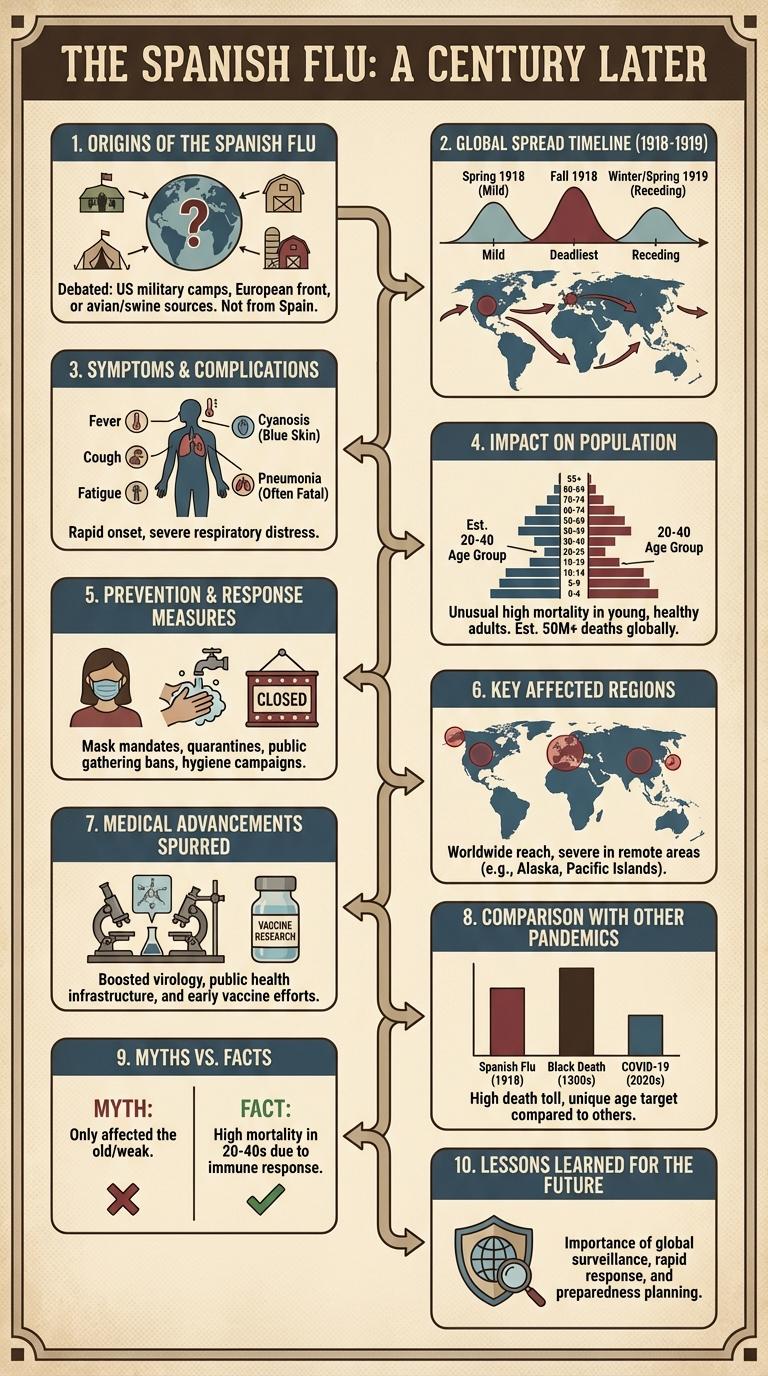
The Spanish flu pandemic of 1918 rapidly infected millions worldwide, causing unprecedented mortality rates. This infographic visually presents key data on infection rates, symptoms, and global impact to enhance understanding of the pandemic's severity. Detailed statistics and timelines illustrate how the virus spread and affected various populations during this historic health crisis.
Origins of the Spanish Flu
The Spanish Flu, caused by the H1N1 influenza virus, emerged in early 1918. First cases were reported in the United States, specifically in military camps, before spreading globally due to World War I troop movements. The pandemic's name stems from widespread media coverage in neutral Spain, which was not subject to wartime censorship.
Global Spread Timeline
| Year | Key Global Spread Events |
|---|---|
| 1918 Spring | Initial outbreaks reported in military camps in the United States, marking the early stages of the pandemic. |
| 1918 Summer | Rapid transmission through Europe, exacerbated by World War I troop movements. |
| 1918 Fall | Deadliest wave hits worldwide; major urban centers in North America, Europe, and Asia experience widespread infection. |
| 1919 Winter | Global decline in flu cases but localized outbreaks continue, particularly in remote regions. |
| 1920 | Spanish flu pandemic largely subsides, with lasting impacts on global health systems and epidemiology studies. |
Symptoms and Complications
The Spanish flu, caused by the H1N1 influenza virus, led to severe respiratory symptoms and widespread complications during its 1918 pandemic. Understanding these symptoms and complications helps highlight the virus's impact on global health.
The flu manifested rapidly with intense symptoms and sometimes fatal outcomes.
- High Fever and Chills - Patients experienced sudden onset of high fever often accompanied by chills and sweating.
- Severe Respiratory Issues - Persistent cough, shortness of breath, and chest pain were common respiratory symptoms.
- Pneumonia Development - Secondary bacterial pneumonia was a leading cause of death among infected individuals.
- Extreme Fatigue - Many suffered from profound fatigue and muscle aches that debilitated daily activities.
- Complications in Young Adults - Contrary to typical flu patterns, young adults faced disproportionately severe complications and mortality rates.
Impact on Population
The Spanish Flu pandemic of 1918 caused an estimated 50 million deaths worldwide, significantly reducing the global population. It infected about one-third of the world's population, demonstrating its rapid and extensive spread.
The mortality rate was unusually high among young adults, roughly aged 20 to 40, contrasting with typical flu outbreaks. Many affected regions experienced severe labor shortages and societal disruptions due to the large-scale loss of working-age individuals.
Prevention and Response Measures
The Spanish flu pandemic of 1918 prompted widespread prevention and response strategies to control the virus spread. Public health efforts focused on hygiene, social distancing, and medical care improvements.
- Quarantine and Isolation - Infected individuals were isolated to prevent transmission in communities.
- Face Masks Usage - Wearing masks became mandatory in many areas to reduce airborne infection.
- Public Gatherings Banned - Authorities prohibited events and closed schools to minimize close contact.
- Public Health Campaigns - Educational efforts promoted hand washing and respiratory hygiene.
- Medical Infrastructure Expansion - Hospitals increased capacity and trained staff to manage the surge of patients.
Key Affected Regions
The Spanish flu, which occurred from 1918 to 1919, impacted multiple continents with devastating effects. This influenza pandemic caused an estimated 50 million deaths worldwide, highlighting its global reach.
- North America - Major urban centers like New York and Philadelphia experienced high mortality rates due to overcrowded conditions.
- Europe - Countries affected by World War I faced rapid virus spread among troops and civilians, exacerbating the death toll.
- Asia - Countries such as India suffered enormous casualties, with millions succumbing to the virus amid dense populations.
The widespread transmission of the Spanish flu reshaped public health strategies across the affected regions.
Medical Advancements Spurred
How did the Spanish Flu pandemic influence medical advancements? The Spanish Flu pandemic of 1918 accelerated research in virology and epidemiology. This event led to improved vaccine development methods and better public health strategies.
What new medical technologies emerged due to the Spanish Flu? Innovations such as improved surgical masks and respirators became standard in medical practice. These tools significantly reduced infection rates in hospitals and public spaces.
How did the pandemic impact vaccine research? The global spread of the Spanish Flu highlighted the need for rapid vaccine production. Scientists developed new techniques for isolating viruses, paving the way for future influenza vaccines.
Why was public health infrastructure important during the Spanish Flu? Health authorities established better disease surveillance systems to monitor outbreaks more efficiently. These improvements allowed for faster responses to future epidemics and pandemics.
What lasting effects did the pandemic have on medical education? The crisis emphasized the importance of infectious disease training for healthcare professionals. Curricula were updated to include more focus on virology and pandemic preparedness.
Comparison with Other Pandemics
The Spanish flu of 1918 infected approximately 500 million people worldwide, making it one of the deadliest pandemics in history with an estimated 50 million deaths. Unlike the COVID-19 pandemic, which had advanced medical responses and vaccines developed within a year, the Spanish flu struck before modern antibiotics and vaccines were available. Compared to the Black Death of the 14th century, the Spanish flu spread faster globally due to increased human mobility during World War I.
Myths vs. Facts
The Spanish Flu of 1918 caused a global pandemic, impacting millions. Myths and facts surrounding this event often cause confusion about its causes and effects.
One myth is that the Spanish Flu originated in Spain; in reality, it likely started elsewhere but became widely reported there. Another misconception is that only the elderly were affected, while data shows young adults were also severely impacted. Scientific studies confirm that proper hygiene and public health measures helped control its spread despite limited medical technology.