
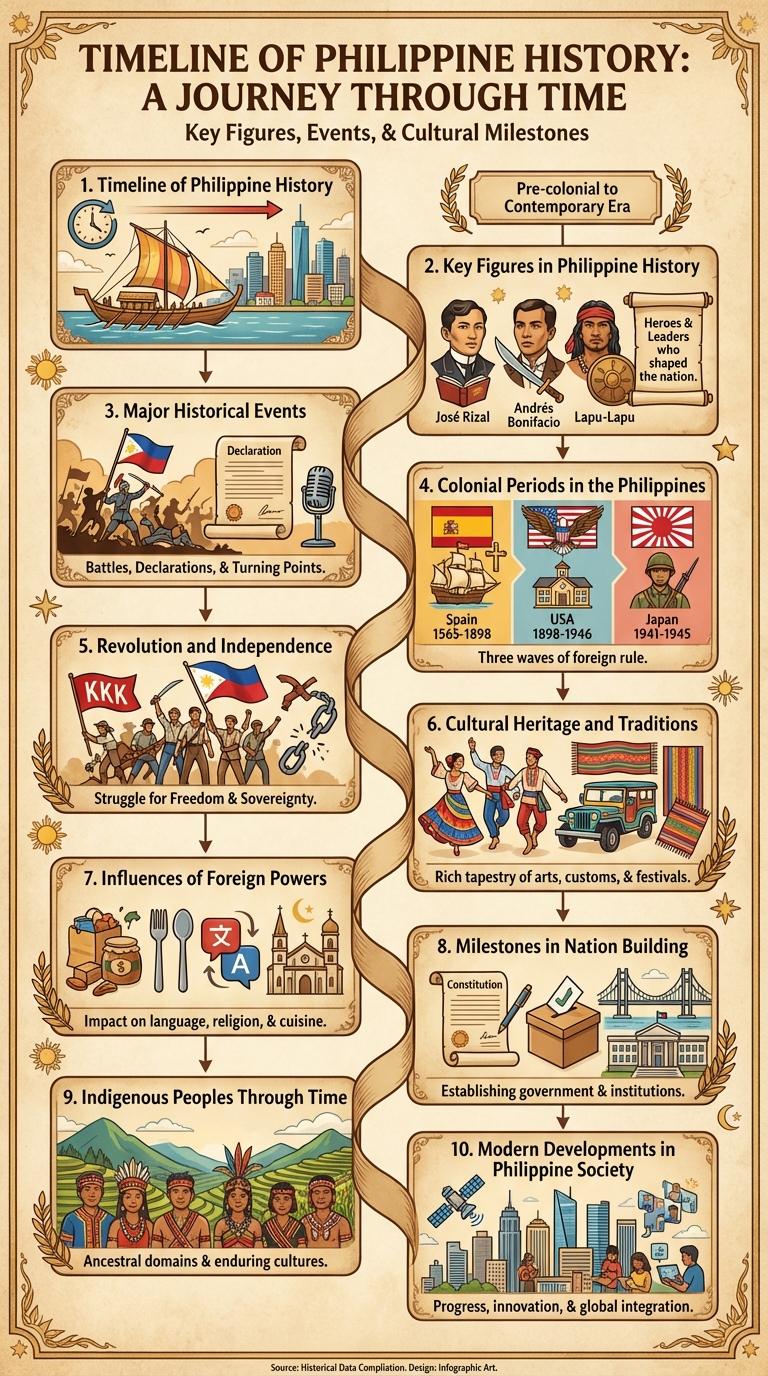
Kasaysayan captures the rich tapestry of history and culture, vividly illustrating significant events and milestones through compelling visuals. Infographics about kasaysayan connect complex historical data with engaging storytelling, making it accessible and memorable. This approach enhances understanding and appreciation of heritage in a visually appealing format.
Timeline of Philippine History
The timeline of Philippine history highlights key events shaping the nation's identity from ancient times to the present. Major milestones include the arrival of the Spanish in 1521, the declaration of independence in 1898, and the establishment of the Republic after World War II. This infographic visually represents these pivotal moments to provide a clear understanding of the country's historical journey.
Key Figures in Philippine History
The history of the Philippines is shaped by numerous key figures who played significant roles in its political, social, and cultural development. These individuals contributed to the nation's struggle for independence and identity across different historical periods.
- Jose Rizal - A nationalist and revolutionary, Rizal's writings inspired the Philippine revolution against Spanish rule.
- Andres Bonifacio - Known as the Father of the Philippine Revolution, he founded the Katipunan to fight Spanish colonization.
- Emilio Aguinaldo - The first president of the Philippines, he led the country during its declaration of independence from Spain in 1898.
Major Historical Events
Kasaysayan, the Filipino term for history, chronicles the significant events that shaped the Philippines. Understanding major historical events offers insight into the nation's cultural and political evolution.
The Philippine Revolution of 1896 marked the country's struggle for independence from Spanish rule. The declaration of independence on June 12, 1898, symbolized national unity and patriotism. Post-war periods saw the establishment of the Commonwealth and eventual full sovereignty in 1946.
Colonial Periods in the Philippines
The Colonial Periods in the Philippines span over three centuries, starting with Spanish rule in 1565, followed by a brief British occupation in the 18th century, and later American colonization in 1898. Spanish colonization introduced Christianity, centralized governance, and new cultural influences, while American rule brought public education, infrastructure development, and democratic reforms. These periods significantly shaped the Philippines' social, political, and cultural landscape, laying the foundation for its modern identity.
Revolution and Independence
The Philippine Revolution, which began in 1896, marked the Filipino people's fight against Spanish colonial rule. This uprising was driven by a desire for freedom and the end of centuries-long oppression.
The declaration of Philippine independence happened on June 12, 1898, led by Emilio Aguinaldo. It symbolized the birth of a new nation free from colonial rule, setting the foundation for a sovereign Philippines.
Cultural Heritage and Traditions
What defines the rich cultural heritage of the Philippines? The Philippines boasts a diverse cultural heritage shaped by indigenous customs, Spanish colonization, and American influence. These elements blend to create unique traditions celebrated nationwide.
How do traditional festivals reflect Philippine cultural identity? Festivals like Sinulog and Panagbenga showcase colorful dances, music, and rituals rooted in local history and spirituality. These events preserve community values and historical memories actively.
What role do indigenous crafts play in Philippine heritage? Indigenous crafts such as weaving, pottery, and woodcarving highlight regional craftsmanship passed down through generations. These artisanal skills symbolize cultural pride and historical continuity.
How is Filipino cuisine linked to cultural traditions? Filipino dishes incorporate native ingredients and cooking methods influenced by Malay, Spanish, and Chinese cultures. Meals like adobo and lechon embody blended culinary heritage and social gatherings.
Why is language important to preserving Filipino traditions? The archipelago's many languages and dialects carry folk tales, songs, and oral histories central to identity. Protecting these languages helps maintain ethnic diversity and ancestral knowledge.
Influences of Foreign Powers
The kasaysayan of the Philippines reveals significant influences from various foreign powers that shaped its culture, politics, and society. These interactions introduced new governance systems, religious practices, and economic changes impacting the archipelago.
- Spanish Colonization - Introduced Christianity and centralized governance, profoundly affecting Filipino culture and religion.
- American Rule - Brought public education and democratic ideals, influencing political and social structures.
- Japanese Occupation - Temporarily disrupted the country with military control and wartime challenges during World War II.
Foreign influences have left lasting legacies in the Philippines' cultural identity and national development.
Milestones in Nation Building
Milestones in nation building mark significant achievements in the development and unity of a country. These events shape the identity, governance, and progress of the nation.
Key milestones include the declaration of independence, establishment of democratic institutions, and economic reforms. Such landmarks foster national pride and socio-economic growth.
Indigenous Peoples Through Time
The history of Indigenous Peoples traces the resilience and rich culture that have persisted through millennia. Their stories reveal unique languages, traditions, and contributions that shape modern identities.
- Ancient Origins - Indigenous communities emerged thousands of years ago, establishing diverse societies across continents.
- Cultural Preservation - Traditional knowledge, rituals, and arts have been passed down through generations to maintain heritage.
- Contemporary Challenges - Indigenous Peoples face ongoing struggles for land rights, recognition, and cultural survival in modern states.