
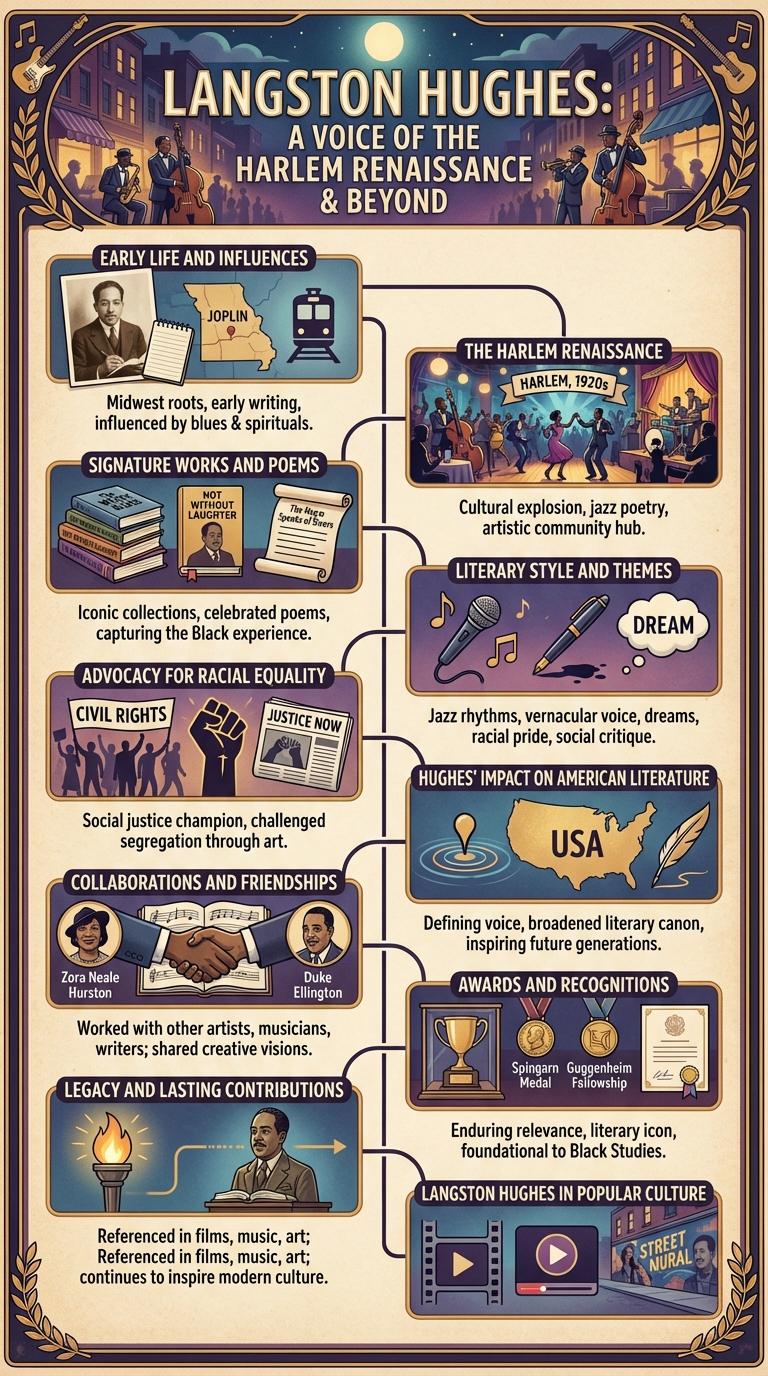
Langston Hughes was a leading figure of the Harlem Renaissance whose poetry and writings vividly captured the essence of African American culture and struggle. His work blends jazz rhythms and colloquial language to express the hopes and challenges of Black life in early 20th-century America. This infographic highlights key moments, themes, and contributions that define Hughes's enduring literary legacy.
Early Life and Influences
Who was Langston Hughes and what influenced his early life?
Langston Hughes was a prominent African American poet, social activist, and playwright born in 1902 in Joplin, Missouri. His early life was shaped by his grandmother's stories, African American culture, and the Harlem Renaissance, which deeply influenced his literary style and themes.
The Harlem Renaissance
Langston Hughes was a central figure of the Harlem Renaissance, a cultural movement during the 1920s and 1930s that celebrated African American art, music, and literature. His poetry and writings highlighted the struggles and resilience of Black Americans, promoting racial pride and social justice. Hughes' work significantly influenced the identity and expression of the Harlem Renaissance, making him an enduring symbol of this era.
Signature Works and Poems
Langston Hughes was a central figure of the Harlem Renaissance, known for his vivid portrayals of African American life. His poetry combined jazz rhythms with social and political themes.
Signature works include The Weary Blues and Montage of a Dream Deferred, capturing the struggles and hopes of Black communities. His poems like "Harlem" and "Mother to Son" remain widely studied for their powerful messages and lyrical style.
Literary Style and Themes
Langston Hughes was a pioneering poet whose work captured the spirit of African American life during the Harlem Renaissance. His literary style and themes profoundly influenced American literature and civil rights discourse.
- Jazz and Blues Influence - Hughes incorporated rhythms and styles from jazz and blues music to create a unique and vibrant poetic voice.
- Focus on African American Identity - His writings explore the struggles, joys, and cultural pride of African Americans in a segregated society.
- Use of Conversational Language - Hughes employed everyday speech and vernacular, making his poetry accessible and authentic.
Advocacy for Racial Equality
| Langston Hughes | Influential African-American poet, novelist, and social activist |
| Advocacy for Racial Equality | Used literary works to challenge racial injustice and promote Black pride |
| Key Themes | Racial identity, social justice, the African-American experience |
| Notable Works | "The Negro Speaks of Rivers," "Let America Be America Again" |
| Legacy | Inspired Civil Rights Movement; remains a symbol of racial equality and cultural pride |
Hughes' Impact on American Literature
Langston Hughes revolutionized American literature by bringing the voices of African Americans to the forefront. His poetry and prose captured the struggles, joys, and rhythms of Black life during the Harlem Renaissance.
Hughes' work challenged racial stereotypes and promoted cultural pride, influencing generations of writers and artists. His use of jazz and blues elements infused American literature with a unique and authentic voice. Today, Hughes remains a symbol of artistic innovation and social change in literature.
Collaborations and Friendships
Langston Hughes collaborated with prominent figures such as Zora Neale Hurston and Duke Ellington, enriching the Harlem Renaissance through combined artistic efforts. His friendships with fellow writers like Countee Cullen and Claude McKay fostered a vibrant community that shaped African American literature. These relationships influenced Hughes' work, blending poetry, music, and social commentary.
Awards and Recognitions
Langston Hughes received numerous awards acknowledging his impact on American literature and the Harlem Renaissance. His work continues to inspire recognition for African American cultural achievements.
- Spingarn Medal by NAACP - Awarded in 1960 for outstanding achievement by an African American, honoring Hughes' literary contributions.
- National Institute of Arts and Letters Award - Recognized Hughes for his distinguished work in poetry and literature.
- Guggenheim Fellowship - Received in 1935 to support his artistic and literary pursuits.
Legacy and Lasting Contributions
Langston Hughes remains a pivotal figure in American literature, renowned for his role in the Harlem Renaissance. His work continues to inspire discussions on race, identity, and social justice.
- Cultural Impact - Hughes' poetry and prose gave voice to the African American experience during a transformative era in U.S. history.
- Literary Innovation - He pioneered a style that blended jazz rhythms with traditional poetic forms, influencing generations of writers.
- Social Advocacy - Through his art, Hughes championed equality and challenged racial discrimination in America.
His legacy endures through numerous collections, adaptations, and scholarly studies dedicated to his work.