
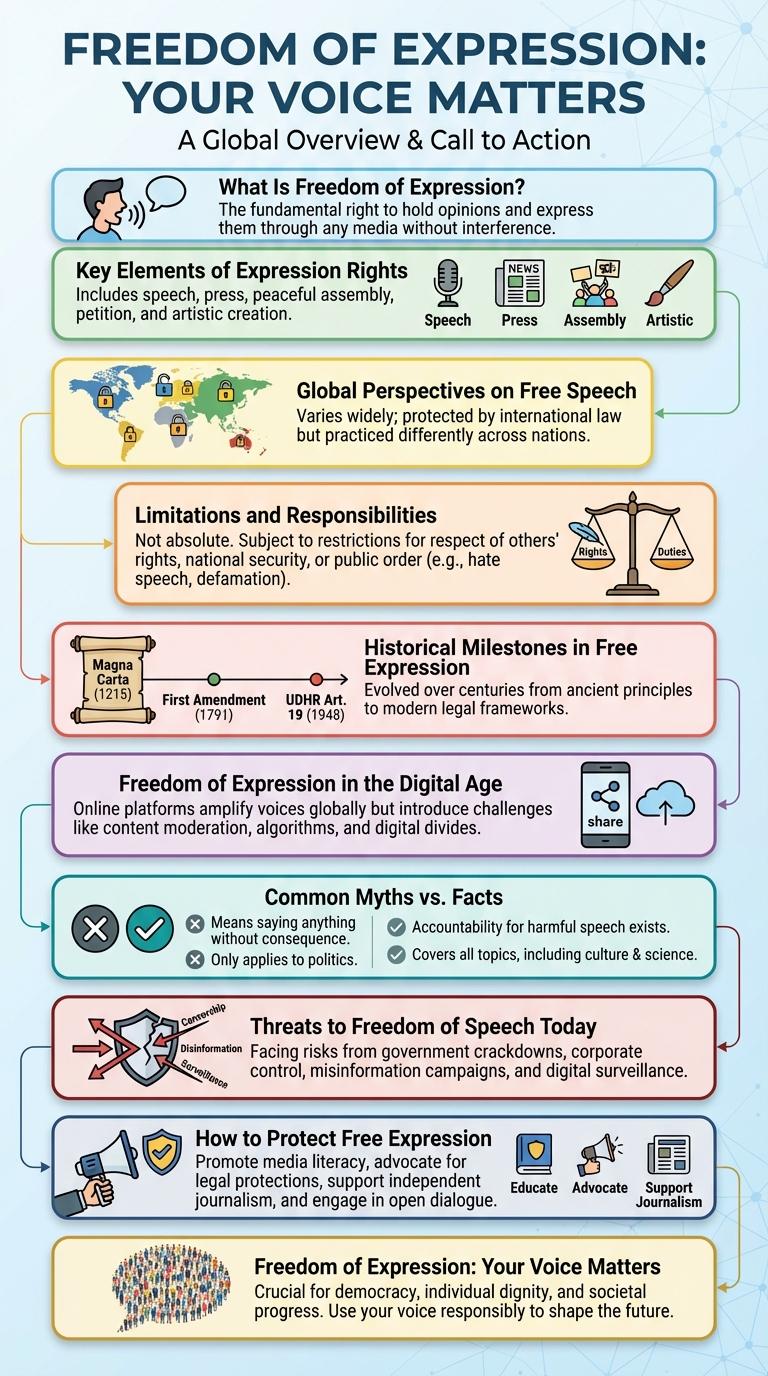
Freedom of expression is a fundamental human right that empowers individuals to share ideas, opinions, and information without fear of censorship or retaliation. Understanding the importance and limits of this right is crucial in fostering open, democratic societies. This infographic highlights key facts, challenges, and protections related to freedom of expression worldwide.
What Is Freedom of Expression?
Freedom of expression is the right to openly share and receive ideas, opinions, and information without undue restriction. It forms the foundation of democratic societies, ensuring individuals can participate in public discourse.
This right protects diverse viewpoints, encouraging creativity and progress. Limitations exist when expression incites violence or harms public safety, balancing freedom with responsibility.
Key Elements of Expression Rights
Freedom of expression is a fundamental human right that allows individuals to communicate ideas and opinions without fear of censorship. This right supports democratic governance, personal autonomy, and social progress.
- Right to Speak Freely - Individuals can share thoughts openly without government restriction or punishment.
- Access to Information - People have the right to seek, receive, and impart information from diverse sources.
- Protection from Censorship - Expression should not be suppressed by authorities except under narrowly defined legal limits.
Global Perspectives on Free Speech
How do various countries differ in their approach to freedom of expression?
Freedom of expression is recognized differently across the globe, influenced by legal, cultural, and political factors. Some nations enforce strict regulations, while others uphold broad protections for free speech.
What are the main international laws supporting free speech?
The Universal Declaration of Human Rights and the International Covenant on Civil and Political Rights provide global frameworks for freedom of expression. These documents emphasize the right to hold opinions without interference and to seek, receive, and impart information.
Which regions have the strongest protections for free speech?
Western democracies, especially in North America and Europe, generally offer robust legal safeguards for free speech. These regions often balance freedom of expression with limitations against hate speech and incitement.
Where is freedom of expression most restricted worldwide?
Countries with authoritarian regimes in parts of Asia, the Middle East, and Africa tend to impose severe restrictions on speech. Censorship, surveillance, and punishment deter criticism of governments and suppress dissenting voices.
How does digital media impact global free speech?
Online platforms amplify voices but also present challenges such as misinformation and hate speech. Governments and organizations worldwide struggle to regulate digital content while respecting freedom of expression.
Limitations and Responsibilities
Freedom of expression is a fundamental human right allowing individuals to share ideas and opinions without censorship. However, this freedom comes with limitations to protect public safety and respect others' rights.
Limitations include restrictions on hate speech, incitement to violence, and defamation. Individuals have the responsibility to express themselves respectfully and avoid spreading false information. Ensuring this balance helps maintain both freedom and social harmony.
Historical Milestones in Free Expression
Freedom of expression is a fundamental human right that has evolved through key historical events shaping modern democratic societies. Understanding these milestones highlights the ongoing struggle to protect this vital liberty worldwide.
- Magna Carta (1215) - Established early principles limiting government power, influencing free speech concepts.
- English Bill of Rights (1689) - Guaranteed Parliament's freedom of speech, laying groundwork for broader expression rights.
- First Amendment (1791) - Enshrined free speech and press protections in the U.S. Constitution, a model for democracies.
- Universal Declaration of Human Rights (1948) - Recognized freedom of expression as a universal human right by the United Nations.
- European Convention on Human Rights (1950) - Provided legal frameworks for protecting free expression across member states.
Freedom of Expression in the Digital Age
Freedom of expression in the digital age empowers individuals to share opinions and information globally through social media, blogs, and other online platforms. This connectivity fosters diverse viewpoints and innovation across societies.
Challenges include censorship, misinformation, and surveillance by governments and private entities, which can limit open dialogue. Protecting digital rights requires balancing free speech with privacy and security concerns in an evolving internet landscape.
Common Myths vs. Facts
| Common Myths | Facts |
|---|---|
| Freedom of expression means you can say anything without consequences. | Freedom of expression protects speech but does not protect against legal consequences like defamation or hate speech laws. |
| Freedom of expression only applies to spoken or written words. | Freedom of expression includes all forms of communication, including art, symbols, and digital media. |
| Freedom of expression allows hate speech without restriction. | Many countries restrict hate speech to protect public order and the rights of others. |
| Freedom of expression means the government must fund all opinions equally. | The government is not required to finance or endorse any particular viewpoint. |
| Freedom of expression only protects individuals, not groups or organizations. | Groups and organizations also have the right to express opinions under freedom of expression laws. |
Threats to Freedom of Speech Today
Freedom of expression faces increasing threats worldwide due to government censorship, social media restrictions, and rising misinformation. Authoritarian regimes use legal and extralegal measures to suppress dissenting voices and limit access to independent information. Digital surveillance and online harassment further undermine individuals' ability to speak freely and safely.
How to Protect Free Expression
Freedom of expression is a fundamental human right essential for democracy and individual autonomy. Protecting this right ensures diverse voices and ideas can be shared openly without fear of censorship or retaliation.
- Advocate for Legal Protections - Support laws and policies that safeguard free speech from unjust restrictions and government censorship.
- Promote Media Literacy - Encourage critical thinking skills to discern credible information and foster responsible communication.
- Engage in Peaceful Dialogue - Participate in respectful conversations that respect differing opinions and reduce hostility.
Vigilance and active participation are critical to maintaining and strengthening freedom of expression globally.