
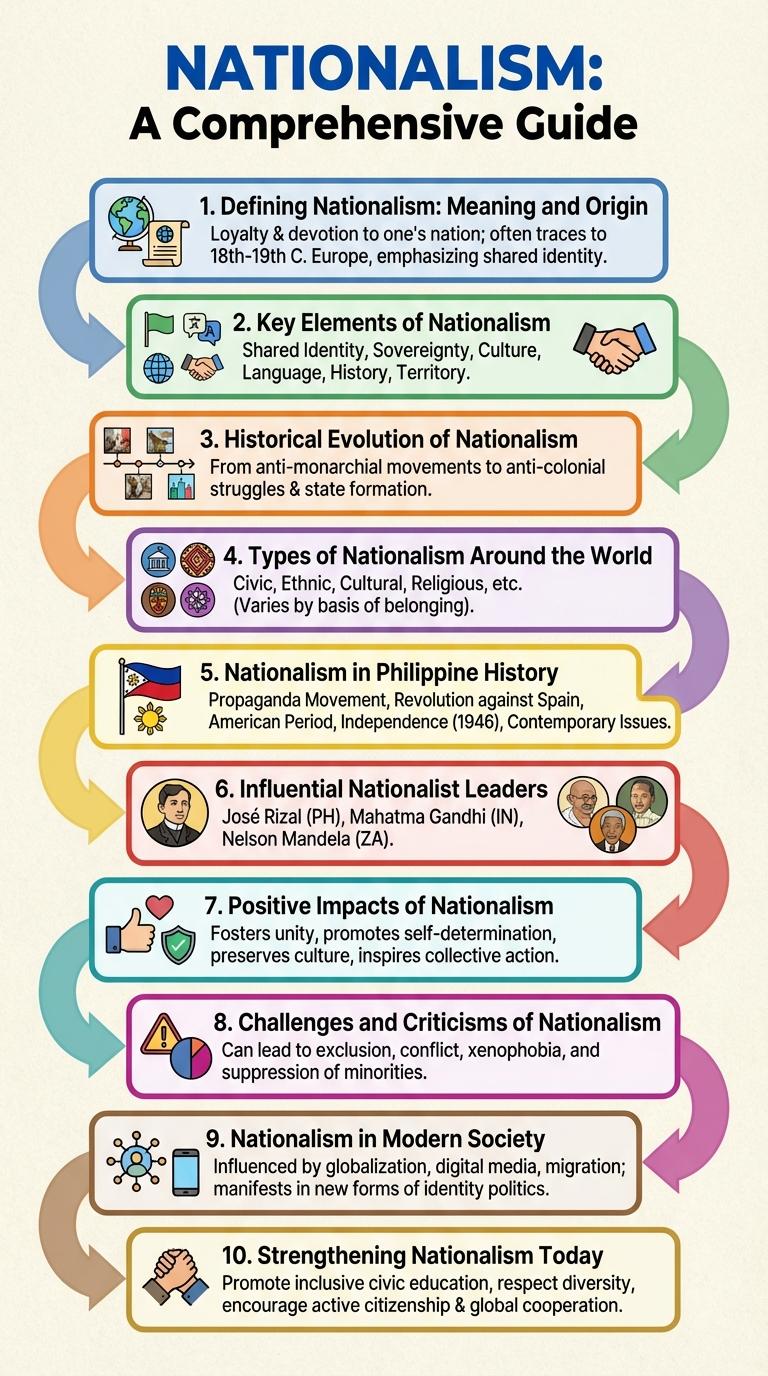
Nasyonalismo represents a powerful force that shapes national identity and unity by emphasizing pride in a shared culture, language, and history. This infographic visually explores the key elements, historical milestones, and global impact of nationalism movements. Understanding the dynamics of nasyonalismo provides valuable insight into political, social, and cultural developments worldwide.
Defining Nationalism: Meaning and Origin
| Aspect | Details |
|---|---|
| Definition of Nationalism | A political and social ideology centered on the shared identity, culture, language, and history of a group of people who identify as a nation. |
| Meaning | Nationalism promotes the interests and sovereignty of a nation, often emphasizing unity, self-governance, and pride in national heritage. |
| Origin of the Term | Derived from the Latin word "natio," meaning birth or tribe, and developed as a concept during the late 18th century. |
| Historical Roots | Emergence linked to the American and French Revolutions, which emphasized popular sovereignty and national self-determination. |
| Core Components | Shared language, common history, cultural traditions, and collective political aspirations define the essence of nationalism. |
Key Elements of Nationalism
Nationalism is a powerful ideology centered on the shared identity and unity of a nation's people. It promotes pride in cultural heritage, political sovereignty, and collective goals.
- National Identity - A common language, culture, and history that unite people and define their sense of belonging.
- Political Sovereignty - The desire for self-governance and independence from foreign control or external influence.
- Patriotism - Strong emotional attachment and loyalty to one's nation and its symbols.
- Collective Goals - Shared aspirations focused on national development, security, and prosperity.
- Social Solidarity - Emphasis on social cohesion and mutual support within the national community.
Historical Evolution of Nationalism
Nationalism has evolved through various historical phases that shaped nation-states and cultural identities. Its development reflects changing political, social, and economic forces worldwide.
- Early Nationalism - Rooted in the Renaissance and Reformation, early nationalism emphasized shared language, culture, and religion.
- 19th Century Nationalism - Fueled by the Napoleonic Wars and the Congress of Vienna, nationalism inspired unification movements in Germany and Italy.
- 20th Century Nationalism - Colonial independence movements and world wars intensified nationalist sentiments and the quest for sovereignty.
Types of Nationalism Around the World
Nationalism manifests in various forms across the globe, reflecting diverse cultural, political, and historical contexts. Prominent types include civic nationalism, ethnic nationalism, cultural nationalism, religious nationalism, and economic nationalism. Each type highlights distinct priorities, such as shared citizenship, common ancestry, cultural heritage, religious identity, or economic interests.
Nationalism in Philippine History
Nationalism in Philippine history is a powerful force that shaped the nation's identity and struggle for independence. It inspired Filipinos to unite against colonial rule and assert their sovereignty.
During the Spanish colonization, nationalist sentiments grew through the Propaganda Movement and key figures like Jose Rizal and Andres Bonifacio. The Philippine Revolution of 1896 marked a significant turning point in the fight for freedom. Nationalism continues to influence the country's political and cultural landscape today.
Influential Nationalist Leaders
Nationalism has been shaped by influential leaders who inspired unity and independence. These figures played crucial roles in mobilizing people towards national identity and sovereignty.
Prominent nationalist leaders include Mahatma Gandhi, whose philosophy of nonviolent resistance led India to independence. Another key figure is Jose Rizal, a Filipino nationalist who advocated for reform and inspired the Philippine revolution.
Positive Impacts of Nationalism
What are the positive impacts of nationalism on a country? Nationalism fosters unity among citizens by promoting a shared identity and common goals. This collective spirit strengthens social cohesion and encourages patriotic participation in nation-building efforts.
How does nationalism contribute to economic development? A strong national identity motivates people to support local industries and products, boosting domestic markets. National pride often leads to increased investments in infrastructure and innovation, driving economic growth.
In what ways does nationalism influence political stability? Nationalism can enhance political stability by uniting diverse groups under a common cause. It reduces internal conflicts and creates a stable environment for governance and policy implementation.
Can nationalism promote cultural preservation? Yes, nationalism encourages the protection and celebration of a nation's unique heritage, language, and traditions. This cultural pride helps preserve historical identities and strengthens community bonds.
How does nationalism inspire social progress? National pride often leads to collective efforts to improve education, public health, and social welfare. Citizens motivated by nationalism work together to achieve higher standards of living and social justice.
Challenges and Criticisms of Nationalism
Nationalism has played a major role in shaping modern states but faces significant challenges and criticisms. Issues arise from its impact on social cohesion, global relations, and internal diversity.
- Exclusion of Minorities - Nationalism can marginalize ethnic and cultural minorities, leading to social tensions and discrimination.
- Promotion of Xenophobia - Excessive nationalist sentiment may foster intolerance and hostility towards foreigners or immigrants.
- Conflict and Division - Nationalist movements sometimes provoke internal conflicts or international disputes over territory and sovereignty.
Despite its influence, nationalism requires careful balance to avoid undermining unity and global cooperation.
Nationalism in Modern Society
Nationalism shapes identity and political landscapes in modern society by promoting pride in cultural heritage and sovereignty. It influences policies related to immigration, governance, and international relations, fostering unity among citizens.
Modern nationalism balances traditional values with globalization challenges, adapting to diverse populations within nation-states. It plays a critical role in shaping national agendas, economic strategies, and social cohesion worldwide.