
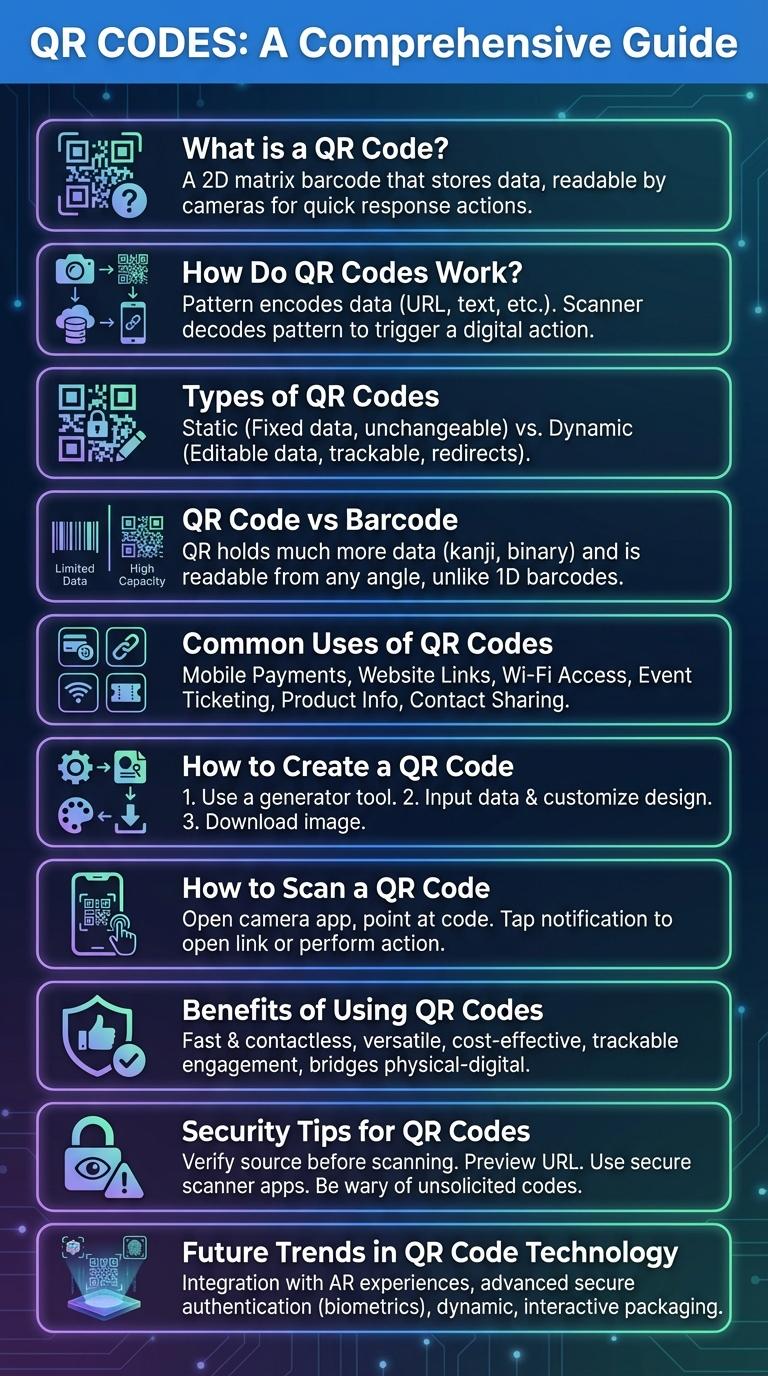
QR codes revolutionize information sharing by providing a quick and seamless way to access data using smartphones. This infographic highlights the key features, uses, and benefits of QR codes, showcasing their growing role in marketing, payment systems, and product tracking. Understanding how QR codes function can enhance customer engagement and streamline digital interactions across various industries.
What is a QR Code?
A QR Code (Quick Response Code) is a type of matrix barcode that stores information in a two-dimensional pattern of black and white squares. It can be scanned using a smartphone or QR scanner to quickly access data such as URLs, text, or contact information.
Invented in 1994 by Denso Wave, QR Codes are widely used in marketing, product tracking, and digital payments due to their fast readability and large storage capacity. Their design allows them to be scanned from any angle, increasing convenience and usability.
How Do QR Codes Work?
QR codes store information in a matrix of black and white squares, readable by digital devices. They link users to websites, text, or other data instantly when scanned.
- Encoding - Data is converted into a pattern of squares representing binary code readable by scanners.
- Scanning - A smartphone camera or QR reader scans the code and interprets the pattern.
- Decoding - The scanned data is processed and translated back into human-readable information or a URL.
QR codes enable fast access to digital content without manual input, enhancing connectivity and information sharing.
Types of QR Codes
QR codes come in various types, each designed for specific uses. Static QR codes contain fixed information that cannot be changed after creation. Dynamic QR codes allow data to be edited and track user interactions, making them ideal for marketing and analytics.
QR Code vs Barcode
QR codes and barcodes serve as tools for data storage and retrieval, but differ significantly in design and capacity. Understanding their unique features helps businesses choose the right tool for inventory, marketing, and tracking.
QR codes store information in two dimensions, enabling more data than traditional barcodes. Barcodes use one-dimensional lines to encode less complex information.
- Data Capacity - QR codes can hold up to 7,089 numeric characters, far exceeding barcodes' maximum of about 20 characters.
- Scanning Technology - QR codes require 2D image scanners or smartphone cameras, whereas barcodes need 1D laser scanners or optical readers.
- Application Scope - QR codes are commonly used for URLs, contact info, and payments, while barcodes dominate retail, inventory, and shipping label systems.
Common Uses of QR Codes
QR codes are versatile tools that streamline the connection between physical and digital worlds. Their widespread adoption spans multiple industries, enhancing user experience through quick information access.
- Marketing and Advertising - QR codes link to promotional content, coupons, or product details, boosting customer engagement.
- Contactless Payments - Used in mobile wallets and payment apps, QR codes enable fast and secure transactions without physical contact.
- Event Management - Tickets and entry passes utilize QR codes for efficient check-in and verification processes.
How to Create a QR Code
How can you create a QR code quickly and easily? Using online QR code generators, you can design customized codes by entering the desired URL or information. These tools allow you to personalize the design, size, and format before downloading your QR code for use in marketing or personal projects.
How to Scan a QR Code
QR codes are two-dimensional barcodes that store data such as URLs, text, or contact information. Scanning a QR code quickly accesses this data using a smartphone camera or a QR code scanner app.
To scan a QR code, open your device's camera app or a dedicated QR code scanner. Point the camera steadily at the QR code until the system recognizes it and displays a notification or link to follow.
Benefits of Using QR Codes
QR codes provide a fast and convenient way for users to access digital content using their smartphones. These codes can store various types of information, from URLs to contact details, enabling seamless interactions in both marketing and personal use.
Businesses benefit from QR codes by enhancing customer engagement and tracking campaign effectiveness through scan analytics. The technology supports diverse applications, including payment systems, event ticketing, and inventory management. QR codes also reduce the need for physical materials, promoting eco-friendly practices and cost savings.
Security Tips for QR Codes
QR codes are widely used for quick access to websites, promotions, and contact information, making security a crucial concern. Scanning unknown QR codes can lead to phishing sites, malware downloads, or unauthorized data collection. Always verify the source before scanning and use QR code scanner apps with built-in security features to minimize risks.