
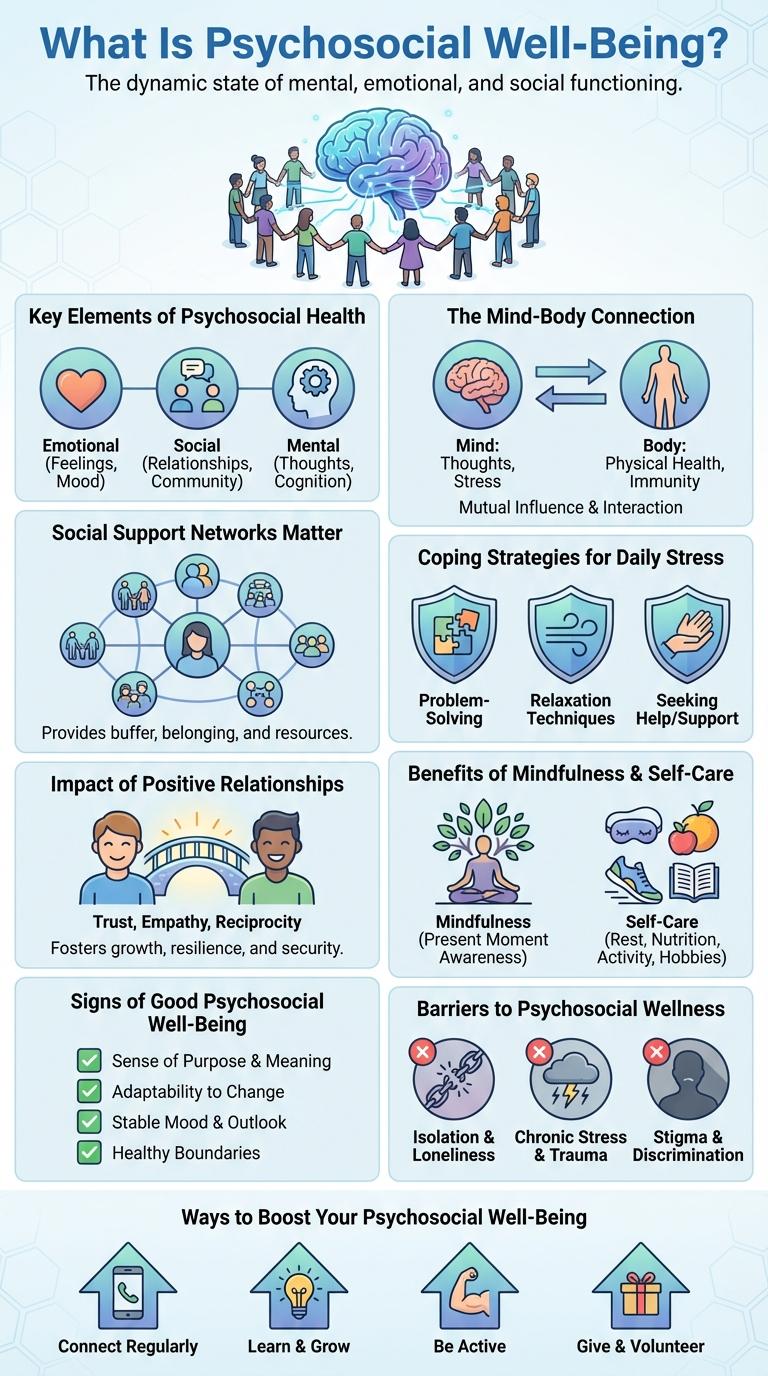
Psychosocial well-being encompasses the interplay between psychological health and social relationships, significantly influencing overall quality of life. Understanding key factors such as emotional resilience, social support, and stress management can help individuals foster a balanced mental state. This infographic highlights essential aspects and actionable insights to promote sustained psychosocial wellness.
What Is Psychosocial Well-Being?
| Aspect | Description |
|---|---|
| Definition | Psychosocial well-being refers to the condition where an individual experiences a balance between psychological health and social functioning. |
| Key Components | Emotional stability, positive self-esteem, meaningful relationships, and effective coping mechanisms. |
| Importance | Supports mental health, enhances social connections, and improves quality of life. |
| Indicators | Feeling connected, maintaining relationships, emotional resilience, and life satisfaction. |
| Influencing Factors | Family environment, community support, stress management, and social inclusion. |
Key Elements of Psychosocial Health
Psychosocial well-being encompasses emotional, social, and psychological health, which collectively influence an individual's overall quality of life. Key elements include emotional resilience, social connections, effective communication skills, self-esteem, and stress management. Emphasizing these aspects helps promote mental stability and fosters healthier relationships within communities.
The Mind-Body Connection
Psychosocial well-being significantly influences overall health through the dynamic mind-body connection. Understanding this relationship highlights the importance of mental and emotional health in physical wellness.
- Stress Affects Physical Health - Chronic stress triggers hormonal imbalances that can weaken immune response and increase the risk of illness.
- Mental Health Influences Recovery - Positive psychological states enhance healing processes and improve outcomes after physical injury or surgery.
- Body Signals Impact Emotions - Physical sensations such as pain or fatigue can alter mood and cognitive function, demonstrating a bidirectional mind-body relationship.
Social Support Networks Matter
Social support networks are vital for maintaining psychosocial well-being, providing emotional comfort and practical assistance during stressful times. Strong connections with family, friends, and community members help reduce feelings of isolation and foster a sense of belonging.
Research shows that individuals with robust social support experience lower levels of anxiety and depression. Engaging in meaningful relationships promotes resilience, improving overall mental health and life satisfaction.
Coping Strategies for Daily Stress
Effective coping strategies for daily stress enhance psychosocial well-being by promoting emotional balance and resilience. Techniques such as mindfulness, regular physical activity, and social support help manage stress hormones and improve mood regulation. Consistent practice of these methods reduces anxiety and fosters a healthier mental state.
Impact of Positive Relationships
How do positive relationships influence psychosocial well-being?
Positive relationships enhance emotional support, leading to reduced stress and increased happiness. Strong social connections improve mental health and foster a sense of belonging.
What role do positive relationships play in resilience?
Supportive relationships provide a buffer against life's challenges and help individuals recover from adversity. They promote coping skills and emotional strength in difficult times.
How do positive relationships affect self-esteem?
Meaningful connections reinforce a sense of worth and acceptance. Encouragement and validation from others boost confidence and personal growth.
Can positive relationships impact physical health?
Healthy social ties are linked to lower risks of chronic diseases and mortality. Emotional bonds encourage healthier behaviors and stress management.
Why are positive relationships essential for children's development?
Strong relationships with caregivers and peers support cognitive and emotional growth. Early positive interactions contribute to lifelong psychosocial well-being.
Benefits of Mindfulness & Self-Care
Psychosocial well-being is essential for maintaining mental, emotional, and social balance in daily life. Mindfulness and self-care practices enhance this well-being by fostering awareness and reducing stress.
- Enhanced Emotional Regulation - Mindfulness helps individuals recognize and manage their emotions effectively to improve mood stability.
- Reduced Stress Levels - Regular self-care activities lower cortisol levels, promoting relaxation and resilience against stress.
- Improved Focus and Concentration - Mindfulness increases attention span and cognitive clarity by training the mind to stay present.
Incorporating mindfulness and self-care into routines supports long-term psychosocial health and overall quality of life.
Signs of Good Psychosocial Well-Being
Psychosocial well-being reflects a person's ability to manage stress, maintain relationships, and adapt to social environments. Recognizing signs of good psychosocial well-being helps in promoting mental health and preventing disorders.
Key indicators include emotional stability, positive social interactions, and effective coping skills. Individuals with good psychosocial well-being often demonstrate resilience and a balanced outlook on life. Consistent feelings of satisfaction and purpose also signal strong psychosocial health.
Barriers to Psychosocial Wellness
Psychosocial well-being is essential for overall mental and emotional health, yet many face significant obstacles that hinder this balance. Recognizing common barriers helps in developing effective strategies for support and improvement.
- Stigma and Social Isolation - Negative societal attitudes often prevent individuals from seeking help, leading to loneliness and diminished self-worth.
- Economic Hardship - Financial instability can create stress and limit access to mental health resources, impacting psychosocial wellness.
- Lack of Access to Care - Geographic, cultural, and systemic barriers restrict availability and affordability of mental health services.