
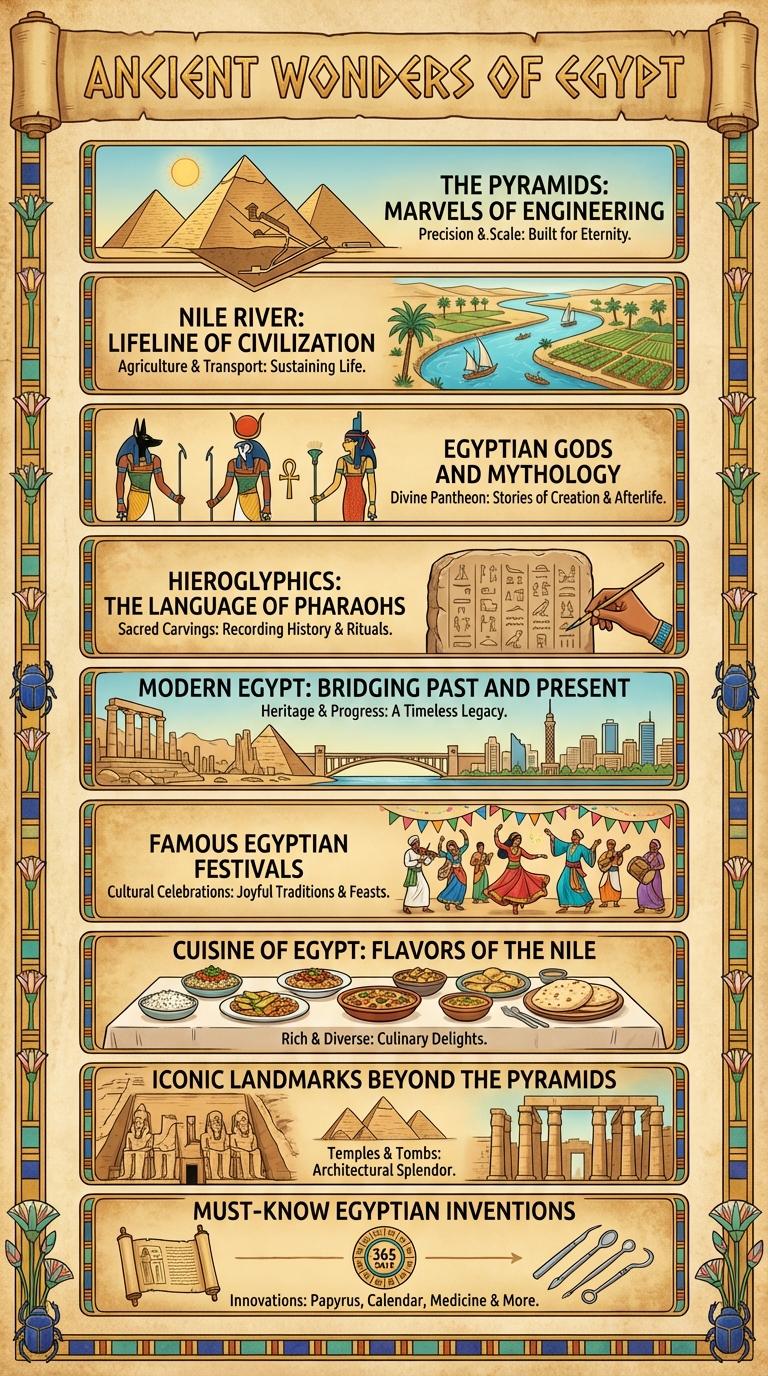
Egypt's rich history and vibrant culture are reflected through captivating visuals and concise data in this infographic. Key highlights include ancient landmarks like the pyramids, the thriving Nile River ecosystem, and modern urban developments in Cairo. Discover how Egypt balances its historical heritage with contemporary growth in art, economy, and tourism.
Ancient Wonders of Egypt
Egypt is renowned for its ancient wonders that continue to captivate the world. These monumental structures reflect the advanced engineering and rich cultural heritage of ancient Egyptian civilization.
The Great Pyramid of Giza, the oldest of the Seven Wonders of the Ancient World, stands as a testament to Egypt's architectural ingenuity. The Sphinx, with its mysterious lion's body and human head, symbolizes royal power and protection. Temples like Karnak and Luxor showcase intricate carvings and religious significance that lasted thousands of years.
The Pyramids: Marvels of Engineering
The Pyramids of Egypt stand as timeless symbols of ancient engineering brilliance. These monumental structures showcase the advanced skills of early Egyptian architects and laborers.
- Great Pyramid of Giza - The largest pyramid, originally 146.6 meters tall, was constructed with over 2 million limestone blocks.
- Construction Techniques - Builders used precise alignment with cardinal points and innovative levering methods to assemble massive stones.
- Cultural Significance - Pyramids served as royal tombs designed to ensure the pharaoh's journey to the afterlife with eternal protection.
Nile River: Lifeline of Civilization
The Nile River is the longest river in the world, stretching over 6,650 kilometers through northeastern Africa. It has been the lifeline of Egyptian civilization for over 5,000 years, providing water, fertile soil, and transportation routes. The river's annual flooding deposited nutrient-rich silt, enabling the growth of crops and sustaining ancient Egyptian societies.
Egyptian Gods and Mythology
Egyptian mythology is a rich collection of stories about gods, goddesses, and supernatural beings representing natural forces and human values. It played a vital role in shaping ancient Egyptian culture, religion, and art.
Many Egyptian gods had specific roles and were worshipped throughout different regions of Egypt, influencing rituals and daily life.
- Ra, the Sun God - Ra was believed to travel across the sky in a solar barque, bringing light, warmth, and life to the world.
- Osiris, God of the Afterlife - Osiris symbolized resurrection and eternal life, ruling the underworld and judging souls.
- Isis, the Protector Goddess - Isis was revered as a powerful healer and magician who protected her husband Osiris and son Horus.
Hieroglyphics: The Language of Pharaohs
Hieroglyphics were the formal writing system used in ancient Egypt, combining logographic and alphabetic elements. This intricate script was primarily employed for religious texts, official inscriptions, and monumental art across temples and tombs.
Each symbol in hieroglyphics represented a sound, word, or concept, enabling complex storytelling and record-keeping. Deciphered through the Rosetta Stone, hieroglyphics provide invaluable insights into the culture, beliefs, and governance of the pharaohs.
Modern Egypt: Bridging Past and Present
Modern Egypt blends its ancient heritage with rapid urban development, showcasing a dynamic balance between tradition and innovation. Cairo, the capital, serves as a bustling hub where historical landmarks sit alongside contemporary skyscrapers.
Significant investments in infrastructure and technology drive Egypt's economic growth, fostering sectors such as tourism, energy, and education. This modern transformation positions Egypt as a key player in both regional and global arenas while honoring its rich cultural legacy.
Famous Egyptian Festivals
Egypt hosts a variety of vibrant festivals that celebrate its rich cultural heritage and religious traditions. These events attract both locals and tourists, showcasing ancient customs alongside modern festivities.
- Sham El-Nessim - An ancient spring festival celebrated with picnics, traditional foods, and egg painting, marking the beginning of the agricultural season.
- Ramadan - A holy month of fasting observed by Muslims across Egypt with nightly prayers, feasting, and community gatherings.
- The Abu Simbel Sun Festival - A biannual event when the sun illuminates the statues of Ramses II, attracting thousands to the temple in Nubia.
- Wafaa El-Nil - A festival celebrating the Nile River's importance with boat parades and cultural performances in Cairo.
- Cairo International Film Festival - A prestigious event showcasing international cinema and promoting Egyptian film culture.
These festivals highlight the diverse cultural fabric and historical depth of Egypt, making the country a unique destination for cultural exploration.
Cuisine of Egypt: Flavors of the Nile
What defines the cuisine of Egypt along the Nile River? Egyptian cuisine features bold flavors combining aromatic spices, fresh herbs, and local ingredients such as fava beans, lentils, and fresh vegetables. The use of cumin, coriander, garlic, and lemon creates distinctive dishes that reflect the rich cultural heritage of the Nile Valley.
Which traditional dishes showcase the flavors of Egyptian cuisine? Popular dishes include koshari, a hearty mix of rice, lentils, and pasta topped with tomato sauce and fried onions, and ful medames, slow-cooked fava beans seasoned with olive oil and lemon. These meals highlight Egypt's reliance on simple, nutritious, and flavorful ingredients cultivated along the Nile.
Iconic Landmarks Beyond the Pyramids
Egypt is home to iconic landmarks beyond the famous pyramids, showcasing its rich history and culture. The Great Sphinx, located near the Pyramids of Giza, is a majestic limestone statue with a lion's body and a human head. Luxor Temple and the Karnak Temple Complex highlight ancient Egyptian religious architecture, while the Abu Simbel temples feature massive rock-cut monuments dedicated to Pharaoh Ramses II.