
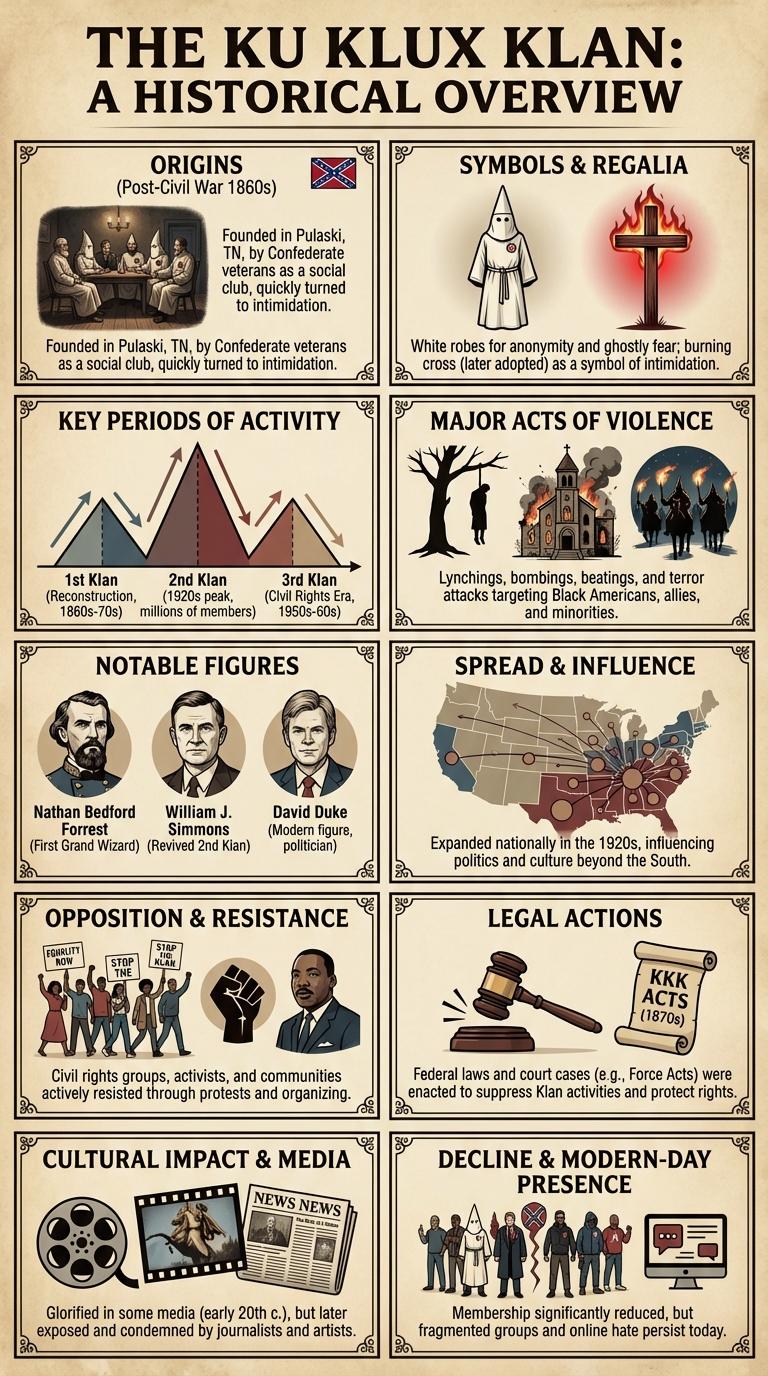
The infographic vividly illustrates the historical rise and impact of the Ku Klux Klan, highlighting its origins, key events, and symbols associated with the group. Concentrated information on membership trends, geographic spread, and major incidents provides a clear understanding of the KKK's lasting influence on social and political issues. Data visualization enhances comprehension of the organization's tactics and the widespread resistance it has faced over time.
Origins of the Ku Klux Klan
The Ku Klux Klan, often abbreviated as KKK, is a white supremacist hate group established in the United States. Its origins date back to the post-Civil War Reconstruction era.
- Founded in 1865 - The Ku Klux Klan was founded in Pulaski, Tennessee, by six former Confederate veterans.
- Reaction to Reconstruction - The group emerged as a violent response to the racial integration and political empowerment of African Americans during Reconstruction.
- Secretive and Symbolic - The Klan used disguises and secret rituals to intimidate Black citizens and suppress voting rights.
Symbols and Regalia
The Ku Klux Klan (KKK) utilized distinctive symbols and regalia to promote their ideology and intimidate others. These elements became synonymous with their identity and actions throughout history.
- White Robes and Hoods - Worn to conceal identity and create a fearsome image, symbolizing racial purity and anonymity.
- Burning Cross - Used as an intimidation tactic, representing supposed divine approval of their cause.
- Blood Drop Cross - A unique Klan emblem combining a cross with a drop of blood, symbolizing sacrifice and racial unity.
These symbols and regalia reinforced the KKK's message and were integral to their public demonstrations and rituals.
Key Periods of Activity
The Ku Klux Klan (KKK) experienced several key periods of activity in American history, marked by waves of influence and violence. Originating after the Civil War, the KKK sought to oppose Reconstruction and maintain white supremacy through intimidation.
The first major peak occurred in the 1870s, as Klan members targeted African Americans and Republican leaders in the South. The organization was largely suppressed by federal laws and military intervention by the late 1870s.
The second surge happened in the 1910s and 1920s, fueled by anti-immigrant, anti-Catholic, and racist sentiments amid rapid social changes. The Klan expanded nationally, boasting millions of members and influencing politics and law enforcement.
The Klan's influence sharply declined by the 1940s but resurged during the Civil Rights Movement in the 1950s and 1960s. This period featured violent opposition to desegregation and civil rights activists, prompting intense federal crackdowns.
Major Acts of Violence
The Ku Klux Klan (KKK) is notorious for its history of racial terrorism and violence, primarily targeting African Americans and other minority groups. Founded in the aftermath of the Civil War, the KKK used intimidation, lynching, and arson to enforce white supremacy.
Major acts of violence by the KKK include the 1921 Tulsa Race Massacre, where dozens of Black residents were killed and homes destroyed. The 1963 Birmingham church bombing targeted African American children, resulting in four deaths and shocking the nation.
Notable Figures in the KKK
The Ku Klux Klan (KKK) is a white supremacist hate group founded in the United States during the Reconstruction era. It is notorious for promoting racism, violence, and intimidation against African Americans and other minority groups.
Notable figures in the KKK include Nathan Bedford Forrest, a former Confederate general who is often credited as the KKK's first Grand Wizard. Hiram Wesley Evans led the organization during its resurgence in the 1920s, expanding its membership significantly. David Duke is another prominent figure who brought national attention to the Klan in the late 20th century through political activism and media presence.
Spread and Influence Across the U.S.
How did the Ku Klux Klan expand its influence throughout the United States?
The Ku Klux Klan grew rapidly during the early 20th century, particularly in the 1920s, by appealing to widespread social anxieties. Its membership surged to millions, spreading from the South into Northern and Midwestern states.
What regions in the U.S. were most affected by the Klan's presence?
The South remained the Klan's stronghold, but it gained significant traction in states like Indiana, Ohio, and Illinois. This expansion reflected the group's ability to exploit racial, religious, and cultural tensions nationwide.
Which groups did the Klan primarily target during its spread?
The Klan targeted African Americans, immigrants, Catholics, and Jews to enforce white Protestant supremacy. These attacks were often justified through propaganda emphasizing racial purity and traditional values.
What methods did the Klan use to increase its membership and influence?
They employed public rallies, parades, and propaganda campaigns to attract new members. Political endorsements and infiltration of local governments helped the Klan wield substantial political power in certain regions.
| Period | Membership Estimate |
|---|---|
| Post-Civil War Reconstruction | Thousands |
| 1920s Peak | 4 to 5 million |
| Post-World War II Decline | Reduced to thousands |
| Late 20th Century Resurgence | Varied factions |
Opposition and Resistance
The Ku Klux Klan (KKK) faced widespread opposition from civil rights groups, government agencies, and local communities committed to racial equality. Organizations like the NAACP actively worked to expose Klan violence and secure legal actions against its members. Federal laws such as the Enforcement Acts in the 1870s targeted Klan activities, promoting resistance through legal means and public awareness campaigns.
Legal Actions Against the Klan
| Legal Action | Description |
|---|---|
| Anti-Klan Legislation | Federal laws such as the Ku Klux Klan Act of 1871 criminalized Klan violence and protected civil rights. |
| Prosecutions | Government prosecuted Klansmen for crimes including murder, intimidation, and voter suppression. |
| Civil Lawsuits | Civil suits held the Klan accountable for damages inflicted on victims and communities. |
| FBI Investigations | FBI's COINTELPRO targeted Klan activity, gathering evidence to support legal actions. |
| State-Level Actions | Several states passed laws and conducted trials to dismantle local Klan organizations. |
Cultural Impact and Media Portrayals
The Ku Klux Klan (KKK) has left a profound cultural impact in the United States, symbolizing racial hatred and white supremacy. Media portrayals have often depicted the KKK as a violent extremist group, shaping public perception and dialogue around racism.
- Symbol of Racial Intolerance - The KKK represents a legacy of racial violence and segregation, influencing civil rights movements and societal attitudes.
- Frequent Media Depiction - Films, documentaries, and news coverage highlight the KKK's role in promoting hate crimes and terror.
- Impact on Popular Culture - References to the KKK appear in literature, music, and television, often as a critique of racism or a historical warning.