
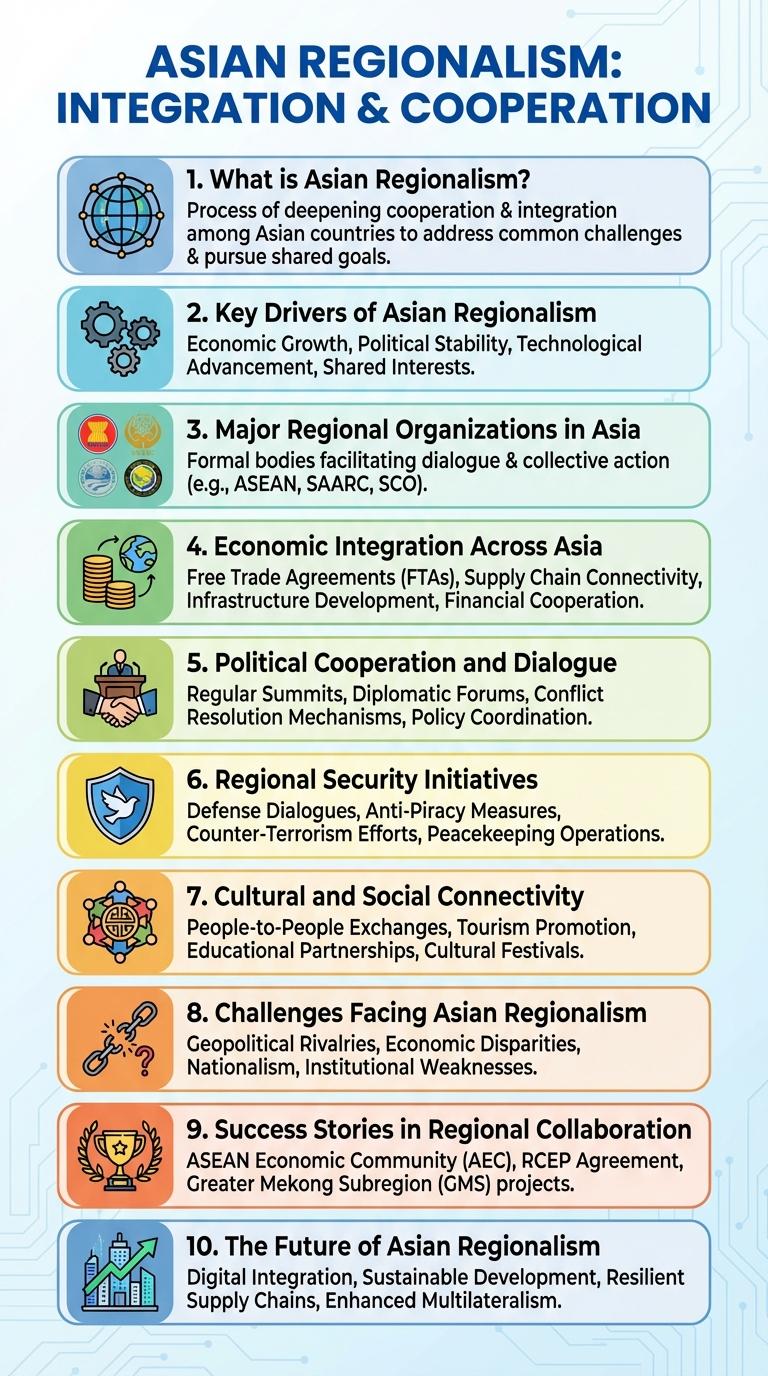
Asian regionalism highlights the economic, political, and cultural cooperation among countries in Asia, fostering increased trade and diplomatic relations. This infographic illustrates key regional organizations, trade agreements, and collaborative initiatives shaping Asia's integration. Visualizing these connections reveals the growing influence of regionalism on global markets and geopolitical dynamics.
What is Asian Regionalism?
What is Asian Regionalism? Asian Regionalism refers to the political, economic, and social cooperation among countries in Asia aimed at promoting regional stability and economic growth. It involves organizations such as ASEAN, APEC, and SAARC that facilitate collaboration on trade, security, and cultural exchange.
Key Drivers of Asian Regionalism
Asian regionalism is shaped by diverse economic, political, and cultural factors that drive cooperation among countries. Understanding these key drivers highlights the region's dynamic integration and development.
- Economic Interdependence - Rising trade volumes and investment flows foster cooperation and create shared growth opportunities.
- Strategic Security Concerns - Regional stability and threat management motivate collaborative defense and diplomatic initiatives.
- Cultural and Historical Links - Common heritage and societal values promote stronger ties and mutual understanding among nations.
Major Regional Organizations in Asia
Asian regionalism is driven by several major organizations that promote economic cooperation, political stability, and cultural exchange among member countries. Key organizations include the Association of Southeast Asian Nations (ASEAN), the South Asian Association for Regional Cooperation (SAARC), and the Asia-Pacific Economic Cooperation (APEC). These entities play crucial roles in shaping policies and fostering collaboration across the diverse and dynamic Asian continent.
Economic Integration Across Asia
Asian regionalism has accelerated economic integration, transforming trade and investment patterns across the continent. Collaborative frameworks promote seamless connectivity, enhancing growth prospects among member countries.
- ASEAN Economic Community (AEC) - Unifies Southeast Asian economies to create a single market of over 600 million people with free flow of goods, services, and capital.
- Regional Comprehensive Economic Partnership (RCEP) - Largest trade agreement in Asia, covering 15 countries and simplifying tariffs to boost intra-regional trade.
- Belt and Road Initiative (BRI) - China-led infrastructure investments enhance connectivity and economic corridors across Asia, fostering cross-border commerce.
These regional integration efforts significantly increase economic interdependence and collective resilience among Asian nations.
Political Cooperation and Dialogue
| Aspect | Details |
|---|---|
| Key Organizations | ASEAN (Association of Southeast Asian Nations), SAARC (South Asian Association for Regional Cooperation), SCO (Shanghai Cooperation Organization) |
| Core Objectives | Promote peace, stability, and mutual respect among Asian countries through diplomatic dialogue and political consultation |
| Major Initiatives | ASEAN Political-Security Community (APSC), SAARC Charter revisions, SCO's counter-terrorism collaborations |
| Dialogue Mechanisms | Regular summits, ministerial meetings, and working group sessions fostering conflict resolution and collaboration |
| Impact on Regional Stability | Reduction of interstate tensions, enhanced cooperation on security issues, and creation of frameworks for peaceful dispute settlement |
Regional Security Initiatives
Asian regionalism encompasses diverse Regional Security Initiatives aimed at fostering peace and stability. Key organizations include ASEAN, the East Asia Summit (EAS), and the Shanghai Cooperation Organization (SCO), which address security challenges through collaboration.
ASEAN Regional Forum (ARF) plays a crucial role in confidence-building and preventive diplomacy among Asian countries. The SCO focuses on counter-terrorism, border security, and military cooperation, promoting regional security partnerships.
Cultural and Social Connectivity
Asian regionalism fosters deep cultural and social connectivity among diverse nations. Shared traditions, languages, and values strengthen ties across the region.
Cross-border cultural exchanges promote mutual understanding and respect. Regional organizations like ASEAN support collaborative social initiatives. Festivals, educational programs, and media platforms enhance people-to-people connections.
Challenges Facing Asian Regionalism
Asian regionalism faces challenges including diverse political systems, economic disparities, and historical conflicts among member states. These issues hinder policy coordination and mutual trust necessary for deeper integration. Addressing these obstacles requires sustained diplomatic efforts and inclusive economic strategies.
Success Stories in Regional Collaboration
Asian regionalism has significantly advanced economic growth, political stability, and cultural exchange among member countries. Successful collaborations demonstrate the power of unity in addressing common challenges and fostering sustainable development.
- ASEAN Economic Community (AEC) - Established a single market and production base, boosting trade and investment among Southeast Asian nations.
- China-ASEAN Free Trade Area (CAFTA) - Created the largest free trade area in Asia, enhancing regional economic integration and cooperation.
- Asian Infrastructure Investment Bank (AIIB) - Mobilizes resources for infrastructure development, supporting sustainable growth and connectivity across Asia.