
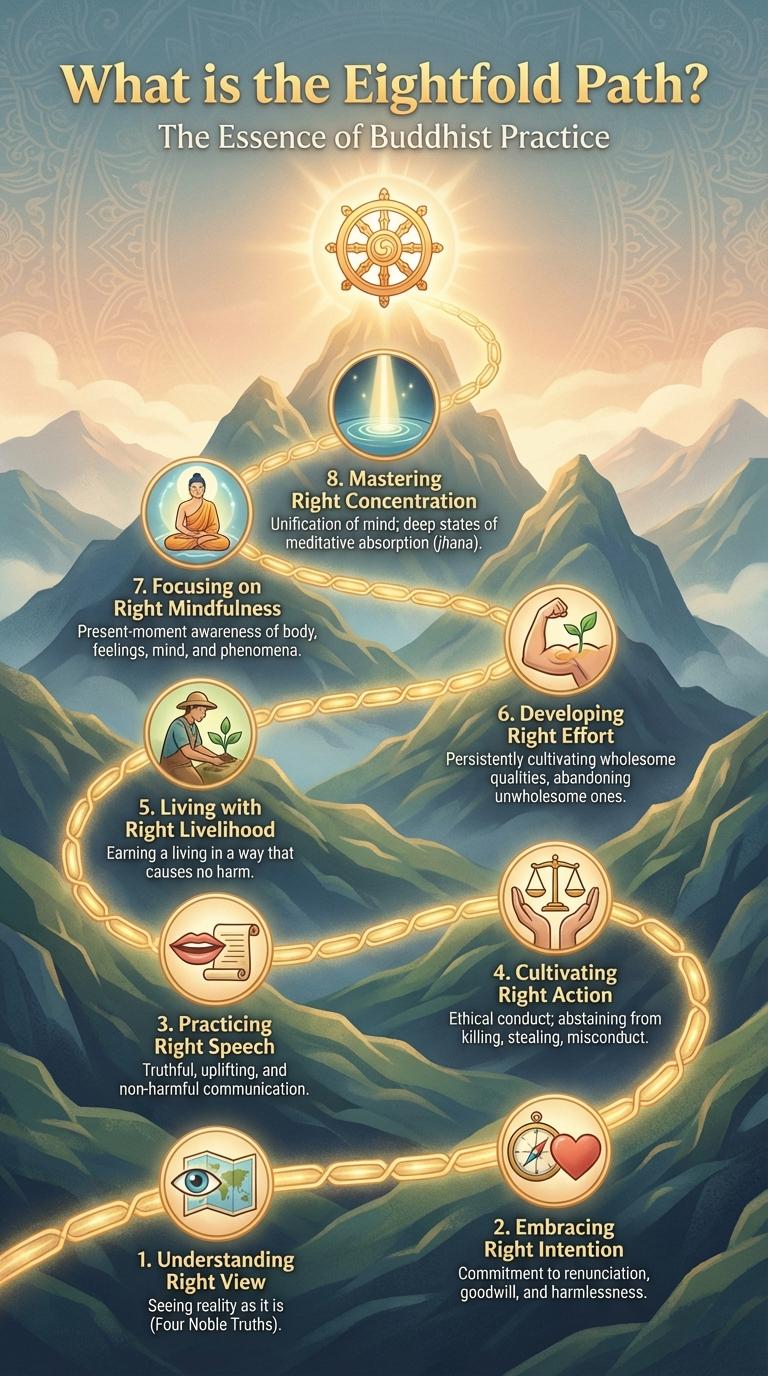
The Eightfold Path outlines practical steps to achieve enlightenment and end suffering in Buddhist practice. It emphasizes cultivating right understanding, intention, speech, action, livelihood, effort, mindfulness, and concentration. Each element guides ethical conduct, mental discipline, and wisdom for spiritual growth.
What is the Eightfold Path?
The Eightfold Path is a core teaching in Buddhism that guides individuals toward enlightenment and the cessation of suffering. It consists of eight interrelated practices that cultivate ethical conduct, mental discipline, and wisdom.
The path is divided into three main categories: Wisdom (Right View, Right Intention), Ethical Conduct (Right Speech, Right Action, Right Livelihood), and Mental Discipline (Right Effort, Right Mindfulness, Right Concentration). Following these principles helps individuals overcome ignorance, attachment, and desire. Practicing the Eightfold Path leads to personal transformation and ultimate liberation (Nirvana).
The Essence of Buddhist Practice
The Eightfold Path represents the core of Buddhist practice, guiding individuals toward enlightenment and liberation from suffering. It is composed of eight interconnected principles that cultivate wisdom, ethical conduct, and mental discipline. Following this path fosters spiritual growth and a balanced, mindful life.
Understanding Right View
The Eightfold Path is a fundamental guide in Buddhism for ethical and mental development leading to enlightenment. Right View, the first step, involves understanding the nature of reality and the truths of suffering, impermanence, and non-self.
Right View helps individuals recognize the causes of suffering and the path to its cessation. Cultivating this perspective lays the foundation for wisdom and compassionate living.
Embracing Right Intention
The Eightfold Path is a fundamental guide in Buddhism leading to the cessation of suffering and the attainment of enlightenment. Embracing Right Intention involves cultivating thoughts of renunciation, goodwill, and harmlessness.
Right Intention shapes ethical conduct and mental discipline by redirecting the mind away from desire, ill will, and cruelty. Practicing Right Intention supports mindfulness and compassion, essential for spiritual growth and inner peace.
Practicing Right Speech
| Aspect | Details |
|---|---|
| Definition | Right Speech involves speaking truthfully, avoiding lying, slander, and harmful words. |
| Purpose | To promote harmony, reduce conflict, and foster trust in relationships. |
| Key Practices | Speaking honestly, kindly, thoughtfully, and refraining from gossip or harsh criticism. |
| Benefits | Improves communication, cultivates compassion, and supports personal integrity. |
| Buddhist Context | Right Speech is one element of the Noble Eightfold Path guiding ethical conduct. |
Cultivating Right Action
The Eightfold Path is a core teaching in Buddhism that guides ethical and mental development. Cultivating Right Action involves behaving morally by avoiding harm, stealing, and sexual misconduct. Practicing Right Action supports harmony, trust, and spiritual progress on the path to enlightenment.
Living with Right Livelihood
The Eightfold Path in Buddhism guides ethical and mindful living, with Right Livelihood emphasizing honesty and responsibility in one's work. Choosing occupations that do not harm others fosters inner peace and societal harmony.
- Non-harmful Income - Earning through professions that avoid causing suffering to living beings aligns with Right Livelihood.
- Ethical Career Choices - Selecting jobs that promote honesty, fairness, and respect nurtures personal integrity and community trust.
- Mindful Work Practices - Engaging thoughtfully and responsibly in daily work supports spiritual growth and societal wellbeing.
Developing Right Effort
Developing Right Effort is a crucial step in the Buddhist Eightfold Path, focusing on cultivating positive mental states. It encourages consistent effort to abandon harmful thoughts and promote wholesome qualities.
- Preventing Unwholesome States - Right Effort involves actively avoiding thoughts and actions that cause suffering or harm.
- Abandoning Unwholesome States - It requires recognizing and letting go of negative mental patterns already present.
- Developing Wholesome States - The practice emphasizes nurturing positive qualities like kindness, compassion, and mindfulness.
Consistent application of Right Effort leads to mental clarity, ethical conduct, and spiritual growth.
Focusing on Right Mindfulness
What is Right Mindfulness in the Eightfold Path? Right Mindfulness involves maintaining a clear awareness of thoughts, feelings, and sensations in the present moment. This practice helps cultivate mental clarity and emotional balance.
How does Right Mindfulness improve daily life? It promotes conscious awareness, reducing stress and impulsive reactions. Mindful living enhances concentration and supports ethical behavior.