
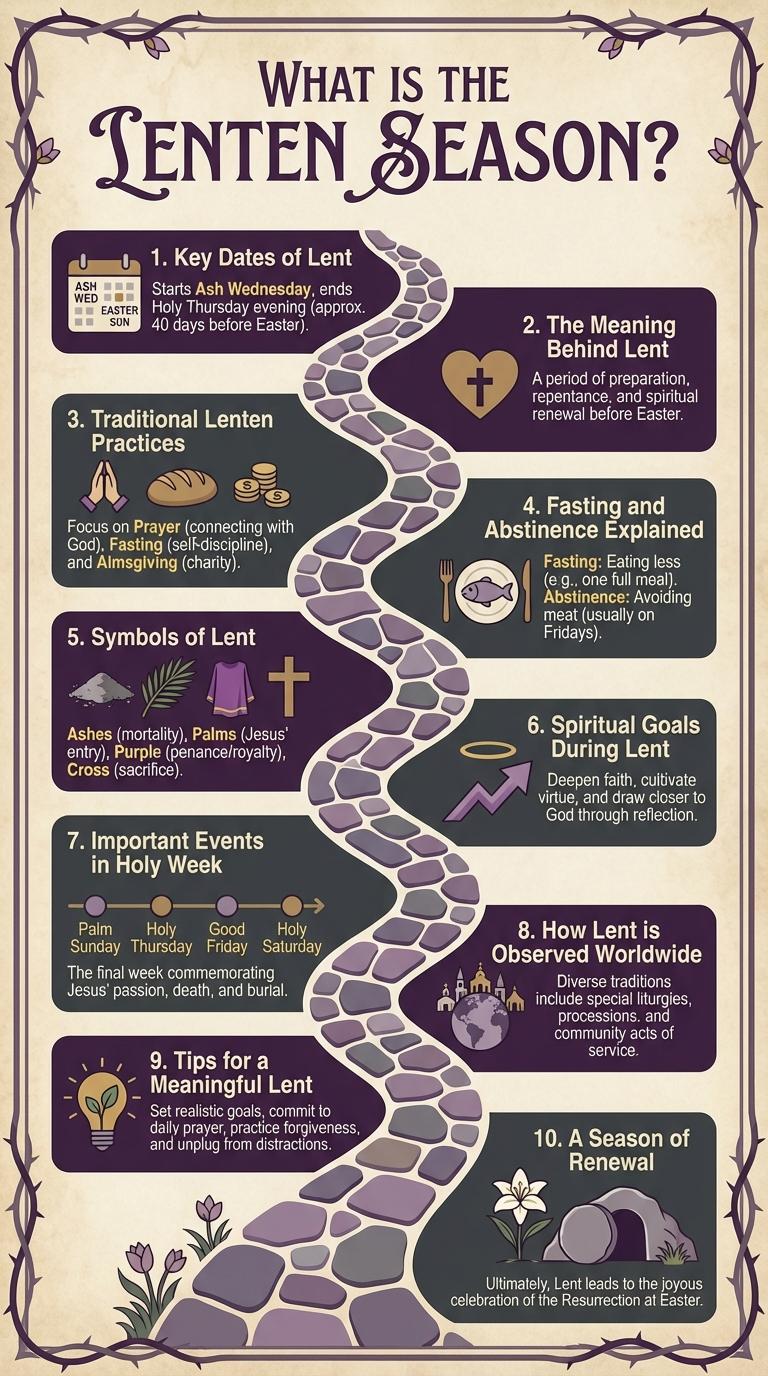
The Lenten season is a significant period of reflection, fasting, and spiritual growth observed by millions worldwide. Infographics provide a clear and engaging way to understand its key practices, important dates, and symbolic meanings. Visualizing these elements helps deepen appreciation for the traditions and themes of repentance, sacrifice, and renewal.
What is the Lenten Season?
The Lenten Season is a 40-day period of fasting, prayer, and penance observed by Christians leading up to Easter. It commemorates the 40 days Jesus spent fasting in the desert, preparing for his ministry. This season encourages spiritual reflection, repentance, and renewal.
Key Dates of Lent
The Lenten season is a significant period in the Christian liturgical calendar characterized by fasting, prayer, and repentance. It spans 40 days, symbolizing the time Jesus spent fasting in the desert.
- Ash Wednesday - Marks the beginning of Lent with a service where ashes are placed on the forehead as a sign of repentance.
- Palm Sunday - Commemorates Jesus' triumphant entry into Jerusalem, initiating Holy Week.
- Maundy Thursday - Observes the Last Supper Jesus shared with his disciples before his crucifixion.
- Good Friday - Remembers the crucifixion and death of Jesus Christ, a day of solemn reflection.
- Easter Sunday - Celebrates the resurrection of Jesus, marking the end of Lent and the beginning of Eastertide.
The Meaning Behind Lent
What is the meaning behind Lent?
Lent is a 40-day period of fasting, prayer, and repentance observed by Christians worldwide. It commemorates the 40 days Jesus spent fasting in the desert, preparing for his ministry.
Traditional Lenten Practices
The Lenten season spans 40 days, symbolizing Jesus Christ's fasting in the desert. It begins on Ash Wednesday and ends on Holy Saturday, fostering reflection and spiritual discipline.
Traditional Lenten practices include fasting, prayer, and almsgiving. Many believers abstain from certain foods, attend church services, and perform acts of charity to deepen their faith.
Fasting and Abstinence Explained
| Term | Definition |
|---|---|
| Fasting | Eating one full meal with two smaller meals that together do not equal the full meal. Typically observed on Ash Wednesday and Good Friday during Lent. |
| Abstinence | Refraining from eating meat on Ash Wednesday, Good Friday, and all Fridays of Lent. This practice symbolizes penance and spiritual discipline. |
| Purpose | Fasting and abstinence promote self-control, reflection, and repentance in preparation for Easter. |
| Who Must Observe | Adults aged 18-59 for fasting; Catholics aged 14 and older for abstinence. |
| Exceptions | Those with health issues, pregnant or nursing women, and children are typically exempt from fasting and abstinence requirements. |
Symbols of Lent
The Lenten season is marked by various symbols that represent sacrifice, reflection, and renewal. Ashes, traditionally placed on the forehead, symbolize penance and mortality during Lent. Other key symbols include the cross, representing Christ's sacrifice, and the purple color, denoting repentance and solemnity throughout the forty days.
Spiritual Goals During Lent
The Lenten season invites believers to deepen their faith and renew their commitment to spiritual growth. It spans 40 days of prayer, fasting, and reflection leading up to Easter.
- Prayer Intensification - Engage in more frequent and focused prayer to strengthen the personal connection with God.
- Fasting and Sacrifice - Practice self-discipline by giving up certain foods or habits to foster spiritual clarity and empathy.
- Acts of Charity - Increase generosity and kindness toward others to embody the principles of love and service.
These spiritual goals help believers prepare their hearts and minds for the celebration of Easter.
Important Events in Holy Week
The Lenten season is a significant period in the Christian calendar, culminating in Holy Week. This week commemorates the final days of Jesus Christ's life, leading to His resurrection.
Holy Week begins with Palm Sunday, marking Jesus' triumphant entry into Jerusalem. Maundy Thursday follows, commemorating the Last Supper and Jesus' commandment to love. Good Friday observes Jesus' crucifixion and death, a solemn day of reflection and mourning for believers.
How Lent is Observed Worldwide
The Lenten season is observed worldwide with diverse traditions reflecting cultural and religious practices. It spans 40 days, symbolizing fasting, prayer, and penance in preparation for Easter.
In many countries, Christians engage in fasting or abstaining from specific foods, emphasizing spiritual renewal. Public processions, special church services, and acts of charity are common expressions of devotion during this time.