
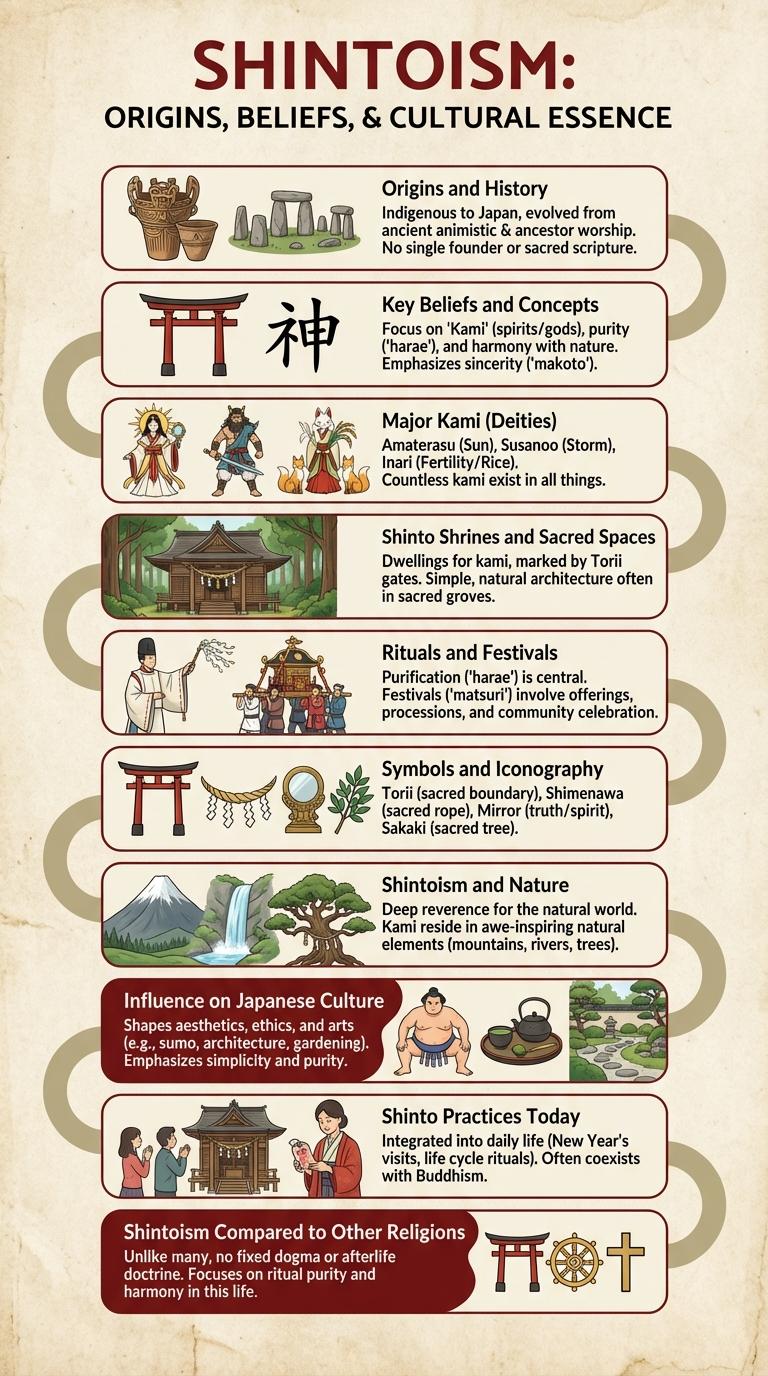
Shintoism is the indigenous spirituality of Japan, centered around kami--natural spirits and ancestors worshipped through rituals. This infographic visually explores Shinto beliefs, practices, and symbols, highlighting their cultural significance. Key elements such as shrines, purification rites, and festivals are depicted to enhance understanding of Shinto's enduring influence.
Origins and History of Shintoism
Shintoism, the indigenous spirituality of Japan, traces its origins back to prehistoric times when ancient Japanese communities practiced animism and nature worship. It evolved over centuries, assimilating local customs and beliefs, and became formalized during the Yayoi period (300 BCE-300 CE). The religion centers on kami, sacred spirits associated with natural phenomena, ancestors, and cultural sites, deeply influencing Japanese culture and identity.
Key Beliefs and Concepts
Shintoism is an ancient Japanese religion centered on kami, spirits embodying natural elements and ancestors. It emphasizes harmony with nature and rituals that honor these spiritual presences.
- Kami Worship - Kami are divine spirits residing in natural objects, places, and ancestors, revered through rituals and offerings.
- Purification - Ritual purity is essential to Shinto practice, involving cleansing ceremonies to remove spiritual impurities.
- Ancestor Reverence - Ancestors are honored as protectors and integral parts of family and community spiritual life.
Major Kami (Deities)
Shintoism centers around the worship of Kami, divine spirits that inhabit natural elements and phenomena. These Kami represent various aspects of life, nature, and ancestors, shaping the spiritual foundation of Shinto belief.
Major Kami include Amaterasu, the sun goddess and supreme deity, who symbolizes light and life. Another key Kami is Susanoo, the storm god, known for his powerful and tempestuous nature, reflecting the balance within the Shinto cosmos.
Shinto Shrines and Sacred Spaces
Shinto shrines serve as the spiritual homes for kami, the sacred spirits worshipped in Shintoism. These sites are carefully maintained as gateways between the physical and spiritual worlds.
- Torii Gates - Mark the entrance to a sacred Shinto space, symbolizing the transition from the secular to the spiritual realm.
- Main Hall (Honden) - Houses the shintai, the sacred object representing the kami, and is the most sacred part of the shrine.
- Purification Rituals - Visitors cleanse themselves at a temizuya fountain to purify body and mind before approaching the shrine.
Shinto shrines and their sacred spaces embody the deep connection between nature, spirituality, and Japanese culture.
Rituals and Festivals
Shintoism is an ancient Japanese religion centered on rituals and festivals that honor kami, or spiritual beings. These practices strengthen the connection between people, nature, and the divine throughout the year.
- Purification Rituals - Participants cleanse their bodies and minds in ceremonies called misogi to remove impurities and achieve spiritual purity.
- Matsuri Festivals - Seasonal and local festivals celebrating kami with processions, music, dance, and offerings to ensure community well-being.
- New Year Celebrations - The first shrine visit of the year, Hatsumode, involves prayers for health and prosperity in the coming year.
Symbols and Iconography
Shintoism, the indigenous spirituality of Japan, is rich in symbols and iconography that reflect its deep connection to nature and kami (spirits). Key symbols include the torii gate, which marks the entrance to sacred spaces, and the mirror, representing purity and truth.
Other prominent icons are the shimenawa, a rope made of rice straw used to ward off evil spirits, and the sakaki tree, considered sacred in Shinto rituals. These symbols embody the reverence for harmony, purity, and the presence of divine forces in everyday life.
Shintoism and Nature
Shintoism is deeply rooted in the reverence of nature, viewing natural elements like mountains, rivers, and trees as sacred. Followers believe that kami, or spirits, inhabit these natural features, fostering a spiritual connection between humans and the environment. This close relationship emphasizes purification rituals and respect for nature's cycles within Shinto practices.
Influence on Japanese Culture
| Aspect | Influence of Shintoism on Japanese Culture |
|---|---|
| Festivals | Shinto rituals form the basis of major Japanese festivals like Matsuri, celebrating nature and ancestors. |
| Architecture | Traditional shrines, seen throughout Japan, reflect Shinto's emphasis on harmony with nature and spiritual purity. |
| Art and Symbolism | Shinto-inspired motifs such as torii gates and sacred animals appear in Japanese art and crafts. |
| Social Values | Shintoism promotes community cohesion, respect for nature, and reverence for ancestors, shaping Japanese social conduct. |
| Seasonal Practices | Seasonal rituals linked to Shinto foster cultural continuity and connect people with natural cycles. |
Shinto Practices Today
What are common Shinto practices observed today? Shinto practices today emphasize rituals that honor kami, the spirits believed to inhabit natural elements and ancestors. These rituals include visits to shrines, purification ceremonies, and seasonal festivals that maintain harmony between humans and the spiritual world.
How do people participate in Shinto shrine visits? Worshippers typically cleanse their hands and mouth at a purification fountain before approaching the main hall of the shrine. Offering prayers, making donations, and ringing bells are common practices to show respect and seek blessings from the kami.
Why are seasonal festivals important in Shintoism? Seasonal festivals, or matsuri, celebrate agricultural cycles, changes in nature, and historical events tied to a shrine's kami. These festivals often feature processions, traditional music, dances, and communal activities that strengthen social bonds and spiritual connection.
What role does purification play in Shinto today? Purification, or misogi, serves to cleanse both the body and mind of impurities believed to disrupt one's connection with the kami. Ritual cleansing practices are performed before prayers or important ceremonies to restore spiritual purity and invite divine favor.
How has Shinto adapted to modern society? Modern Shinto continues to preserve its ancient customs while embracing contemporary life by integrating shrine visits into personal milestones like weddings or New Year celebrations. Technology and tourism have also increased public awareness and accessibility to Shinto traditions worldwide.