
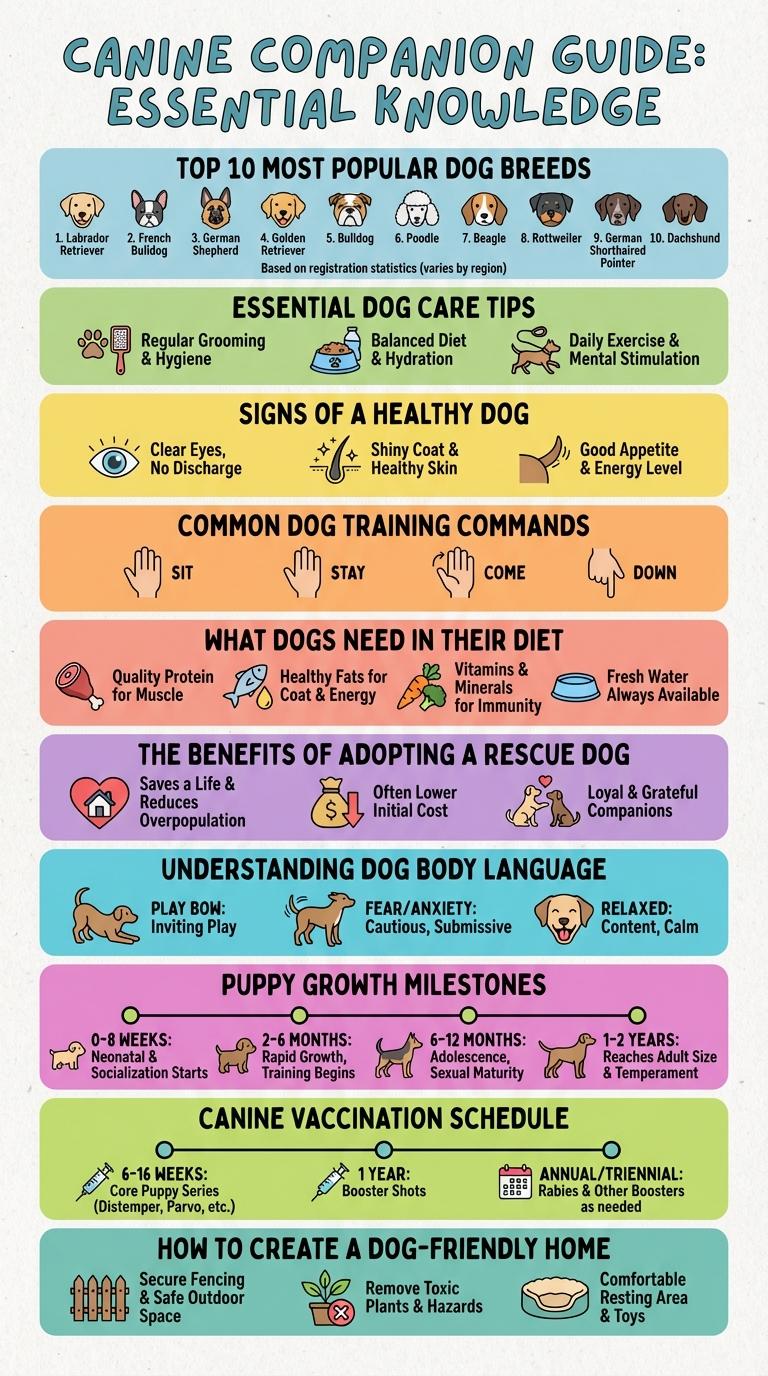
Dogs have captured human hearts for centuries as loyal companions and beloved pets. Infographics present detailed insights into dog breeds, behaviors, and care tips, making complex information easy to understand. Visual data highlights essential facts, helping dog owners enhance their knowledge and improve pet wellbeing.
Top 10 Most Popular Dog Breeds
Dogs are among the most beloved pets worldwide, known for their loyalty and companionship. Various breeds cater to different lifestyles, from energetic working dogs to gentle lapdogs.
The top 10 most popular dog breeds reflect diverse characteristics and temperaments. Labrador Retrievers consistently rank first due to their friendly nature and intelligence. French Bulldogs, German Shepherds, and Golden Retrievers follow, each offering unique traits suited for families, protection, or therapy roles.
Essential Dog Care Tips
Proper dog care ensures a happy, healthy pet with a long life. Understanding essential dog care tips prevents common health issues and behavioral problems.
- Nutrition - Feed your dog a balanced diet tailored to their age, size, and breed to support overall health.
- Exercise - Provide daily physical activity to maintain a healthy weight and stimulate your dog's mind.
- Regular Vet Visits - Schedule routine check-ups and vaccinations to detect and prevent illnesses early.
Consistent grooming and socialization are also critical components of responsible dog care.
Signs of a Healthy Dog
Recognizing the signs of a healthy dog is essential for every pet owner. Key indicators include a shiny coat, clear eyes, and consistent energy levels.
A healthy dog maintains a steady appetite and regular bowel movements. Observing these signs helps ensure your dog's well-being and early detection of potential health issues.
Common Dog Training Commands
| Command | Description |
|---|---|
| Sit | Teaches the dog to lower its hindquarters and stay seated. |
| Stay | Instructs the dog to remain in place until released. |
| Come | Commands the dog to approach the owner promptly. |
| Down | Encourages the dog to lie down on the ground. |
| Heel | Trains the dog to walk closely beside the owner. |
What Dogs Need in Their Diet
Dogs require a balanced diet that includes proteins, fats, carbohydrates, vitamins, and minerals to maintain optimal health. High-quality protein from sources like chicken, beef, and fish supports muscle development and energy.
Essential fatty acids such as omega-3 and omega-6 promote healthy skin and a shiny coat. Carbohydrates provide energy, while vitamins and minerals support immunity and overall body function.
The Benefits of Adopting a Rescue Dog
Why should you consider adopting a rescue dog? Rescue dogs often come vaccinated and spayed or neutered, reducing initial veterinary costs. They provide a loving companionship while giving a second chance to animals in need.
Understanding Dog Body Language
Understanding dog body language is essential for building a strong and trusting relationship with your pet. Dogs communicate their feelings and intentions primarily through posture, facial expressions, and movement.
- Tail Position - A wagging tail often signals happiness, while a tucked tail indicates fear or submission.
- Ear Orientation - Ears pulled back usually show anxiety, whereas forward-facing ears suggest alertness or curiosity.
- Eye Contact - Direct eye contact can be a sign of confidence or challenge, while avoiding eyes may reflect submission or discomfort.
Puppy Growth Milestones
Puppy growth milestones indicate key stages in a dog's development, crucial for optimal health and training. From birth to 12 weeks, puppies experience rapid physical and cognitive changes. Monitoring weight, social skills, and vaccination schedules supports proper growth and wellbeing.
Canine Vaccination Schedule
Canine vaccination schedules protect dogs from contagious and potentially deadly diseases such as rabies, parvovirus, and distemper. Puppies typically begin vaccinations at 6-8 weeks old, followed by booster shots every 3-4 weeks until 16 weeks old. Annual or triennial booster vaccines maintain immunity and ensure lifelong health for adult dogs.