
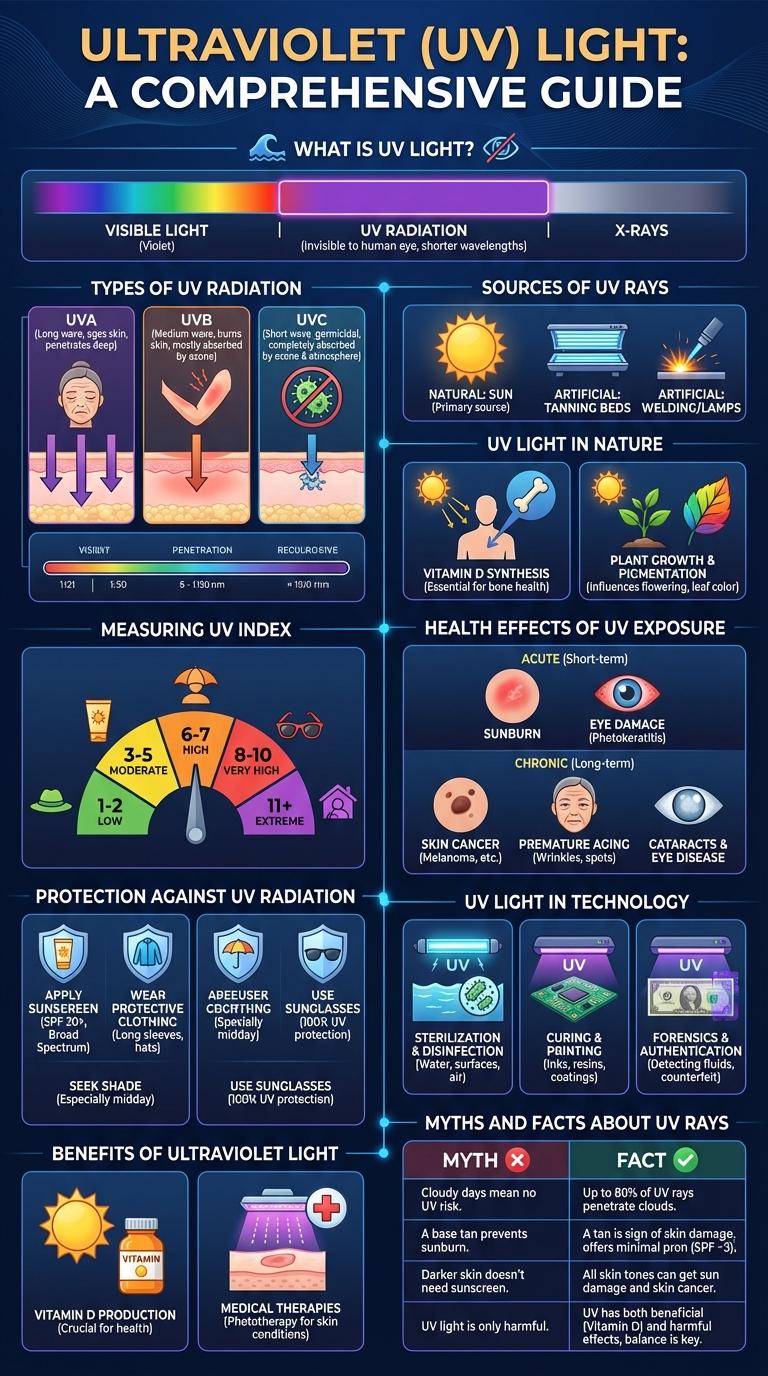
Ultraviolet (UV) light is a form of electromagnetic radiation with wavelengths shorter than visible light but longer than X-rays. It plays a crucial role in processes such as vitamin D synthesis, sterilization, and detecting fluorescent materials. Exposure to UV rays requires careful protection due to potential skin damage and eye hazards.
What is Ultraviolet (UV) Light?
Ultraviolet (UV) light is a type of electromagnetic radiation with wavelengths shorter than visible light but longer than X-rays. It is invisible to the human eye and is divided into three main categories: UVA, UVB, and UVC.
UV light is naturally emitted by the sun and plays a crucial role in producing vitamin D in the skin. Excessive exposure to UV radiation can cause skin damage, sunburn, and increase the risk of skin cancer. Artificial sources of UV light include black lights, tanning beds, and sterilization lamps.
Types of Ultraviolet Radiation
Ultraviolet (UV) radiation is classified into three main types based on wavelength: UVA, UVB, and UVC. UVA rays have the longest wavelength and penetrate deep into the skin, causing aging and long-term damage. UVB rays are shorter and responsible for sunburn and direct DNA damage, while UVC rays have the shortest wavelength but are mostly absorbed by the Earth's atmosphere and do not reach the surface.
Sources of UV Rays
Ultraviolet (UV) rays are a type of electromagnetic radiation emitted by natural and artificial sources. Understanding the main sources of UV rays helps in managing exposure and protecting skin health.
- Sunlight - The primary source of UV rays, emitting UVA, UVB, and UVC radiation with varying effects on the environment and human health.
- Tanning Beds - Artificial devices that produce concentrated UVA and UVB rays to simulate sunlight for skin tanning purposes.
- Welding Torches - Industrial tools that emit intense UV radiation during metal welding processes, requiring protective measures for safety.
UV Light in Nature
Ultraviolet (UV) light is a type of electromagnetic radiation naturally emitted by the sun. It plays a critical role in various natural processes, from aiding in the production of vitamin D in humans to influencing ecosystems.
UV light is divided into UVA, UVB, and UVC, with UVA and UVB reaching the Earth's surface. These rays affect plant growth, animal behavior, and contribute to the formation of the ozone layer.
Measuring UV Index
The Ultraviolet (UV) Index measures the strength of sunburn-producing ultraviolet radiation at a specific place and time. It helps people protect themselves from harmful UV exposure by indicating the risk level.
The UV Index ranges from 0 to 11+, with higher values representing greater risk of skin damage and sunburn.
- UV Sensors - Devices detect UV radiation intensity to calculate the current UV Index.
- Satellite Data - Satellites monitor atmospheric ozone and solar radiation to estimate UV levels globally.
- Risk Scale - The index assigns numeric values categorized as low, moderate, high, very high, and extreme risk for effective public guidance.
Health Effects of UV Exposure
Ultraviolet (UV) radiation from the sun affects human health in various ways. Understanding the health effects of UV exposure can help in taking appropriate protective measures.
- Skin Cancer Risk - Prolonged UV exposure increases the risk of melanoma and non-melanoma skin cancers.
- Eye Damage - UV rays can cause cataracts and photokeratitis, leading to impaired vision.
- Immune System Suppression - Excessive UV exposure can weaken the immune system, reducing the body's ability to fight infections.
Protecting skin and eyes from UV radiation is essential to reduce these adverse health effects.
Protection Against UV Radiation
Ultraviolet (UV) radiation from the sun can cause skin damage and increase the risk of skin cancer. Using broad-spectrum sunscreen with an SPF of 30 or higher effectively blocks UVA and UVB rays. Wearing protective clothing, sunglasses with UV protection, and seeking shade during peak sun hours enhances defense against harmful UV exposure.
UV Light in Technology
What role does ultraviolet (UV) light play in modern technology? UV light is essential in various technological applications, from sterilization to data storage. Its unique wavelengths enable precise and efficient processes that other light types cannot achieve.
| Technology | UV Light Application |
|---|---|
| Sterilization | UV-C light destroys bacteria and viruses on surfaces and air. |
| Data Storage | UV lasers read/write high-density optical media like Blu-ray discs. |
| Water Treatment | UV light purifies water by inactivating harmful microorganisms. |
| Medical Imaging | UV fluorescence highlights biological tissues for diagnostics. |
| Material Curing | UV light rapidly hardens adhesives and coatings in manufacturing. |
Benefits of Ultraviolet Light
Ultraviolet (UV) light plays a crucial role in disinfection by effectively killing bacteria and viruses on surfaces and in the air. It is widely used in medical and water purification systems to ensure safer environments.
UV light promotes the production of vitamin D in the skin, essential for bone health and immune system function. Exposure to moderate UV light helps improve mood and supports overall well-being.