
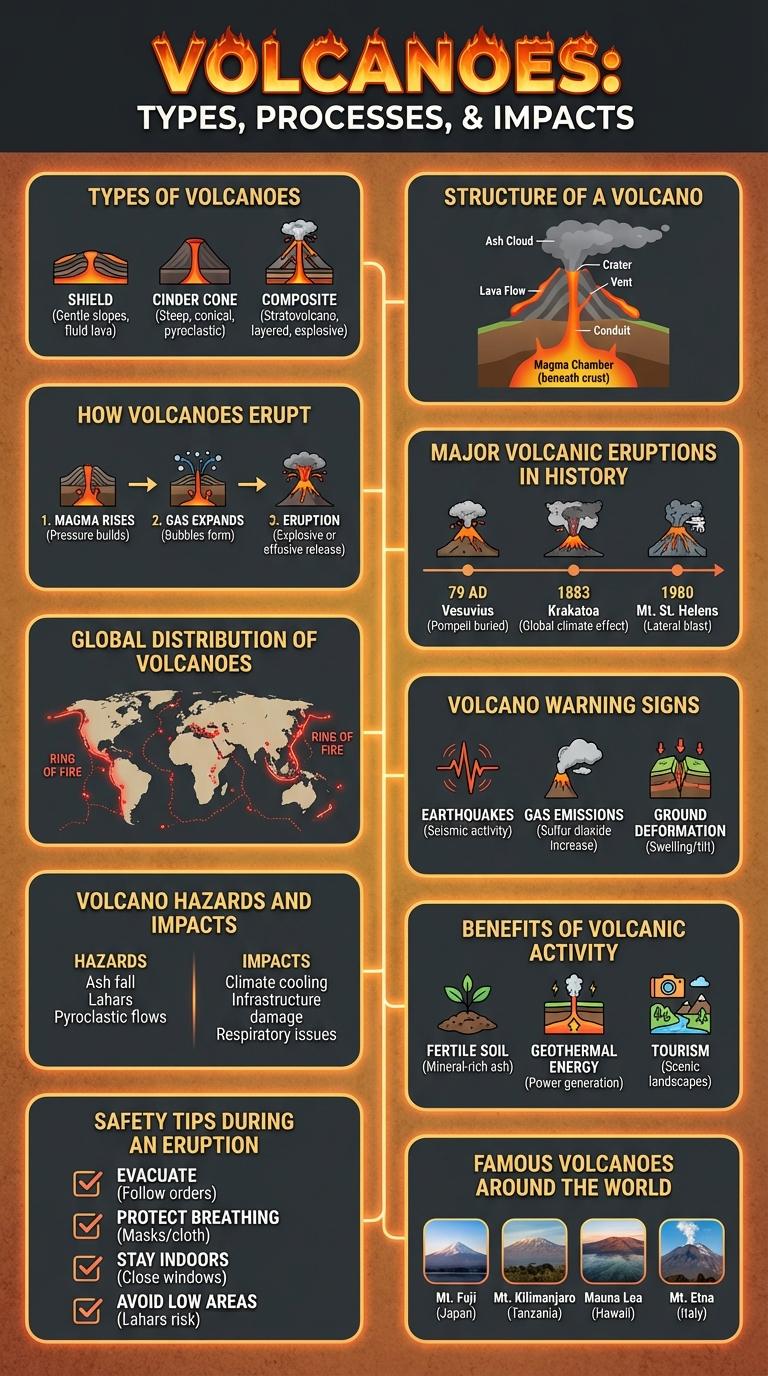
Volcanoes are powerful natural formations shaped by the movement of molten rock beneath the Earth's surface. Infographics effectively illustrate the structure, types, and eruption processes of volcanoes, making complex geological concepts easier to understand. Visual representations highlight key facts and data, offering a clear overview of volcanic activity and its impact on the environment.
Types of Volcanoes
Volcanoes form when magma from beneath the Earth's crust reaches the surface. Different types of volcanoes vary in shape, size, and eruption style.
Shield volcanoes have broad, gentle slopes formed by low-viscosity lava flows. Stratovolcanoes, also known as composite volcanoes, feature steep profiles and explosive eruptions. Cinder cones are small, steep-sided volcanoes built from ash and volcanic debris.
Structure of a Volcano
Volcanoes have a complex structure consisting of a magma chamber, a conduit, and a crater. The magma chamber stores molten rock beneath the surface, which rises through the conduit during eruptions. The crater is the opening at the top where lava, ash, and gases escape into the atmosphere.
How Volcanoes Erupt
How do volcanoes erupt? Volcanoes erupt when magma from beneath the Earth's crust rises through cracks and reaches the surface. Pressure builds up from trapped gases within the magma, eventually causing an explosive release.
Major Volcanic Eruptions in History
Volcanic eruptions have shaped Earth's landscape and influenced human history through their power and devastation. Major eruptions like Mount Vesuvius in 79 AD, Krakatoa in 1883, and Mount St. Helens in 1980 released immense energy, causing widespread destruction and climate effects. These events remain critical for understanding volcanic activity and improving disaster preparedness worldwide.
Global Distribution of Volcanoes
Volcanoes are unevenly distributed across the Earth's surface, primarily concentrated along tectonic plate boundaries. Understanding the global distribution helps predict volcanic activity and assess related risks.
- Ring of Fire - The Pacific Ring of Fire contains about 75% of the world's active and dormant volcanoes, encircling the Pacific Ocean basin.
- Mid-Ocean Ridges - Underwater volcanic activity is common along mid-ocean ridges, where tectonic plates diverge and new crust forms.
- Hot Spots - Volcanic hotspots like Hawaii are located away from plate boundaries, caused by mantle plumes rising beneath the Earth's crust.
Volcano Warning Signs
Volcanoes often show warning signs before an eruption, helping scientists predict potential activity. Common signals include increased seismic activity and ground deformation around the volcano.
Gas emissions, such as sulfur dioxide, tend to rise before an eruption, indicating magma movement beneath the surface. Thermal changes like rising temperatures in surrounding soil and water are also key warning signs.
Volcano Hazards and Impacts
Volcano hazards include lava flows, ash fall, pyroclastic flows, and volcanic gases, which pose significant risks to human life and infrastructure. These hazards can lead to widespread environmental damage and long-term economic impacts.
Volcanic eruptions can disrupt air travel, contaminate water supplies, and cause respiratory problems due to ash inhalation. Understanding these hazards is crucial for disaster preparedness and risk mitigation in volcanic regions.
Benefits of Volcanic Activity
Volcanic activity plays a crucial role in shaping Earth's landscape and supporting ecosystems. It contributes essential nutrients to the soil and influences climate regulation.
- Fertile Soil - Volcanic ash enriches soil with minerals, promoting agricultural productivity and diverse plant growth.
- Geothermal Energy - Heat from volcanic activity provides a sustainable source of clean energy for power generation.
- New Land Formation - Lava flows create new landmasses and islands, expanding habitats and geological diversity.
Safety Tips During an Eruption
| Safety Tip | Description |
|---|---|
| Evacuate Early | Follow official evacuation orders immediately to avoid hazards from lava and ash. |
| Wear Protective Gear | Use masks to prevent inhaling ash and goggles to protect eyes from debris. |
| Stay Indoors | Remain inside a sturdy building to avoid falling ash and toxic gases. |
| Prepare Emergency Kit | Include water, food, flashlights, batteries, and first aid supplies. |
| Avoid River Valleys | Stay away from valleys and low areas prone to lava flows and lahars (mudflows). |