
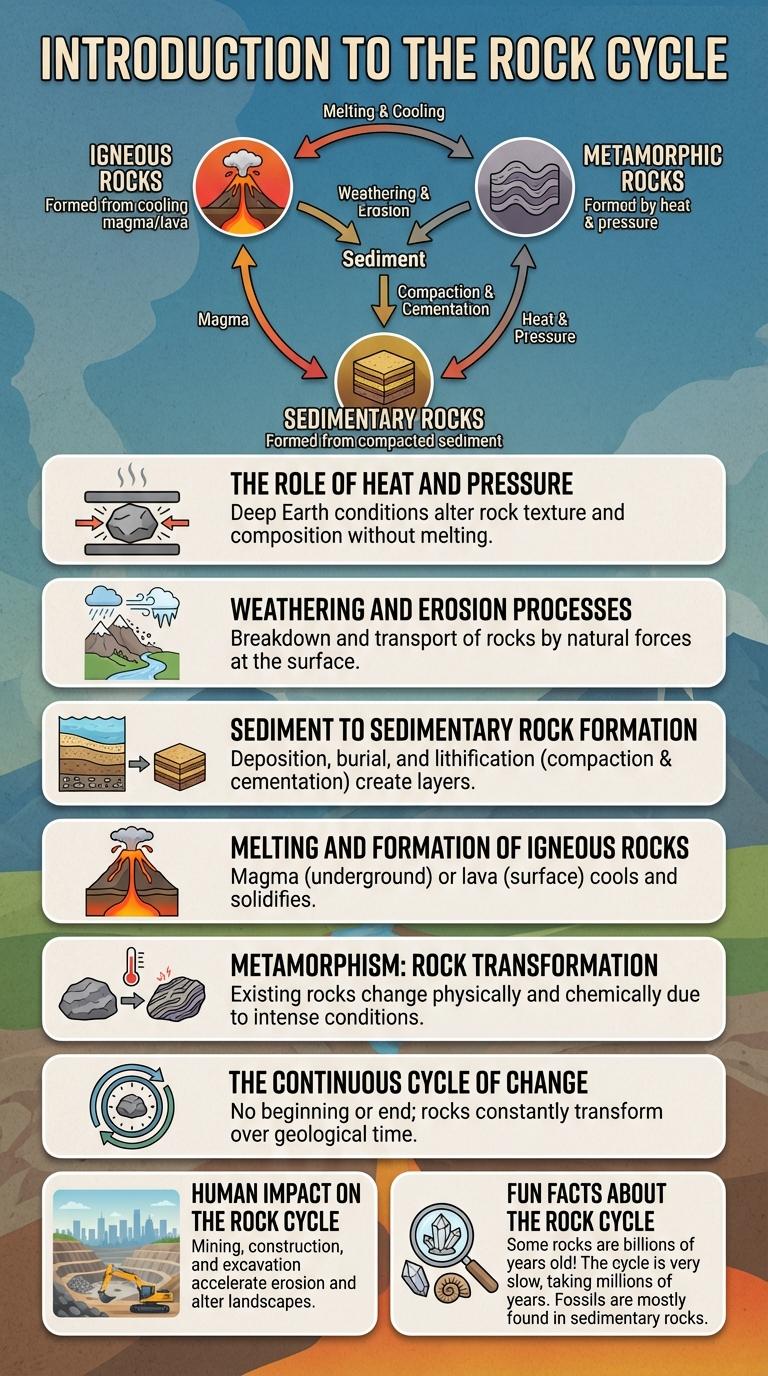
The rock cycle illustrates the continuous transformation of rocks through processes such as melting, cooling, erosion, and pressure. This infographic visually breaks down each stage, including the formation of igneous, sedimentary, and metamorphic rocks. Understanding the rock cycle reveals how Earth's materials recycle and shape the planet's surface over time.
Introduction to the Rock Cycle
The rock cycle is a continuous process that describes the transformation of rocks through various geological stages. It involves three main rock types: igneous, sedimentary, and metamorphic. This cycle explains how rocks change form due to factors like heat, pressure, and erosion.
Types of Rocks: Igneous, Sedimentary, Metamorphic
What are the main types of rocks in the rock cycle? Rocks in the rock cycle are categorized into three primary types: igneous, sedimentary, and metamorphic. Each type forms through distinct geological processes, shaping Earth's surface and interior.
How is igneous rock formed? Igneous rocks originate from the cooling and solidification of molten magma or lava. This process results in rocks like granite and basalt with crystalline textures.
What defines sedimentary rocks? Sedimentary rocks form from the accumulation and compaction of mineral and organic particles over time. Common examples include sandstone, limestone, and shale, often containing fossils.
How do metamorphic rocks develop? Metamorphic rocks arise from existing rocks subjected to intense heat and pressure causing physical and chemical changes. Marble and slate are typical metamorphic rocks produced through this transformation.
| Rock Type | Formation Process |
|---|---|
| Igneous | Cooling and solidification of magma/lava |
| Sedimentary | Compaction and cementation of sediments |
| Metamorphic | Alteration by heat and pressure |
The Role of Heat and Pressure
| Stage | Role of Heat and Pressure |
|---|---|
| Igneous Rocks | Heat from magma cools and solidifies to form igneous rocks. |
| Sedimentary Rocks | Compaction due to pressure consolidates sediments into sedimentary rocks. |
| Metamorphic Rocks | High heat and pressure transform existing rocks into metamorphic rocks without melting. |
| Magma Formation | Intense heat melts rocks into magma, restarting the cycle. |
| Overall Cycle Impact | Heat and pressure drive transformations shaping rock types and enabling the rock cycle's continuous nature. |
Weathering and Erosion Processes
Weathering is the natural breakdown of rocks into smaller particles through physical, chemical, or biological means. Erosion transports these particles away from their original location, shaping landscapes and contributing to sediment formation.
Mechanical weathering includes processes like freeze-thaw cycles and abrasion, which physically fragment rocks. Chemical weathering alters the mineral composition of rocks through reactions with water, oxygen, and acids, accelerating erosion.
Sediment to Sedimentary Rock Formation
The rock cycle illustrates the transformation of Earth's materials through various processes. Sediment plays a crucial role as the starting point for sedimentary rock formation.
Sediments are small particles of rock, mineral, and organic material deposited by wind, water, or ice. Over time, these sediments accumulate in layers and experience compaction and cementation, forming sedimentary rocks.
Melting and Formation of Igneous Rocks
The rock cycle involves continuous processes that transform rocks from one type to another. Melting plays a crucial role in forming igneous rocks from molten material beneath the Earth's surface.
- Melting of Rocks - Intense heat causes existing rocks to melt into magma deep within the Earth's mantle or crust.
- Magma Cooling - Magma cools and solidifies either beneath the surface or after erupting as lava, forming igneous rocks.
- Igneous Rock Types - Intrusive igneous rocks form from slow cooling beneath the surface; extrusive igneous rocks form from rapid cooling on the surface.
Understanding melting and solidification processes is essential to grasp the origin of igneous rocks in the rock cycle.
Metamorphism: Rock Transformation
Metamorphism is a key process in the rock cycle where existing rocks undergo physical and chemical changes due to intense heat and pressure. This transformation results in the formation of metamorphic rocks with new textures and mineral compositions.
Heat and pressure cause minerals in rocks to recrystallize without melting, leading to structural changes. Metamorphism can occur deep within Earth's crust, altering igneous, sedimentary, or older metamorphic rocks.
- Heat - Elevated temperatures facilitate mineral realignment and recrystallization during metamorphism.
- Pressure - Intense pressure from tectonic forces compacts and deforms rocks, driving mineral changes.
- Metamorphic Rocks - Examples include schist, gneiss, and marble, formed through varying degrees of metamorphism.
The Continuous Cycle of Change
The rock cycle illustrates the continuous transformation of rocks through various geological processes. It connects the three main rock types: igneous, sedimentary, and metamorphic.
Igneous rocks form from cooled magma or lava, which can break down into sediments. These sediments compact and cement into sedimentary rocks. Heat and pressure then transform these rocks into metamorphic rocks, which may melt back into magma, completing the cycle.
Human Impact on the Rock Cycle
The rock cycle is a natural process involving the formation, breakdown, and reformation of rocks through geological forces. Human activities such as mining, deforestation, and construction accelerate erosion and sediment displacement, disrupting this cycle. Pollution and climate change further affect weathering rates and rock formation, altering the balance of the rock cycle.