
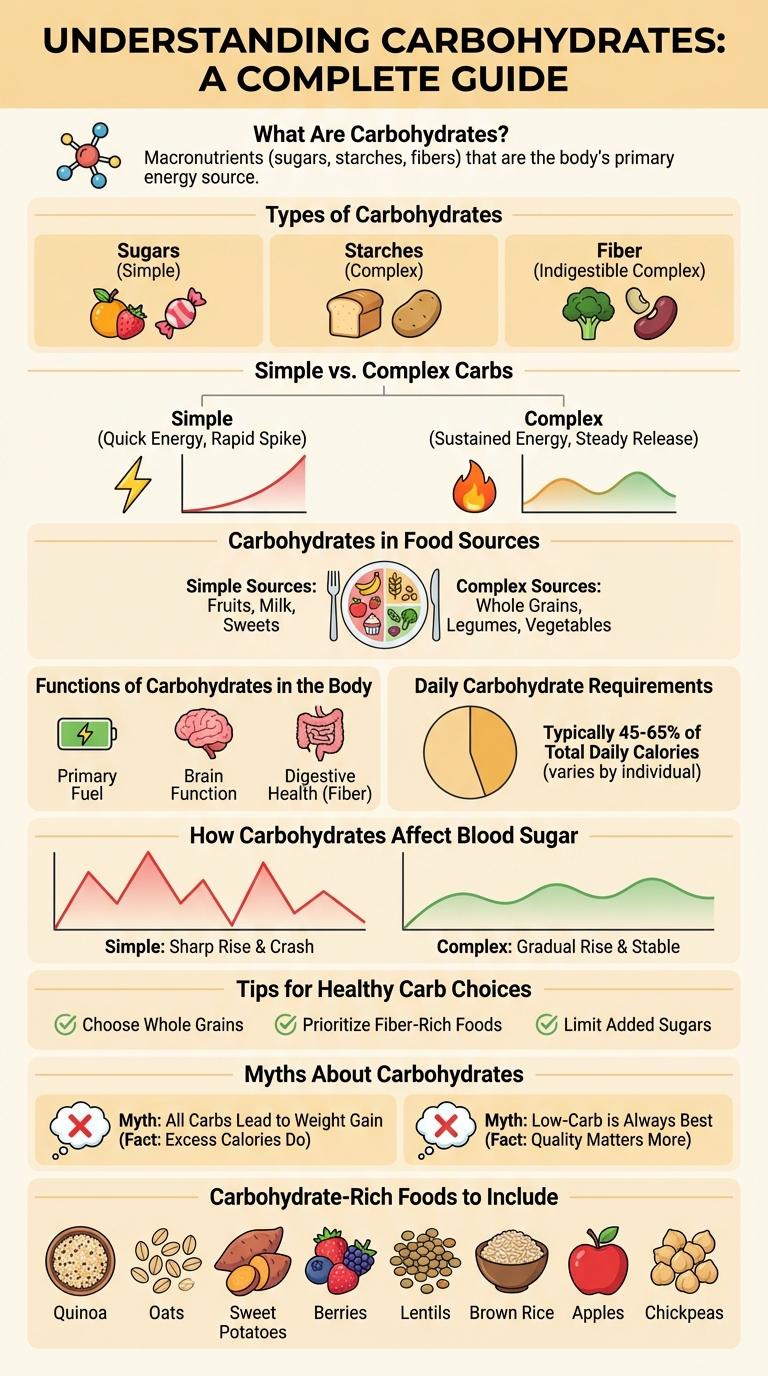
Carbohydrates are essential macronutrients that provide the body with a primary source of energy. They are found in a variety of foods, including grains, fruits, and vegetables, and play a crucial role in maintaining overall health. Understanding the different types and functions of carbohydrates helps in making informed dietary choices for balanced nutrition.
What Are Carbohydrates?
Carbohydrates are organic compounds made of carbon, hydrogen, and oxygen atoms. They serve as the body's primary source of energy, fueling vital functions and physical activity. Common types of carbohydrates include sugars, starches, and fiber found in various foods.
Types of Carbohydrates
Carbohydrates are essential nutrients that provide energy for the body. They are categorized into simple and complex carbohydrates based on their chemical structure.
Simple carbohydrates include sugars like glucose, fructose, and sucrose, which are quickly absorbed by the body. Complex carbohydrates consist of starches and fibers found in whole grains, vegetables, and legumes, offering slower, sustained energy release.
Simple vs. Complex Carbs
Carbohydrates are essential nutrients that provide energy to the body. They are classified into two main types: simple and complex carbs.
- Simple Carbohydrates - Composed of one or two sugar molecules, simple carbs provide quick energy.
- Complex Carbohydrates - Made of multiple sugar units linked together, complex carbs release energy slowly.
- Sources - Simple carbs are found in fruits, milk, and sugar, while complex carbs are abundant in whole grains, vegetables, and legumes.
Carbohydrates in Food Sources
Carbohydrates are a primary source of energy found in a variety of foods. They are classified into simple and complex carbohydrates based on their chemical structure.
Simple carbohydrates are present in fruits, milk, and sugar, providing quick energy. Complex carbohydrates, found in whole grains, vegetables, and legumes, offer sustained energy and dietary fiber. Choosing whole food sources helps maintain blood sugar levels and supports digestive health.
Functions of Carbohydrates in the Body
Carbohydrates are the body's primary source of energy, providing fuel for cellular functions and physical activity. They are broken down into glucose, which is used by cells to generate ATP, the energy currency of the body.
Beyond energy, carbohydrates play a crucial role in maintaining digestive health through dietary fiber. Fiber aids in bowel regularity and supports a healthy gut microbiome, which is essential for overall wellness.
Daily Carbohydrate Requirements
| Age Group | Recommended Carbohydrate Intake (grams/day) |
|---|---|
| Children (4-8 years) | 130 g |
| Adolescents (9-18 years) | 130-260 g |
| Adult Women | 130-225 g |
| Adult Men | 130-325 g |
| Pregnant & Lactating Women | 175-210 g |
How Carbohydrates Affect Blood Sugar
Carbohydrates are a primary source of energy and have a direct impact on blood sugar levels. Understanding how different types of carbohydrates affect glucose can help manage energy and health.
- Simple Carbohydrates - Quickly absorbed, causing rapid spikes in blood sugar levels.
- Complex Carbohydrates - Digested slowly, leading to gradual increases in blood sugar.
- Glycemic Index - Measures how fast a carbohydrate-containing food raises blood glucose levels.
Balancing carbohydrate intake with physical activity helps maintain stable blood sugar and overall metabolic health.
Tips for Healthy Carb Choices
Choosing the right carbohydrates plays a vital role in maintaining balanced nutrition and steady energy levels. Opt for whole grains, fruits, and vegetables instead of refined sugars and processed snacks to promote better digestion and sustained fullness. Reading nutrition labels helps identify high-fiber options and avoid added sugars for healthier carb selections.
Myths About Carbohydrates
Are carbohydrates inherently fattening? Many believe that all carbohydrates lead to weight gain, but the truth depends on the type and amount consumed. Complex carbohydrates provide essential nutrients and energy without causing excess fat storage.
Do low-carb diets guarantee better health? While reducing refined carbs can improve some health markers, completely eliminating carbohydrates may result in nutrient deficiencies. Balanced intake of whole grains, fruits, and vegetables supports overall wellbeing.
Are all carbs the same in nutritional value? Carbohydrates vary greatly between simple sugars and complex fibers. Whole food sources like legumes and whole grains offer vitamins, minerals, and fiber that processed carbs lack.
Will cutting carbs improve athletic performance? Athletes require carbohydrates as the main energy source for endurance and recovery. Restricting carbs can reduce stamina and lead to fatigue during intensive training.
Is sugar from fruits just as harmful as added sugars? Natural sugars in fruits come with fiber, antioxidants, and nutrients that mitigate negative effects. Added sugars contribute to health risks when consumed in excess without nutritional benefits.