
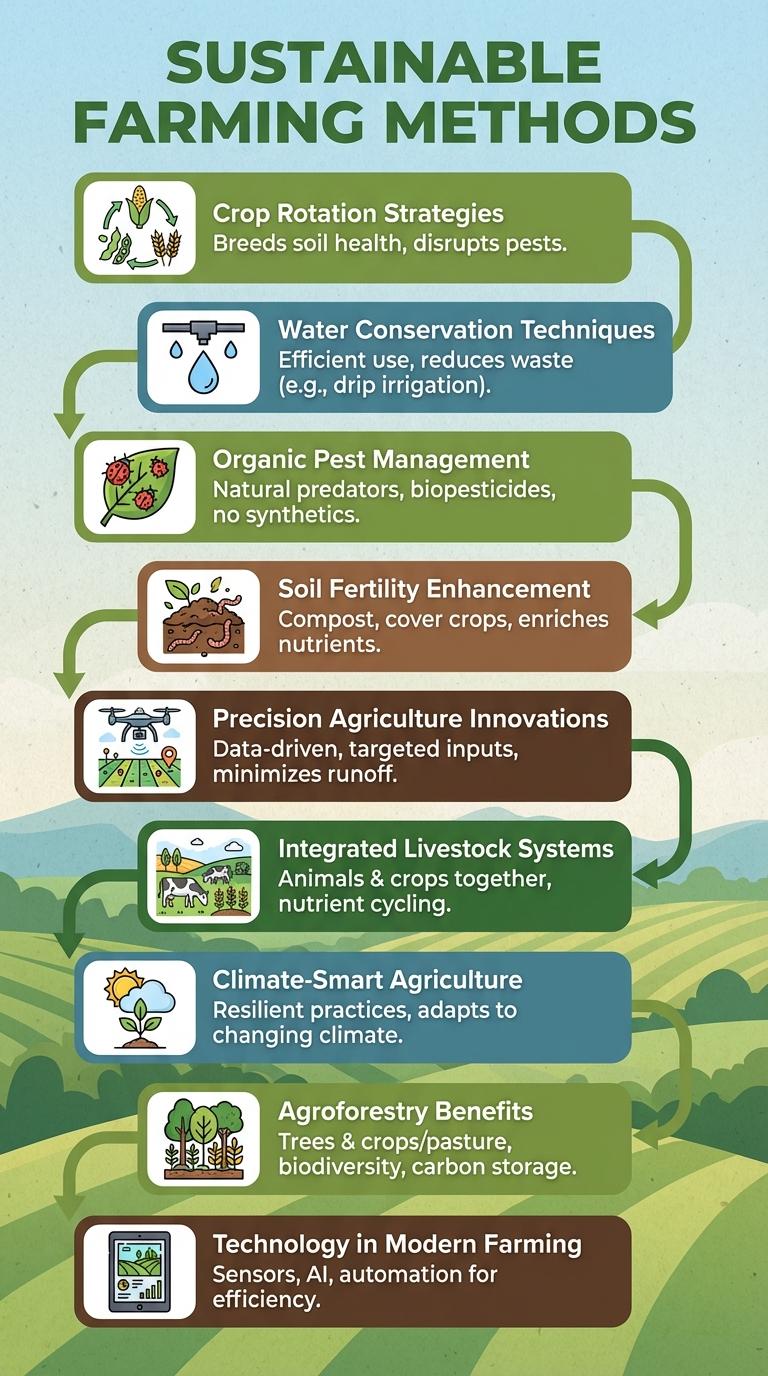
Efficient agricultural practices are essential for maximizing crop yield while preserving natural resources. Techniques such as crop rotation, sustainable irrigation, and integrated pest management enhance soil health and reduce environmental impact. This infographic highlights key methods that promote productivity and sustainability in modern farming.
Sustainable Farming Methods
Sustainable farming methods aim to enhance productivity while preserving natural resources and minimizing environmental impact. These practices support long-term agricultural health and food security.
- Crop Rotation - Alternating crops reduces soil depletion and controls pests naturally.
- Cover Cropping - Growing cover crops prevents erosion and improves soil fertility.
- Integrated Pest Management - Combining biological, cultural, and chemical tools minimizes pesticide use.
Crop Rotation Strategies
Crop rotation is a sustainable agricultural practice involving the sequential planting of different crops on the same land to enhance soil health. This method reduces pest and disease buildup while improving nutrient availability.
Common rotation strategies include alternating legumes with cereals to naturally fix nitrogen and maintain soil fertility. Implementing diverse crop sequences helps boost yields and minimizes the need for chemical fertilizers.
Water Conservation Techniques
Water conservation techniques in agriculture include drip irrigation, rainwater harvesting, and mulching, which help reduce water wastage and improve crop yield. Drip irrigation delivers water directly to plant roots, minimizing evaporation and runoff. Rainwater harvesting collects and stores rainwater for irrigation purposes, while mulching retains soil moisture and suppresses weeds.
Organic Pest Management
Soil Fertility Enhancement
Soil fertility enhancement is crucial for sustainable agricultural productivity. Improving soil health supports higher crop yields and environmental balance.
- Organic Matter Addition - Incorporating compost and manure enriches soil nutrients and improves structure.
- Crop Rotation - Alternating crops helps maintain nutrient balance and reduces pest buildup.
- Cover Cropping - Growing cover crops prevents erosion and enhances nitrogen fixation.
Effective soil fertility management leads to healthier crops and long-term farmland viability.
Precision Agriculture Innovations
Precision agriculture leverages cutting-edge technology to optimize crop yields and reduce resource waste. Innovations such as GPS-guided machinery and remote sensing enable targeted field management.
Data analytics and IoT sensors provide real-time insights into soil health, moisture levels, and crop growth. These advancements allow farmers to make informed decisions that enhance productivity and sustainability.
Integrated Livestock Systems
Integrated Livestock Systems combine crop and animal farming to enhance resource efficiency and sustainability. These systems improve soil fertility through manure recycling and promote biodiversity on farms. Farmers benefit from diversified income streams and reduced environmental impact by adopting integrated practices.
Climate-Smart Agriculture
What is Climate-Smart Agriculture (CSA)? Climate-Smart Agriculture integrates sustainable farming techniques to increase productivity, improve resilience to climate change, and reduce greenhouse gas emissions. CSA involves practices such as precision farming, agroforestry, and improved water management to enhance food security.
How does Climate-Smart Agriculture benefit farmers? CSA enhances soil health and water efficiency, leading to better crop yields under changing climatic conditions. It also helps farmers adapt to extreme weather events while minimizing environmental impacts.
Which technologies support Climate-Smart Agriculture? Technologies like remote sensing, GPS-guided equipment, and climate forecasting tools enable precise resource use and timely interventions. These innovations improve decision-making and optimize farm inputs.
What role do agroforestry and crop diversification play in CSA? Integrating trees with crops and diversifying plant species boosts biodiversity and soil fertility. These practices increase ecosystem resilience and reduce vulnerability to pests and diseases.
How does Climate-Smart Agriculture contribute to greenhouse gas reduction? CSA adopts methods such as reduced tillage, cover cropping, and efficient fertilizer use to lower emissions. These techniques promote carbon sequestration and sustainable nutrient cycles.
Agroforestry Benefits
Agroforestry integrates trees and shrubs into agricultural landscapes, enhancing ecosystem diversity and productivity. This practice supports sustainable land use while improving crop yields and soil health.
- Soil Fertility Enhancement - Trees contribute organic matter and nitrogen, enriching the soil for better crop growth.
- Biodiversity Conservation - Diverse plant species create habitats, promoting wildlife and beneficial insects.
- Climate Resilience - Agroforestry systems reduce erosion and buffer against extreme weather impacts.