
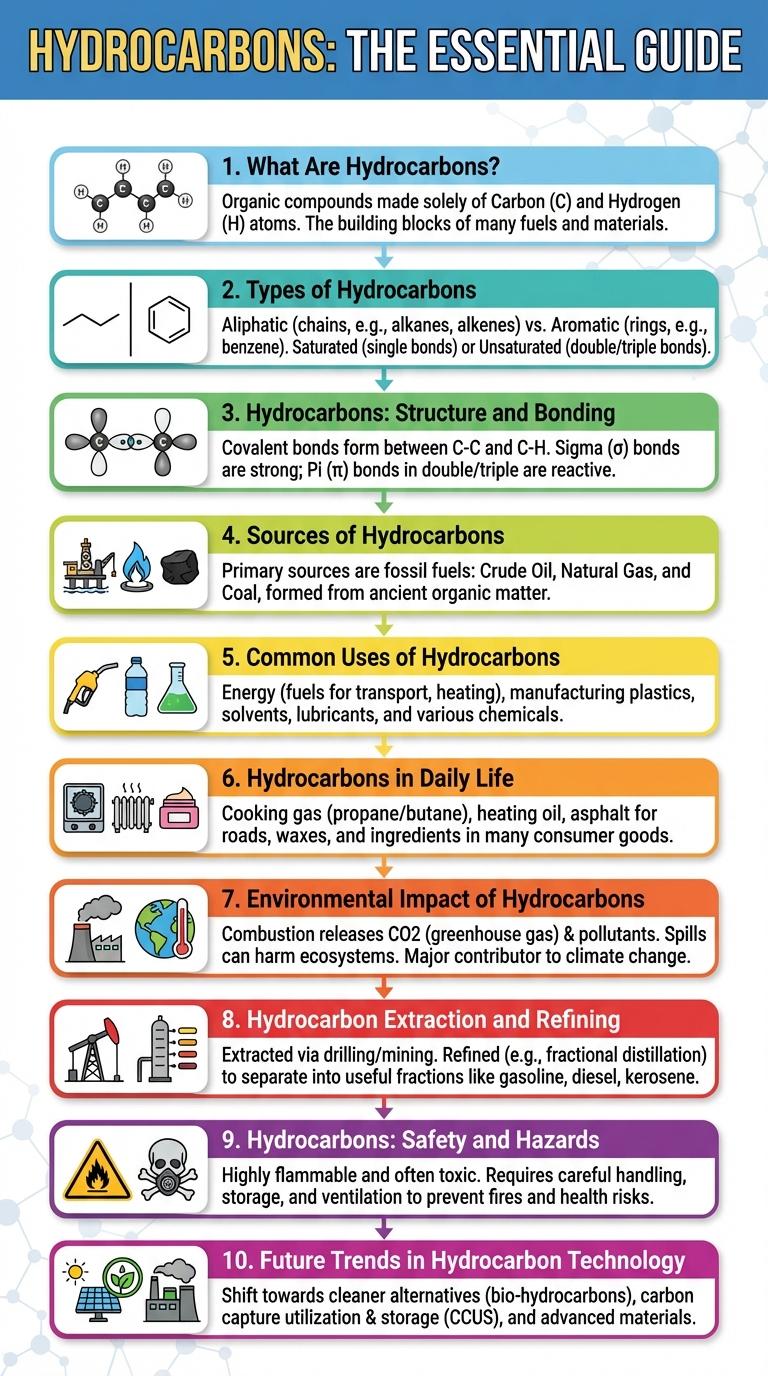
Hydrocarbons are organic compounds composed exclusively of hydrogen and carbon atoms, forming the foundation of fossil fuels and numerous industrial materials. Their structures range from simple chains to complex rings, influencing their chemical behavior and applications. Understanding hydrocarbons is essential for energy production, environmental science, and the development of synthetic materials.
What Are Hydrocarbons?
Hydrocarbons are organic compounds consisting entirely of hydrogen and carbon atoms. They serve as the primary components of fossil fuels like coal, oil, and natural gas. Hydrocarbons are classified into alkanes, alkenes, alkynes, and aromatic hydrocarbons based on the types of chemical bonds present.
Types of Hydrocarbons
Hydrocarbons are organic compounds consisting entirely of hydrogen and carbon atoms. They are primarily categorized into alkanes, alkenes, alkynes, and aromatic hydrocarbons based on their bonding structures. Each type exhibits distinct chemical properties and uses, ranging from fuels to industrial chemicals.
Hydrocarbons: Structure and Bonding
| Aspect | Description |
|---|---|
| Definition | Hydrocarbons are organic compounds composed exclusively of carbon (C) and hydrogen (H) atoms. |
| Types of Bonds | Hydrocarbons contain covalent bonds: single bonds (alkanes), double bonds (alkenes), and triple bonds (alkynes). |
| Carbon Structure | Carbon atoms form the backbone in linear, branched, or cyclic arrangements, utilizing sp3, sp2, or sp hybridization. |
| Bonding Properties | Strong C-C and C-H bonds provide hydrocarbons with stability and determine reactivity in chemical processes. |
| Significance | Hydrocarbon structures influence fuel properties, polymer production, and serve as fundamental building blocks in organic chemistry. |
Sources of Hydrocarbons
Hydrocarbons are organic compounds primarily composed of hydrogen and carbon atoms. They serve as the foundation for fuels, plastics, and other chemical products.
- Fossil Fuels - Hydrocarbons form naturally over millions of years from the decomposition of ancient marine organisms under heat and pressure.
- Natural Gas Fields - These underground reservoirs contain gaseous hydrocarbons like methane, often extracted for energy use.
- Oil Reservoirs - Liquid hydrocarbons trapped beneath the Earth's surface, used extensively in transportation and industry.
- Coal Deposits - Solid hydrocarbons created from prehistoric plant matter, used mainly for electricity generation and steel production.
- Biogenic Sources - Hydrocarbons produced by living organisms, such as methane from wetlands and landfills.
Understanding hydrocarbon sources is crucial for energy exploration, environmental management, and sustainable resource development.
Common Uses of Hydrocarbons
Hydrocarbons are organic compounds composed entirely of hydrogen and carbon atoms. They serve as the primary building blocks for many fuels and industrial materials.
Common uses of hydrocarbons include their role as fuels such as gasoline, diesel, and natural gas, which power vehicles and generate electricity. Hydrocarbons are essential in the production of plastics, synthetic fibers, and pharmaceuticals. Their versatility makes them critical in both energy and manufacturing sectors worldwide.
Hydrocarbons in Daily Life
Hydrocarbons are organic compounds made up of hydrogen and carbon atoms, essential for various daily life applications. These molecules serve as the basis for fuels, plastics, and many household products.
Understanding hydrocarbons helps in recognizing their impact on everyday activities and industries.
- Fuel Source - Hydrocarbons power vehicles, heating systems, and electricity generation through fuels like gasoline and natural gas.
- Plastic Production - Many plastics and synthetic materials originate from hydrocarbon-based polymers, essential in packaging and manufacturing.
- Household Products - Hydrocarbons are components in detergents, cosmetics, and solvents used regularly at home.
Environmental Impact of Hydrocarbons
Hydrocarbons are organic compounds made up of hydrogen and carbon atoms. Their extraction and use significantly affect the environment.
- Air Pollution - Burning hydrocarbons releases carbon dioxide and pollutants contributing to respiratory issues and climate change.
- Water Contamination - Oil spills and runoff introduce toxic substances into aquatic ecosystems, harming marine life.
- Habitat Destruction - Extraction activities lead to deforestation and soil degradation, disrupting local biodiversity.
Hydrocarbon Extraction and Refining
What are the primary methods used for hydrocarbon extraction? Hydrocarbons are mainly extracted through drilling techniques such as onshore and offshore drilling. Advanced methods include hydraulic fracturing and enhanced oil recovery to maximize extraction efficiency.
How is crude oil refined into usable products? Refining involves separating crude oil into fractions via distillation followed by chemical processing. Key outputs include gasoline, diesel, jet fuel, and petrochemical feedstocks used in various industries.
Hydrocarbons: Safety and Hazards
Hydrocarbons are organic compounds consisting entirely of hydrogen and carbon atoms, widely used as fuels and raw materials in various industries. Their flammable nature poses significant safety hazards during storage, handling, and transportation.
Exposure to hydrocarbons can lead to health risks such as respiratory issues, skin irritation, and long-term effects like cancer. Proper safety measures, including adequate ventilation, use of protective equipment, and strict adherence to regulations, are essential to minimize hazards.