
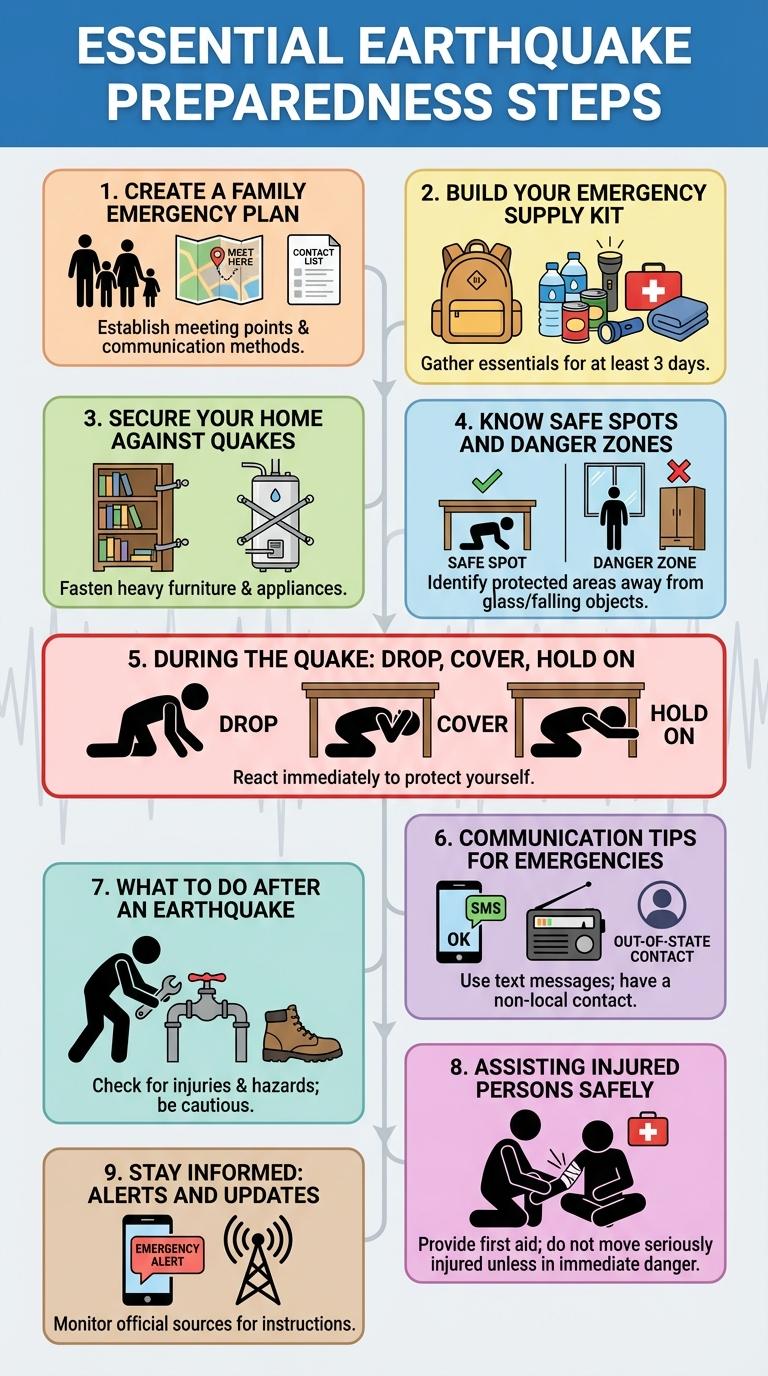
Earthquake preparedness saves lives by ensuring individuals and communities can respond quickly and effectively during a seismic event. Key steps include securing heavy furniture, creating emergency kits, and practicing evacuation plans regularly. Understanding these measures enhances safety and minimizes damage when earthquakes strike.
Essential Earthquake Preparedness Steps
Earthquake preparedness involves crucial steps to ensure safety before, during, and after an event. Understanding these essentials helps minimize damage and protect lives.
Create an emergency kit with water, food, medications, and important documents. Secure heavy furniture and identify safe spots like under sturdy tables or against interior walls.
Create a Family Emergency Plan
Creating a family emergency plan is essential for earthquake preparedness to ensure safety and clear communication during a disaster. Having a well-structured plan reduces fear and confusion, helping family members act quickly and efficiently.
- Designate Meeting Spots - Choose safe locations both near your home and outside your neighborhood where family members can reunite after an earthquake.
- Assign Emergency Contacts - Select a non-local contact person for everyone to call and check in during emergencies to confirm everyone's safety.
- Practice Drills Regularly - Conduct routine earthquake drills with your family to reinforce the emergency plan and improve response time.
Build Your Emergency Supply Kit
Building an emergency supply kit is crucial for earthquake preparedness. Include essentials such as water, non-perishable food, a flashlight, batteries, and a first aid kit to ensure safety during and after an earthquake. Regularly check and update your kit to keep supplies fresh and ready for immediate use.
Secure Your Home Against Quakes
Securing your home against earthquakes involves reinforcing walls, securing heavy furniture, and installing strong latches on cabinets to prevent injuries and damage. Anchoring large appliances and water heaters reduces the risk of fires and floods during seismic activity. Preparing your home ensures safety and minimizes potential damage when an earthquake strikes.
Know Safe Spots and Danger Zones
Identifying safe spots indoors such as under sturdy furniture or against interior walls helps protect you during an earthquake. Avoid hazards like windows, glass, heavy furniture, and exterior walls that may collapse or shatter.
Recognizing danger zones outdoors, including near power lines, tall trees, and unstable structures, reduces risk of injury. Planning evacuation routes away from these hazards ensures faster, safer escape after shaking stops.
During the Quake: Drop, Cover, Hold On
Earthquakes strike without warning, making immediate protective actions critical. Knowing how to respond during the quake can significantly reduce injury risks.
Follow the "Drop, Cover, Hold On" method for maximum safety during shaking.
- Drop - Get down on your hands and knees to prevent being knocked over.
- Cover - Protect your head and neck by taking cover under a sturdy piece of furniture or against an interior wall.
- Hold On - Firmly grasp your shelter until the shaking stops to avoid being thrown around.
Communication Tips for Emergencies
What to Do After an Earthquake
After an earthquake, check yourself and others for injuries and provide first aid if necessary. Expect aftershocks and be prepared to move to a safer location if needed.
Inspect your surroundings for hazards like gas leaks, damaged electrical wiring, or structural damage. Avoid using open flames and turn off utilities if you suspect damage. Stay informed through a battery-powered radio or mobile alerts for emergency updates.
Assisting Injured Persons Safely
How can you assist injured persons safely during an earthquake? Ensure your safety first by checking for hazards such as falling debris before approaching injured individuals. Use a sturdy object to move debris away and provide basic first aid while waiting for professional medical help.