
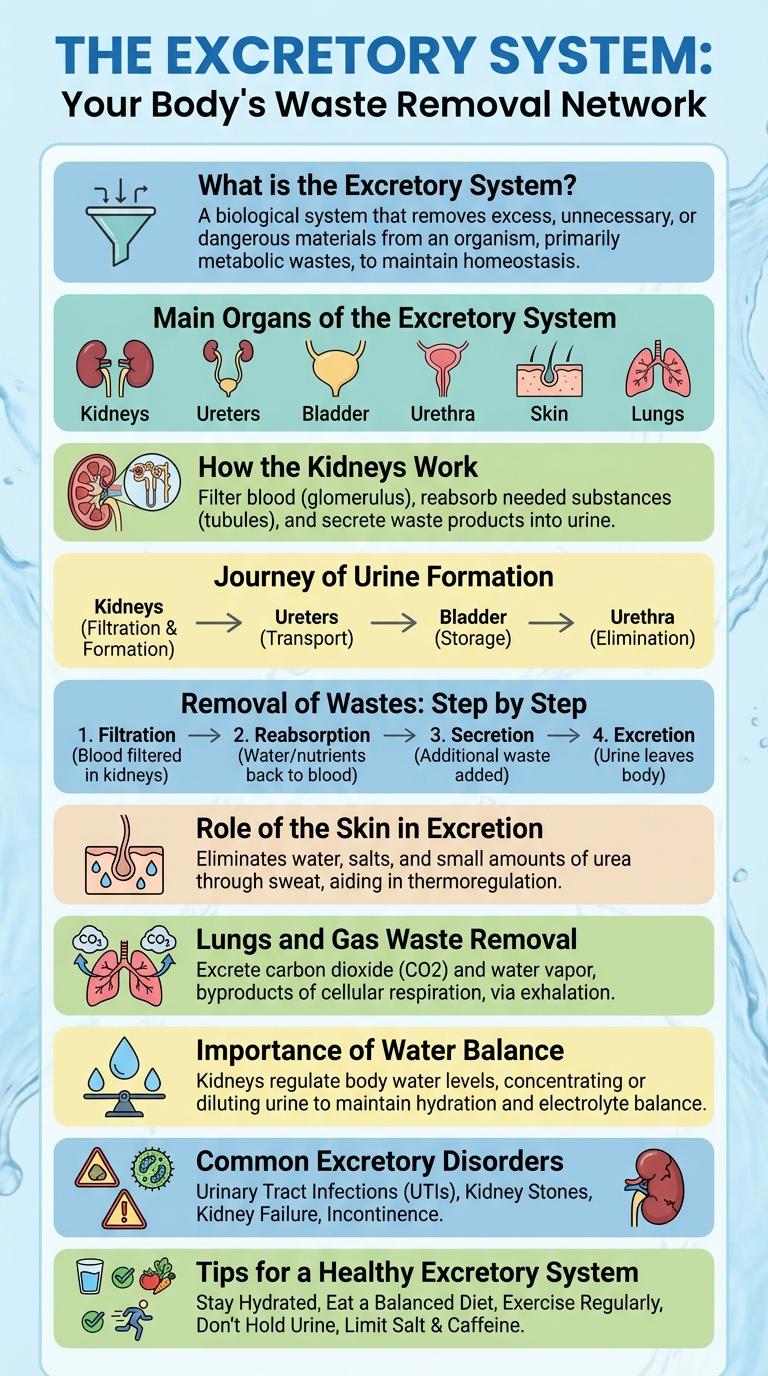
The excretory system plays a vital role in removing waste products and maintaining the body's internal balance. This infographic visually explains the key organs involved, such as the kidneys, bladder, and ureters, along with their specific functions. Understanding this system highlights how the body filters toxins and regulates fluids for overall health.
What is the Excretory System?
The excretory system is a biological system responsible for removing waste products from the body. It helps maintain the body's internal chemical balance and prevent damage from toxic substances.
This system includes organs such as the kidneys, liver, lungs, and skin. Each organ plays a vital role in filtering, collecting, and expelling waste materials efficiently.
Main Organs of the Excretory System
The excretory system is responsible for removing waste products and maintaining the body's fluid balance. Its main organs work together to filter blood and produce urine.
The kidneys are the primary organs, filtering waste and excess substances from the blood. The ureters transport urine from the kidneys to the bladder for storage. The bladder stores urine until it is expelled through the urethra.
How the Kidneys Work
The kidneys filter blood to remove waste products and excess fluids, forming urine. Each kidney contains millions of nephrons that regulate salt, water, and electrolyte balance. Cleaned blood returns to the body while waste is excreted through the urinary system.
Journey of Urine Formation
The excretory system efficiently removes waste and excess substances from the body through urine formation. This process involves multiple organs working together to maintain fluid and electrolyte balance.
- Filtration in the Glomerulus - Blood pressure forces water and solutes from the blood into the Bowman's capsule, initiating urine formation.
- Reabsorption in the Tubules - Essential nutrients and water are reabsorbed from the filtrate back into the bloodstream in the proximal and distal tubules.
- Secretion into the Tubules - Additional waste products and ions are secreted into the tubular fluid to be excreted as urine.
Removal of Wastes: Step by Step
Role of the Skin in Excretion
The skin plays a crucial role in the excretory system by eliminating waste products through sweat glands. Sweat contains water, salts, and small amounts of urea, helping to regulate body temperature and remove excess substances. This process supports kidney function and maintains the body's internal chemical balance.
Lungs and Gas Waste Removal
The excretory system removes waste products from the human body to maintain internal balance. One vital component is the lungs, responsible for eliminating gaseous waste.
The lungs expel carbon dioxide, a byproduct of cellular respiration, through exhalation. This gas exchange process helps regulate blood pH and oxygen levels for optimal body function.
Importance of Water Balance
The excretory system plays a vital role in maintaining water balance within the body. Proper regulation of water prevents dehydration and supports cellular functions.
- Regulation of Kidney Function - Kidneys filter blood, adjusting water reabsorption to control hydration levels.
- Maintaining Blood Pressure - Water balance influences blood volume, directly affecting blood pressure stability.
- Electrolyte Homeostasis - Water regulation ensures balanced electrolyte concentrations critical for nerve and muscle function.
Water balance maintained by the excretory system is essential for overall health and metabolic efficiency.
Common Excretory Disorders
What are the common disorders affecting the excretory system? The excretory system can be compromised by various disorders that disrupt waste elimination and fluid balance. Understanding these conditions helps in early diagnosis and effective management.
| Disorder | Description |
|---|---|
| Urinary Tract Infection (UTI) | Bacterial infection affecting the urinary system, causing pain and frequent urination. |
| Kidney Stones | Hard deposits formed from minerals and salts that cause intense pain and block urine flow. |
| Chronic Kidney Disease (CKD) | Gradual loss of kidney function leading to waste buildup and fluid imbalance. |
| Nephrotic Syndrome | A condition causing kidney damage leading to protein loss in urine and swelling. |
| Interstitial Cystitis | Chronic inflammation of the bladder wall resulting in pelvic pain and urinary urgency. |