
Plate boundaries mark the edges where Earth's tectonic plates meet, shaping the planet's dynamic geology. These zones are sites of intense geological activity including earthquakes, volcanic eruptions, and mountain building. Understanding plate boundaries is essential for comprehending natural hazards and geological formations worldwide.
Types of Plate Boundaries
Plate boundaries are the edges where two tectonic plates meet and interact. These boundaries shape Earth's surface and cause geological activities such as earthquakes and volcanic eruptions.
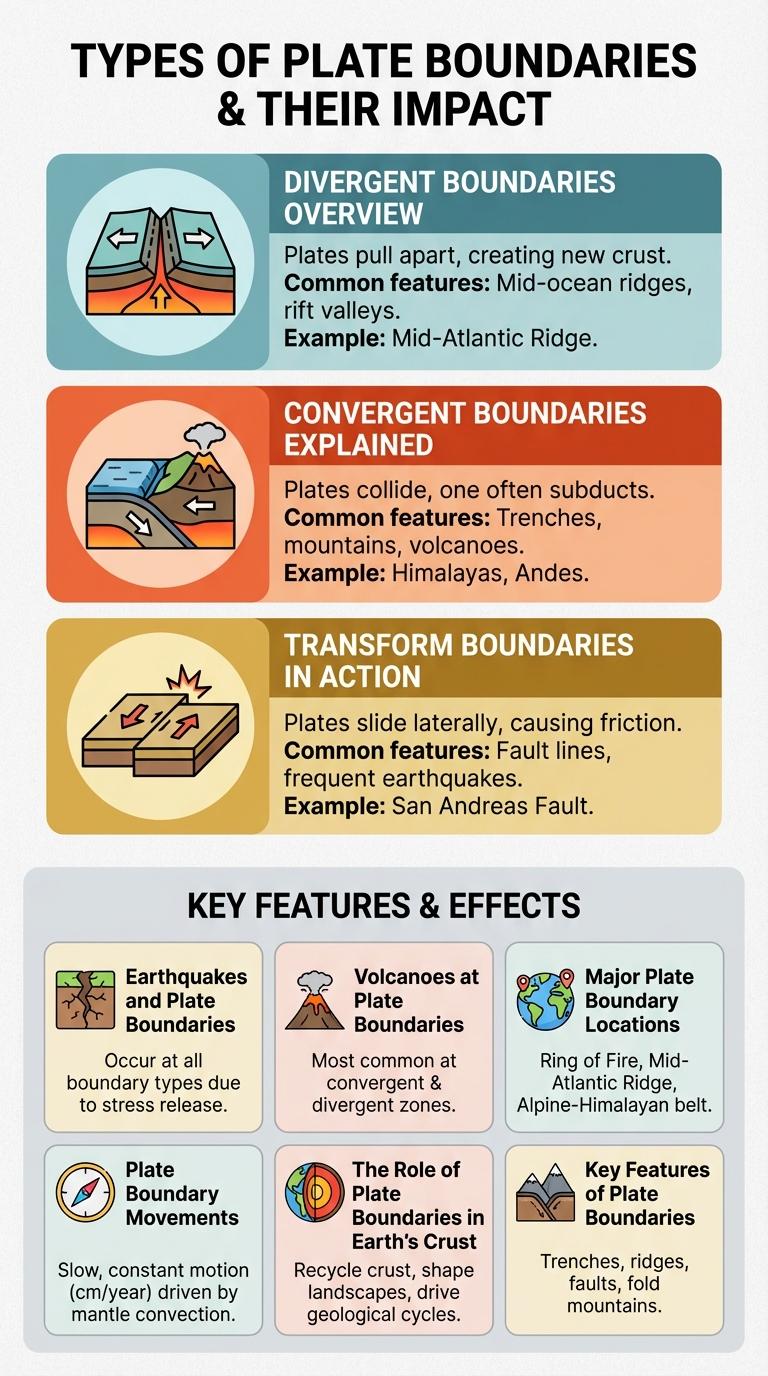
- Divergent Boundaries - Plates move apart, leading to the creation of new crust typically at mid-ocean ridges.
- Convergent Boundaries - Plates collide, causing subduction or mountain formation depending on the plates involved.
- Transform Boundaries - Plates slide past each other horizontally, often triggering earthquakes along faults.
Convergent Boundaries Explained
Convergent boundaries occur where two tectonic plates move toward each other, resulting in intense geological activity. These boundaries are crucial in shaping Earth's surface through processes such as mountain building and subduction.
- Plate Collision - At convergent boundaries, plates collide, causing one plate to be forced beneath another in a process called subduction.
- Mountain Formation - The collision of continental plates at convergent boundaries creates mountain ranges like the Himalayas.
- Volcanic Activity - Subduction zones generate magma, leading to frequent volcanic eruptions along convergent boundaries.
Understanding convergent boundaries helps explain many seismic and volcanic events around the world.
Divergent Boundaries Overview
What are divergent plate boundaries? Divergent boundaries occur where two tectonic plates move away from each other. This movement creates new crust as magma rises from below the Earth's surface.
Transform Boundaries in Action
Transform boundaries occur where two tectonic plates slide past one another horizontally. These boundaries are characterized by intense seismic activity due to the friction and pressure that builds up along the faults. The San Andreas Fault in California is a prime example of a transform boundary in action, frequently producing significant earthquakes.
Key Features of Plate Boundaries
Plate boundaries are zones where two tectonic plates meet, exhibiting distinct geological activities. These boundaries are classified into three main types based on their movement: divergent, convergent, and transform.
Divergent boundaries feature plates moving apart, forming mid-ocean ridges and rift valleys. Convergent boundaries involve plates colliding, causing mountain formation, earthquakes, and volcanic arcs, while transform boundaries slide past each other, leading to earthquakes along fault lines.
Earthquakes and Plate Boundaries
Plate boundaries are regions where two tectonic plates meet and interact, leading to significant geological activity. These boundaries are classified into three main types: divergent, convergent, and transform.
Earthquakes commonly occur along plate boundaries due to the intense stress and friction generated by plate movements. The release of accumulated energy during fault slip causes seismic waves that are felt as earthquakes.
Volcanoes at Plate Boundaries
| Plate Boundary Type | Volcano Characteristics |
|---|---|
| Divergent Boundaries | Volcanoes form as magma rises from mantle due to plates pulling apart; typically create shield volcanoes with gentle slopes. |
| Convergent Boundaries | Volcanoes form where oceanic plate subducts beneath continental or oceanic plate; produce explosive stratovolcanoes rich in silica. |
| Transform Boundaries | Rare volcanic activity due to lateral plate slipping; minor or no volcanic formations compared to other boundaries. |
| Hotspots | Volcanoes occur over mantle plumes independent of plate boundaries; create chains like Hawaiian Islands. |
Major Plate Boundary Locations
Plate boundaries are the edges where two tectonic plates meet, shaping Earth's surface through various geological processes. Major plate boundaries are primarily classified as divergent, convergent, and transform, each creating distinct landforms and seismic activity.
- Mid-Atlantic Ridge (Divergent Boundary) - This underwater mountain range separates the Eurasian and North American plates, characterized by seafloor spreading and volcanic activity.
- Himalayan Range (Convergent Boundary) - Formed by the collision of the Indian and Eurasian plates, this boundary generates some of the highest mountain peaks on Earth.
- San Andreas Fault (Transform Boundary) - Marking the boundary between the Pacific and North American plates, this fault is known for frequent earthquakes in California.
Plate Boundary Movements
Plate boundaries are zones where Earth's tectonic plates interact, causing significant geological activity. Movements at these boundaries include divergent, convergent, and transform motions, each leading to distinct landform changes. Understanding these movements helps explain phenomena such as earthquakes, volcanic eruptions, and mountain formation.