
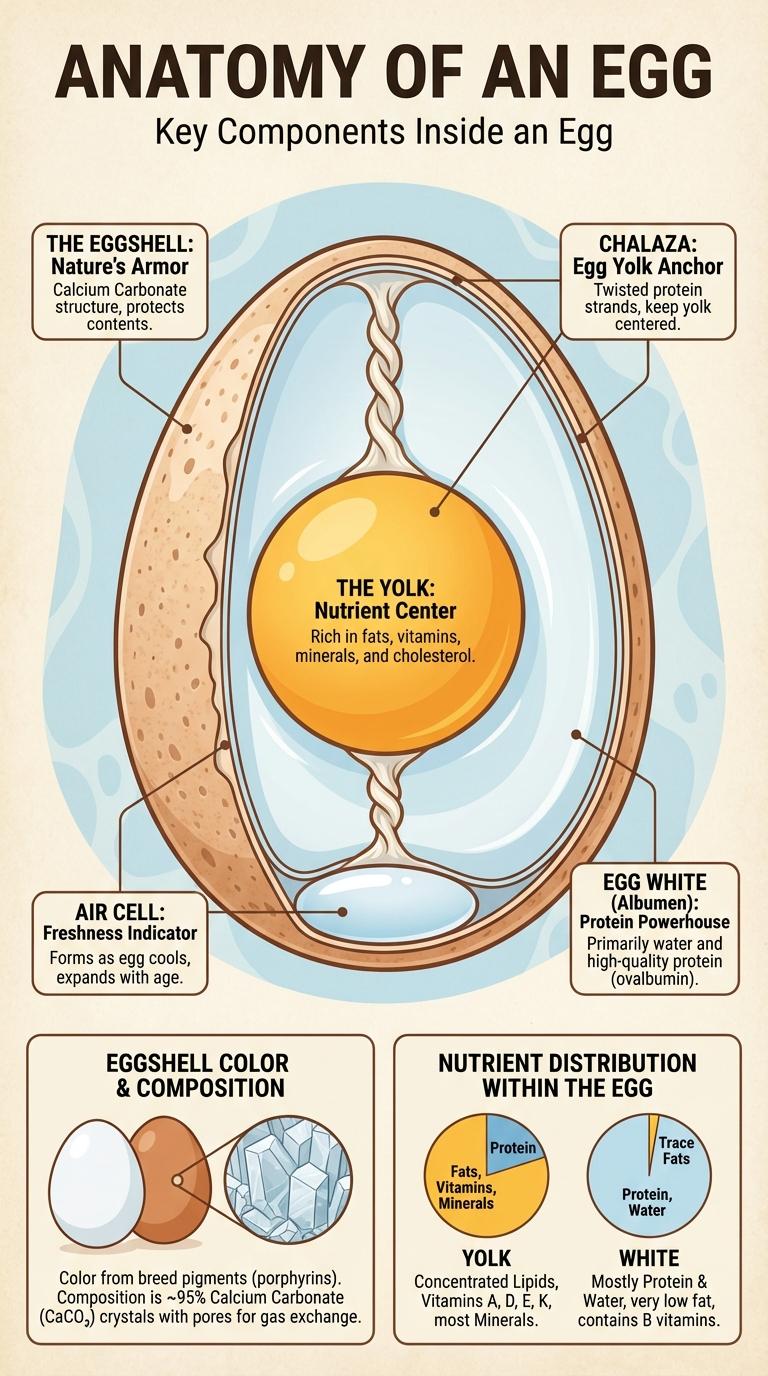
Eggs consist of three main components: the shell, the albumen, and the yolk, each playing a crucial role in nutrition and structure. The shell provides a protective barrier, while the albumen offers a rich source of protein and water. The yolk contains essential fats, vitamins, and minerals that contribute to overall health.
Anatomy of an Egg
The anatomy of an egg reveals its essential components, each serving a specific function in nurturing the developing embryo. Understanding these parts helps explain the egg's role in reproduction and nutrition.
An egg consists of the shell, albumen, yolk, chalaza, and air cell. The hard outer shell protects the contents and allows gas exchange through tiny pores. The albumen, or egg white, cushions the yolk and provides water and protein. The yolk contains the embryo and stores nutrients, while the chalaza anchors the yolk in place. The air cell forms as the egg cools after laying, supplying the embryo with oxygen during development.
Key Components Inside an Egg
An egg is composed of several key components that provide essential nutrients. These components include the shell, white (albumen), yolk, and membranes.
The shell protects the egg from physical damage and bacteria. The white contains proteins, while the yolk is rich in fats, vitamins, and minerals.
The Eggshell: Nature's Armor
What makes the eggshell essential for protecting an egg? The eggshell serves as nature's armor, providing a hard, protective exterior that shields the egg from physical damage and microbial invasion. Composed primarily of calcium carbonate, the eggshell is porous, allowing air and moisture to pass through while maintaining the egg's internal environment.
Egg White (Albumen): Protein Powerhouse
The egg white, also known as albumen, is a rich source of high-quality protein essential for muscle repair and growth. It contains about 90% water and 10% proteins, including ovalbumin, which makes up nearly 54% of the total protein content. Egg white is low in calories and fat, making it a popular choice for a healthy, protein-packed diet.
The Yolk: Nutrient Center
The egg yolk serves as the primary nutrient center, packed with essential vitamins and minerals. It provides key components that support overall health and development.
- Rich in Vitamins - The yolk contains vitamins A, D, E, and K, vital for vision, bone health, and immune function.
- High in Essential Fatty Acids - It supplies omega-3 and omega-6 fatty acids vital for brain and heart health.
- Concentrated Protein Source - The yolk offers high-quality proteins that support muscle repair and growth.
Membranes: Protective Layers
| Component | Description |
|---|---|
| Shell Membranes | Two thin layers located between the eggshell and the egg white (albumen). They provide a strong barrier against bacterial invasion. |
| Outer Membrane | Adheres to the inside of the eggshell and acts as the first line of defense to protect the egg from external contaminants. |
| Inner Membrane | Located just inside the outer membrane, offering an additional protective layer and helping to maintain egg freshness by limiting moisture loss. |
| Shell Membrane Function | Membranes function as protective layers, preventing bacteria and pathogens from entering the egg while supporting gas exchange for the developing embryo. |
| Membrane Composition | Consists mainly of fibrous proteins such as keratin, contributing to their strength and resilience in protecting the egg content. |
Chalaza: Egg Yolk Anchor
The chalaza is a crucial component of an egg, serving as the natural anchor for the egg yolk. It appears as two spiral bands of tissue that hold the yolk centered within the egg white.
This anchoring mechanism ensures the yolk remains stable, protecting the developing embryo in fertilized eggs. The chalaza is rich in proteins and helps maintain the egg's structural integrity during movement.
Air Cell: Freshness Indicator
The air cell is a small pocket of air located between the inner and outer shell membranes at the wider end of an egg. As eggs age, the air cell enlarges due to moisture and carbon dioxide escaping through the shell's pores. Measuring the size of the air cell serves as a reliable indicator of egg freshness, with smaller air cells indicating fresher eggs.
Eggshell Color & Composition
The eggshell color varies primarily between white and brown, influenced by the breed of the hen. The composition of the eggshell is mainly calcium carbonate, providing strength and protection.
- Eggshell Color Variation - White eggshells typically come from hens with white feathers and earlobes, while brown eggshells come from hens with red feathers and earlobes.
- Calcium Carbonate Composition - About 94-97% of the eggshell's weight is calcium carbonate, forming a rigid outer layer to protect the egg's contents.
- Protective Function - The eggshell serves as a physical barrier against bacteria and environmental damage while allowing gas exchange through tiny pores.
Shell color does not affect the nutritional quality of the egg but may influence consumer preference.