
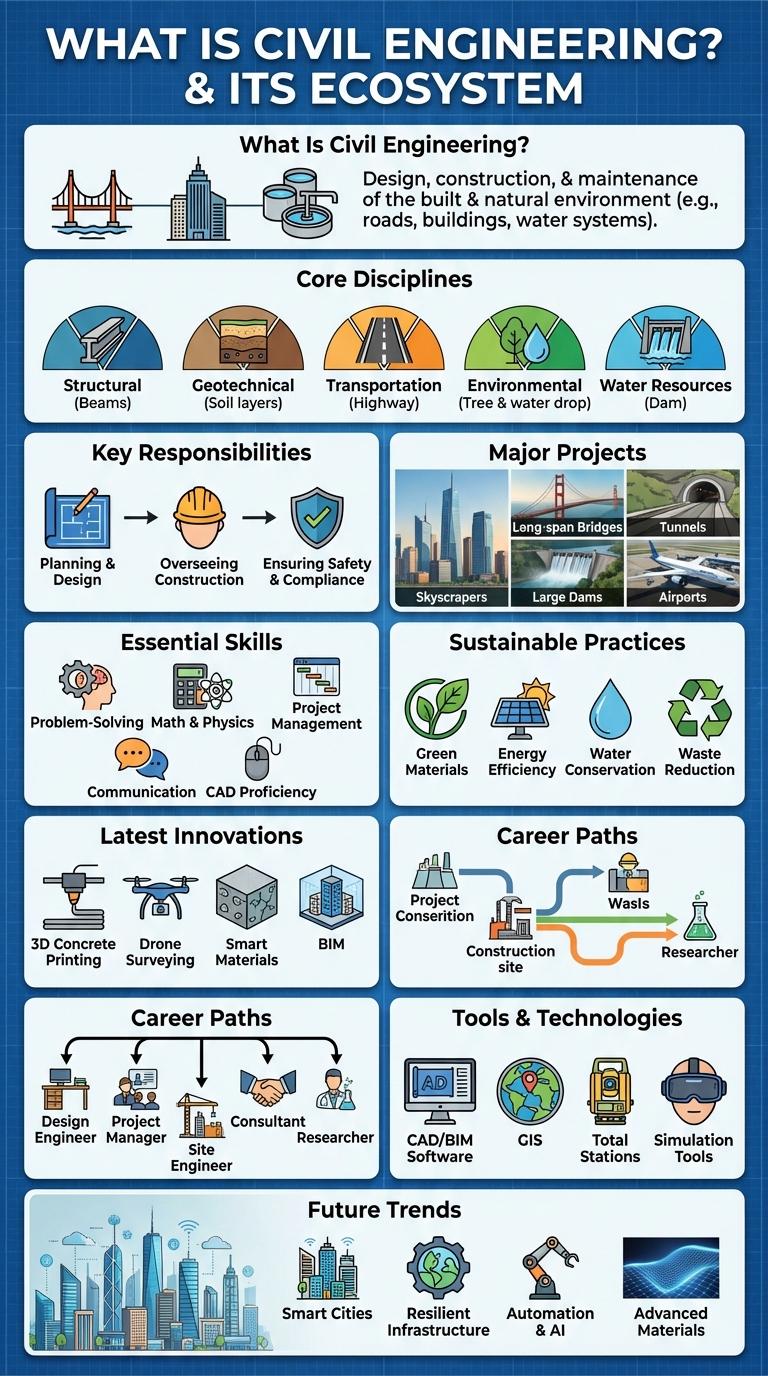
Civil engineering shapes the foundation of modern infrastructure, from towering bridges to intricate water systems. This infographic highlights key concepts, innovative techniques, and essential materials driving the field forward. Understanding these elements reveals how civil engineering impacts everyday life and future urban development.
What Is Civil Engineering?
What is Civil Engineering?
Civil engineering is the discipline that designs, constructs, and maintains infrastructure such as roads, bridges, and buildings. It combines principles of physics, mathematics, and material science to ensure safe and sustainable development of public and private projects.
Core Disciplines of Civil Engineering
Civil engineering encompasses a range of core disciplines that form the foundation of infrastructure development. These disciplines address the design, construction, and maintenance of essential facilities and systems.
Key core disciplines include structural, geotechnical, transportation, environmental, and water resources engineering. Each discipline plays a vital role in creating safe, efficient, and sustainable environments for communities worldwide.
Key Responsibilities of Civil Engineers
Civil engineering is a critical discipline focused on designing, constructing, and maintaining infrastructure projects. Civil engineers ensure the safety, functionality, and sustainability of public and private works.
- Design and Planning - Civil engineers create detailed blueprints and project plans for structures such as bridges, roads, and buildings.
- Construction Management - They oversee construction sites to ensure projects are completed on time, within budget, and according to regulations.
- Structural Analysis - Civil engineers evaluate material strength and load-bearing capacity to guarantee the stability of infrastructure.
Major Civil Engineering Projects
Civil engineering shapes the infrastructure of modern society through major projects that include bridges, dams, highways, tunnels, and skyscrapers. These projects require advanced planning, design innovation, and sustainable construction methods to ensure safety and durability. Iconic examples such as the Golden Gate Bridge, Hoover Dam, and Channel Tunnel highlight the impact of civil engineering on transportation and resource management.
Essential Skills for Civil Engineers
Civil engineering demands a blend of technical knowledge and practical skills to design and manage infrastructure projects. Mastering essential skills ensures project success and public safety.
- Technical Proficiency - Civil engineers must understand engineering principles, materials science, and structural analysis for effective design and construction.
- Project Management - Coordinating resources, timelines, and teams is crucial to deliver infrastructure projects on time and within budget.
- Problem-Solving Skills - Engineers need to address unforeseen challenges through innovative and adaptable solutions during project execution.
Sustainable Practices in Civil Engineering
Sustainable practices in civil engineering focus on minimizing environmental impact through efficient resource use and innovative design. Techniques such as green building materials, energy-efficient construction methods, and waste reduction contribute to eco-friendly infrastructure. Emphasizing durability and recyclability enhances long-term sustainability and resilience in civil engineering projects.
Latest Innovations in Civil Engineering
Civil engineering has rapidly evolved with the integration of cutting-edge technologies such as artificial intelligence and sustainable materials. These innovations enhance project efficiency, safety, and environmental impact.
Advanced tools like Building Information Modeling (BIM) and drone surveying revolutionize design and construction processes. Smart infrastructure, including self-healing concrete and IoT sensors, ensures durability and real-time monitoring of structures.
Career Paths in Civil Engineering
Civil engineering offers diverse career paths that shape infrastructure and urban development. Professionals in this field apply scientific principles to design, construct, and maintain essential structures.
- Structural Engineering - Focuses on designing buildings and bridges to ensure safety and durability under various loads.
- Geotechnical Engineering - Involves analyzing soil and rock mechanics to support foundation design and earthworks.
- Transportation Engineering - Plans and manages transportation systems such as roads, highways, and airports for efficient mobility.
- Environmental Engineering - Addresses water treatment, waste management, and pollution control to protect the environment.
- Construction Management - Oversees project planning, budgeting, and execution to deliver infrastructure projects on time and within scope.
Choosing a specialized career path in civil engineering enables professionals to impact community development and infrastructure resilience.
Tools and Technologies in Civil Engineering
Civil engineering relies on advanced tools and technologies to design, analyze, and construct infrastructure projects effectively. These innovations enhance precision, safety, and efficiency in building bridges, roads, and buildings.
Surveying instruments like total stations and GPS ensure accurate site measurements. Building Information Modeling (BIM) software allows engineers to create detailed 3D models and simulate project outcomes. Drones and laser scanning technologies provide real-time data for monitoring construction progress and detecting structural issues early.