
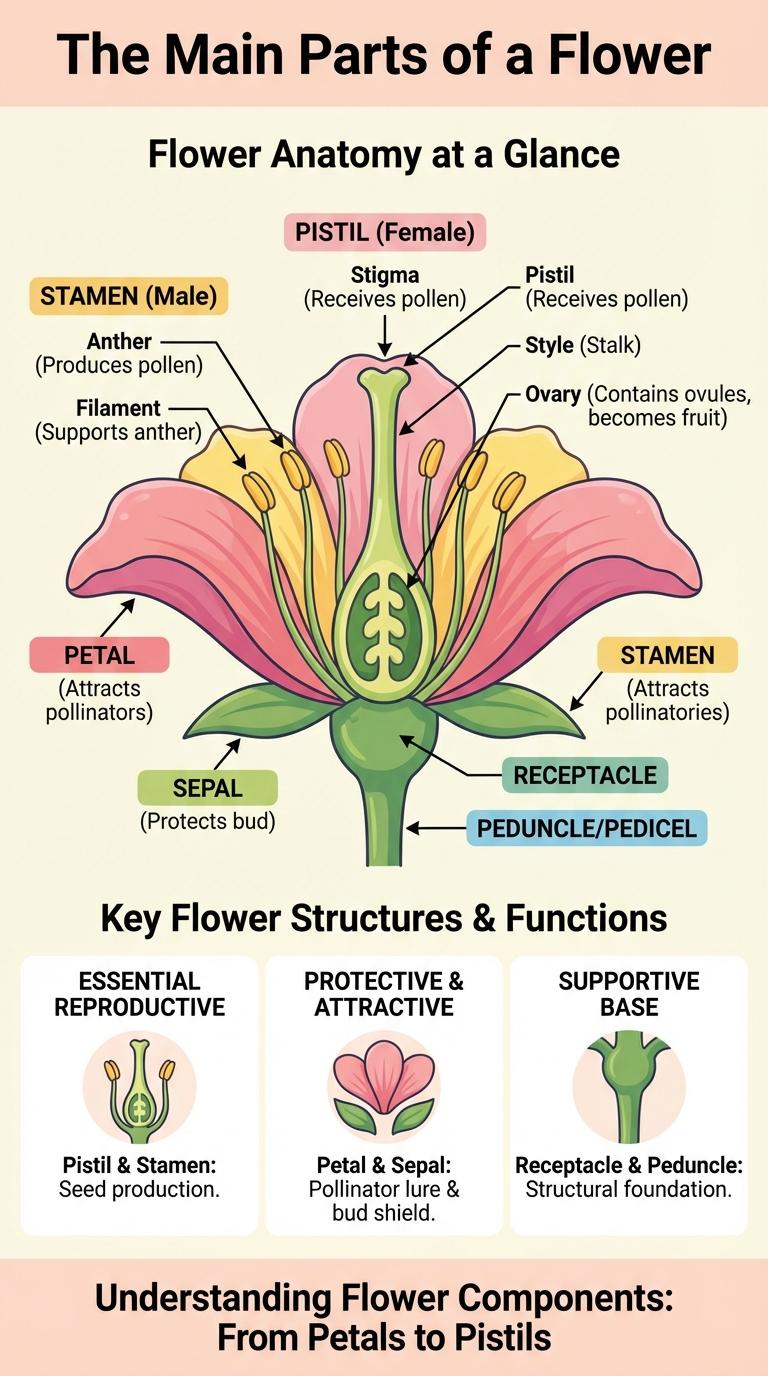
Understanding the different parts of a flower reveals how each component plays a vital role in plant reproduction and growth. Key structures include the petals, which attract pollinators; stamens, responsible for producing pollen; and pistils, where fertilization occurs. Exploring these parts through an infographic offers a clear and engaging way to grasp the biology behind flowering plants.
The Main Parts of a Flower
Flowers consist of several essential parts, each playing a crucial role in reproduction. Understanding the main parts helps in identifying how flowers function and reproduce.
- Petals - Brightly colored structures that attract pollinators such as bees and butterflies.
- Stamens - The male reproductive organs that produce pollen, consisting of anthers and filaments.
- Pistil - The female reproductive part made up of the stigma, style, and ovary where seeds develop.
Each main part of a flower works together to facilitate pollination and seed production.
Flower Anatomy at a Glance
Flower anatomy consists of several key parts, each playing a vital role in reproduction. The main structures include petals, sepals, stamens, and pistils, which work together to attract pollinators and facilitate fertilization. Understanding these components provides insight into plant biology and the process of flower development.
| Part | Function |
|---|---|
| Petals | Attract pollinators with color and scent |
| Sepals | Protect the flower bud before it opens |
| Stamens | Produce pollen, the male reproductive cells |
| Pistils | Contain ovules and facilitate fertilization |
Key Flower Structures
Flowers contain several essential structures that play key roles in reproduction. Understanding these parts helps explain how plants produce seeds and pollen.
- Petal - Brightly colored to attract pollinators such as bees and butterflies.
- Stamen - The male reproductive part consisting of the anther and filament where pollen is produced.
- Pistil - The female reproductive organ made up of the stigma, style, and ovary, which receives pollen and develops seeds.
- Sepal - Protects the flower bud before it opens and supports the petals when in bloom.
- Ovule - Located inside the ovary, it develops into a seed after fertilization.
Inside a Flower: Essential Components
Flowers contain vital structures necessary for plant reproduction. Each part plays a specific role in the process of pollination and fertilization.
The essential components inside a flower include the pistil, stamen, petals, sepals, and ovary. The pistil is the female part, consisting of the stigma, style, and ovary, where seeds develop. Stamens are the male parts responsible for producing pollen, which fertilizes the ovules in the ovary.
Exploring Flower Parts
Flowers consist of several distinct parts, each playing a crucial role in reproduction and growth. Understanding these parts helps in identifying how flowers function and develop.
The main parts of a flower include the petals, sepals, stamens, and pistils. Each part has a specific function such as attracting pollinators or producing seeds.
From Petals to Pistils: Flower Breakdown
Flowers consist of various parts, each with a unique role in the plant's reproduction. Understanding these parts helps explain how flowers attract pollinators and produce seeds.
- Petals - Colorful structures that attract pollinators through visual cues and scents.
- Sepals - Protective leaf-like parts that encase and shield the flower bud before it blooms.
- Stamens - The male reproductive organs consisting of anthers and filaments which produce pollen.
- Pistils - The female reproductive parts including the stigma, style, and ovary where fertilization occurs.
- Receptacle - The thickened part of the stem that supports the flower and connects it to the plant.
The Building Blocks of a Flower
What are the essential parts that make up a flower? A flower consists of key components including petals, sepals, stamens, and pistils. Each part plays a vital role in the flower's reproductive process and overall structure.
Core Sections of a Flower
The core sections of a flower are essential for its reproductive process. These parts work together to ensure the development of seeds and the continuation of the plant species.
The main sections include the pistil, stamen, petals, and sepals. Each section has a distinct function that contributes to pollination and fertilization.
Flower Morphology Simplified
Flower morphology refers to the study of the physical form and structure of flowers. Key parts include the petals, stamens, pistils, sepals, and receptacle, each serving vital functions in reproduction. Understanding these components aids in identifying plant species and their reproductive strategies.