
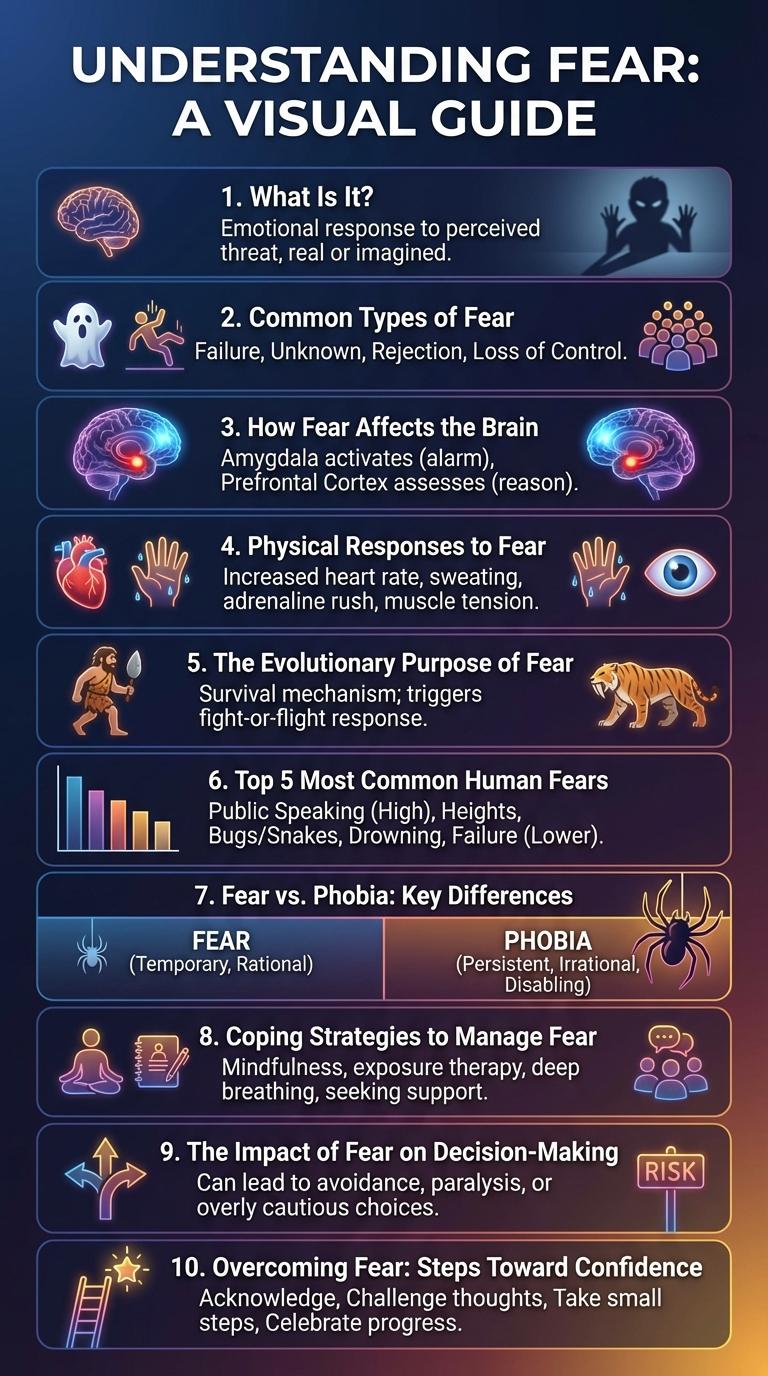
Fear triggers a complex response in the brain, activating the amygdala and releasing stress hormones that prepare the body for fight or flight. This innate emotion helps protect us from danger, but excessive fear can hinder decision-making and mental health. Visualizing fear through an infographic reveals its biological mechanisms, common triggers, and coping strategies for managing anxiety effectively.
Understanding Fear: What Is It?
Fear is a natural emotional response to perceived danger or threat. It triggers physiological changes that prepare the body for a fight-or-flight reaction.
- Biological Basis - Fear activates the amygdala, a brain region responsible for processing emotions and survival instincts.
- Evolutionary Purpose - Fear helps individuals avoid harm by promoting caution and quick decision-making in risky situations.
- Types of Fear - Fear can be innate, learned, or irrational, influencing behavior in different contexts.
Common Types of Fear
Fear is a natural emotional response to perceived threats, designed to protect individuals from harm. It can manifest in various forms, impacting both mental and physical well-being.
Common types of fear include specific phobias, social anxiety, and fear of failure. These fears influence behavior and decision-making in different environments.
How Fear Affects the Brain
Fear triggers complex reactions in the brain that influence behavior and decision-making. Understanding these effects helps reveal how the brain processes threats.
The amygdala plays a central role in detecting fear and activating the body's stress response.
- Amygdala Activation - The amygdala processes fear signals and triggers hormonal responses like adrenaline release.
- Prefrontal Cortex Suppression - Fear can reduce activity in the prefrontal cortex, impairing rational thinking and decision-making.
- Hippocampus Involvement - The hippocampus helps store fearful memories, influencing future reactions to similar threats.
Physical Responses to Fear
Fear triggers a cascade of physical responses designed to prepare the body for action. Common reactions include increased heart rate, rapid breathing, and muscle tension, all aimed at enhancing alertness. These changes enable quick responses to potential threats, improving chances of survival.
The Evolutionary Purpose of Fear
| Aspect | Details |
|---|---|
| Definition of Fear | An emotional response triggered by perceived threats, essential for survival. |
| Evolutionary Role | Fear evolved to improve chances of survival by activating fight, flight, or freeze reactions. |
| Biological Mechanism | The amygdala processes fear stimuli, signaling the body to respond rapidly to danger. |
| Survival Advantages | Heightened alertness and increased adrenaline enable quicker decision-making in life-threatening situations. |
| Modern Implications | While fear can be maladaptive in non-threatening environments, it remains crucial for assessing potential risks. |
Top 5 Most Common Human Fears
Fear is a powerful human emotion triggered by perceived threats, influencing behavior and survival instincts. Understanding common fears helps in managing anxiety and improving mental health.
The top 5 most common human fears include arachnophobia (fear of spiders), claustrophobia (fear of confined spaces), acrophobia (fear of heights), social phobia (fear of social situations), and aerophobia (fear of flying). These fears affect millions worldwide and vary in intensity from mild discomfort to severe phobia.
Fear vs. Phobia: Key Differences
Fear is a natural emotional response to a real or perceived threat, helping individuals stay alert and safe. Phobia, however, is an intense, irrational fear of specific objects or situations that interferes with daily life.
Fear triggers the body's fight-or-flight response and usually fades when the threat is gone. Phobias persist long after the danger has passed and can cause significant distress. Understanding these differences helps in identifying when professional help may be needed.
Coping Strategies to Manage Fear
Fear triggers the body's fight-or-flight response, preparing individuals to respond to threats. Effective coping strategies include deep breathing, mindfulness meditation, and cognitive reframing to reduce anxiety. Consistent practice of these methods enhances emotional resilience and promotes calmness during stressful situations.
The Impact of Fear on Decision-Making
How does fear influence our decision-making process? Fear triggers the brain's survival mechanisms, often leading to quick, instinctual choices rather than thoughtful analysis. This emotional response can limit rational thinking and increase risk aversion.
What are the common effects of fear on decisions? Fear can cause individuals to avoid taking necessary risks and stick to familiar options, reducing creativity and problem-solving capabilities. It often biases decisions toward short-term safety instead of long-term benefits.
Which areas of the brain are most affected by fear? The amygdala plays a central role in processing fear and can override the prefrontal cortex, the part responsible for complex reasoning. This neural shift results in decisions driven more by emotion than logic.
Can fear lead to biased decision-making? Yes, fear amplifies cognitive biases like confirmation bias and loss aversion, skewing perception and limiting objective evaluation. These biases reinforce negative expectations and reduce openness to new information.
What strategies can mitigate the impact of fear on decisions? Techniques such as mindfulness, deliberate reflection, and seeking diverse perspectives help reduce fear's grip on thinking. These approaches promote balanced decision-making by engaging rational brain functions.