
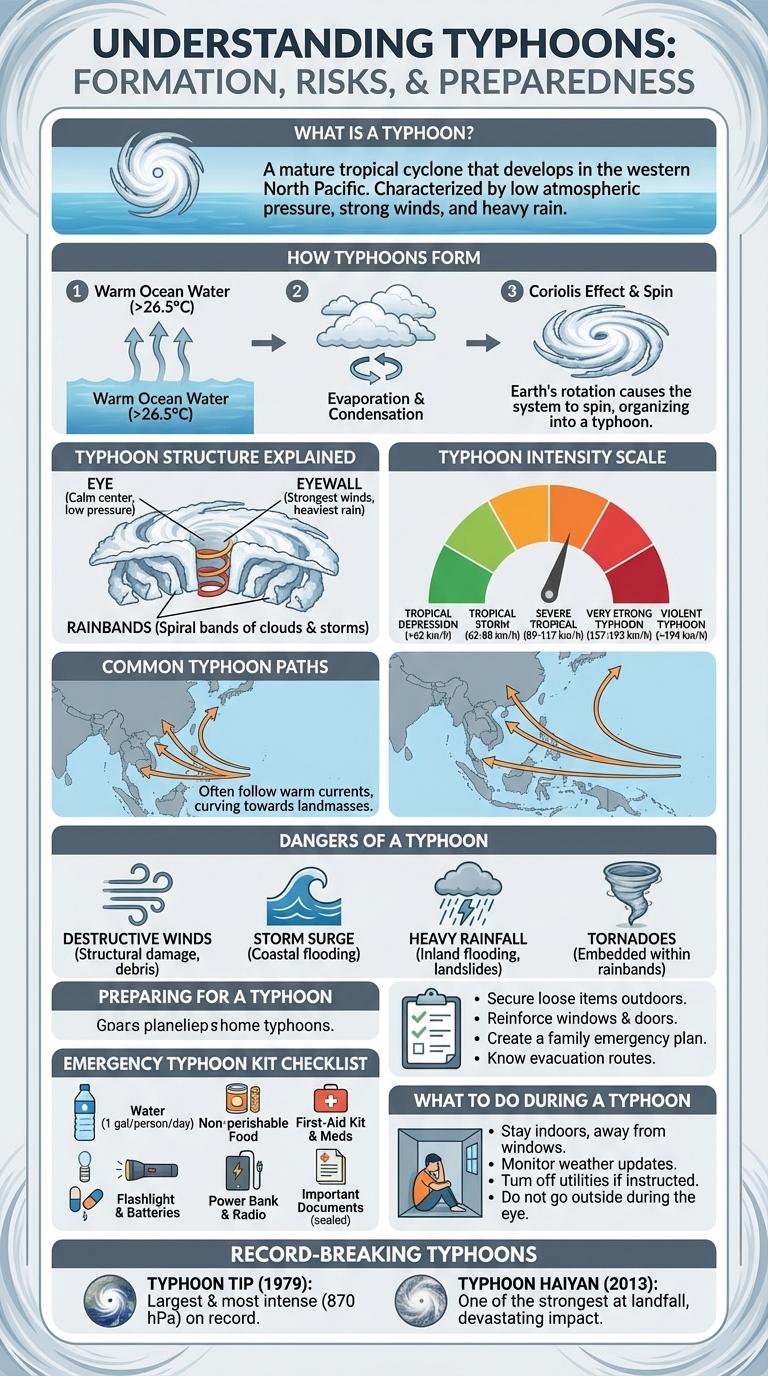
A typhoon is a powerful tropical cyclone characterized by intense winds and heavy rainfall that can cause widespread damage. Infographics provide a clear and concise way to visualize the formation, stages, and impact of typhoons. Understanding these elements helps communities prepare effectively and mitigate risks associated with severe weather events.
What is a Typhoon?
A typhoon is a powerful tropical cyclone that forms over warm ocean waters in the Northwest Pacific Ocean. It is characterized by intense winds, heavy rain, and a well-defined circular structure.
- Formation - Typhoons develop when warm, moist air rises over tropical waters, creating low-pressure systems.
- Wind Speeds - Wind speeds in a typhoon can exceed 74 miles per hour, causing significant damage.
- Impact Areas - Typhoons primarily affect East Asia, including countries such as Japan, the Philippines, and China.
Typhoons play a critical role in distributing heat and moisture across the Pacific region, influencing weather patterns globally.
How Typhoons Form
Typhoons form over warm ocean waters when moist air rises and cools, creating powerful storms. These intense weather systems develop in tropical regions with temperatures above 26.5degC (80degF).
Warm ocean water heats the air above, causing it to rise and create low pressure below. As the air rises, it cools and condenses into clouds and rain, releasing heat that fuels the storm. A rotating system forms due to the Earth's Coriolis effect, intensifying the typhoon into a powerful cyclone.
Typhoon Structure Explained
| Typhoon Structure | Description |
|---|---|
| Eye | A calm, clear center of the typhoon with light winds and low pressure, typically 20-40 miles wide. |
| Eye Wall | The ring of intense thunderstorms surrounding the eye where the strongest winds and heaviest rain occur. |
| Rain Bands | Spiral bands of clouds and thunderstorms extending outward from the eye wall, causing heavy rain and gusty winds. |
| Outflow | Upper-level winds that flow outward from the typhoon, helping to vent the storm and maintain its strength. |
| Center (Eye) | The location of the lowest atmospheric pressure within the typhoon facilitating cyclonic rotation. |
Typhoon Intensity Scale
Typhoons are powerful tropical cyclones characterized by intense winds and heavy rainfall. The Typhoon Intensity Scale categorizes these storms based on sustained wind speeds, providing crucial information for preparedness and response.
The scale ranges from Tropical Depression to Super Typhoon, with increasing wind speeds indicating higher intensity. Accurate classification aids meteorologists in issuing warnings and minimizing damage during typhoon events.
Common Typhoon Paths
Typhoons are powerful tropical cyclones that form over warm ocean waters, primarily in the Northwest Pacific Ocean. Common typhoon paths often start in the western Pacific, moving northwest toward East Asia, especially affecting countries like the Philippines, Japan, Taiwan, and China. These paths are influenced by prevailing wind patterns and ocean currents, causing typhoons to either curve northeast into the open ocean or make landfall along coastal regions.
Dangers of a Typhoon
What are the primary dangers of a typhoon? Typhoons bring extremely strong winds that can uproot trees and damage buildings. Heavy rainfall from typhoons often leads to severe flooding and landslides, endangering lives and property.
Preparing for a Typhoon
Preparing for a typhoon is essential to ensure safety and minimize damage. Understanding key safety measures and gathering necessary supplies can make a critical difference during the storm.
- Create an Emergency Kit - Include water, non-perishable food, first aid supplies, flashlights, and batteries to stay self-sufficient.
- Secure Your Home - Reinforce windows and doors, and clear outdoor debris to prevent damage from strong winds.
- Stay Informed - Monitor weather updates and follow instructions from local authorities to respond promptly.
Emergency Typhoon Kit Checklist
A well-prepared Emergency Typhoon Kit is essential for safety during a typhoon. It ensures you have all necessary supplies for survival and comfort in case of power outages or evacuations.
Key items include water, non-perishable food, and a first aid kit. Flashlights, batteries, and important documents also play a critical role in emergency preparedness.
What to Do During a Typhoon
During a typhoon, safety and preparedness are crucial to minimize risks and protect lives. Knowing the key actions to take can ensure you stay safe throughout the storm.
Follow these important steps during a typhoon to maintain safety and reduce hazards:
- Stay Indoors - Seek shelter in a sturdy building away from windows to avoid injury from flying debris.
- Keep Emergency Supplies Handy - Have water, food, flashlights, and first aid kits readily accessible for emergencies.
- Avoid Flooded Areas - Do not walk or drive through floodwaters to prevent drowning or vehicle damage.
- Stay Informed - Listen to weather updates via radio, TV, or mobile devices for important instructions and warnings.
- Turn Off Utilities if Necessary - Shut off gas, electricity, and water if instructed by authorities to prevent accidents.