
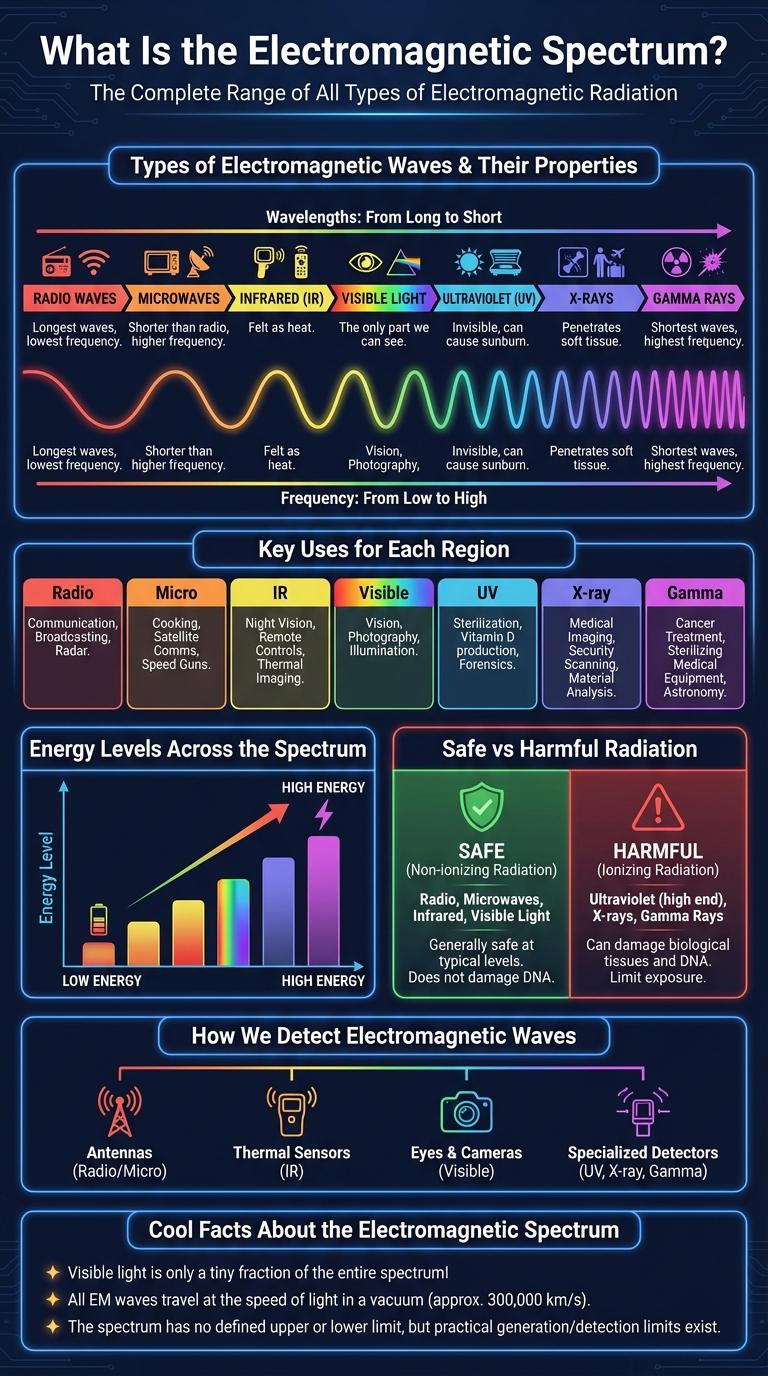
The electromagnetic spectrum encompasses all wavelengths of electromagnetic radiation, ranging from radio waves to gamma rays. Understanding this spectrum is essential for grasping how various technologies and natural phenomena operate. This infographic visually breaks down the spectrum, highlighting key properties and practical applications of each type of radiation.
What Is the Electromagnetic Spectrum?
What is the electromagnetic spectrum? The electromagnetic spectrum encompasses all types of electromagnetic radiation, ranging from radio waves to gamma rays. It represents the full range of wavelengths and frequencies emitted by electromagnetic waves.
Types of Electromagnetic Waves
The electromagnetic spectrum consists of various types of waves categorized by their wavelengths and frequencies. These waves transfer energy through space and have different applications in science and technology.
Radio waves have the longest wavelengths and are used in communication systems. Microwaves, infrared, visible light, ultraviolet, X-rays, and gamma rays follow, each with increasing frequency and energy.
Wavelengths: From Long to Short
The electromagnetic spectrum covers a wide range of wavelengths, arranged from the longest to the shortest. These wavelengths determine the type of electromagnetic radiation and its applications.
- Radio Waves - Longest wavelengths, used in communication such as television and radio signals.
- Microwaves - Shorter than radio waves, utilized in radar technology and microwave ovens.
- Infrared Waves - Between microwaves and visible light, commonly used in remote controls and thermal imaging.
Wavelengths continue to decrease through visible light, ultraviolet rays, X-rays, and gamma rays, each with unique energy levels and uses.
Frequency: From Low to High
The electromagnetic spectrum encompasses all types of electromagnetic radiation, arranged by frequency from low to high. Low-frequency waves include radio waves and microwaves, used in communication and cooking technologies. High-frequency waves such as X-rays and gamma rays have applications in medical imaging and cancer treatment.
Regions of the Electromagnetic Spectrum
The electromagnetic spectrum encompasses all types of electromagnetic radiation, arranged by wavelength and frequency. It ranges from very long radio waves to extremely short gamma rays.
The spectrum is divided into distinct regions: radio waves, microwaves, infrared, visible light, ultraviolet, X-rays, and gamma rays. Each region has unique properties and applications, such as radio waves for communication and X-rays for medical imaging. Understanding these regions helps in technological advancements and scientific research.
Key Uses for Each Region
The electromagnetic spectrum encompasses all types of electromagnetic radiation, categorized by wavelength and frequency. Each region of the spectrum serves distinct, essential functions in technology and science.
Radio waves enable wireless communication, including radio, television, and cell phones. Microwaves facilitate cooking, radar systems, and satellite transmissions.
Infrared radiation is widely used in thermal imaging, remote controls, and night vision devices. Visible light allows human vision and is fundamental for photography and illumination.
Ultraviolet light is applied in sterilization, fluorescence, and detecting counterfeit currency. X-rays are crucial for medical imaging and security screening.
Gamma rays have applications in cancer treatment, sterilizing medical equipment, and astrophysics research. Each spectrum region's utility reflects its unique energy and wavelength characteristics.
Energy Levels Across the Spectrum
| Electromagnetic Spectrum Region | Energy Level (eV) |
|---|---|
| Radio Waves | 10-9 to 10-6 eV |
| Microwaves | 10-6 to 10-3 eV |
| Infrared | 10-3 to 1 eV |
| Visible Light | 1.65 to 3.1 eV |
| Ultraviolet | 3.1 to 124 eV |
Safe vs Harmful Radiation
The electromagnetic spectrum encompasses a range of radiation types, from low-energy radio waves to high-energy gamma rays. Safe radiation, such as visible light and radio waves, poses minimal risk to human health. Harmful radiation includes ultraviolet rays, X-rays, and gamma rays, which can damage cells and increase cancer risk.
How We Detect Electromagnetic Waves
The electromagnetic spectrum encompasses a range of waves detected using various instruments tailored to their frequencies. Different detection methods capture energy from radio waves to gamma rays, enabling diverse applications in science and technology.
- Radio Waves Detection - Antennas capture radio frequency signals and convert them into electrical currents for analysis.
- Infrared Waves Detection - Infrared sensors measure heat radiation emitted by objects using photodiodes or bolometers.
- Visible Light Detection - Photoreceptors, such as camera sensors and the human eye, respond to visible light photons.
- Ultraviolet Waves Detection - UV detectors, including photomultiplier tubes, measure high-energy photons beyond visible light.
- X-rays and Gamma Rays Detection - Scintillation detectors and semiconductor devices register high-frequency photons through ionization effects.