
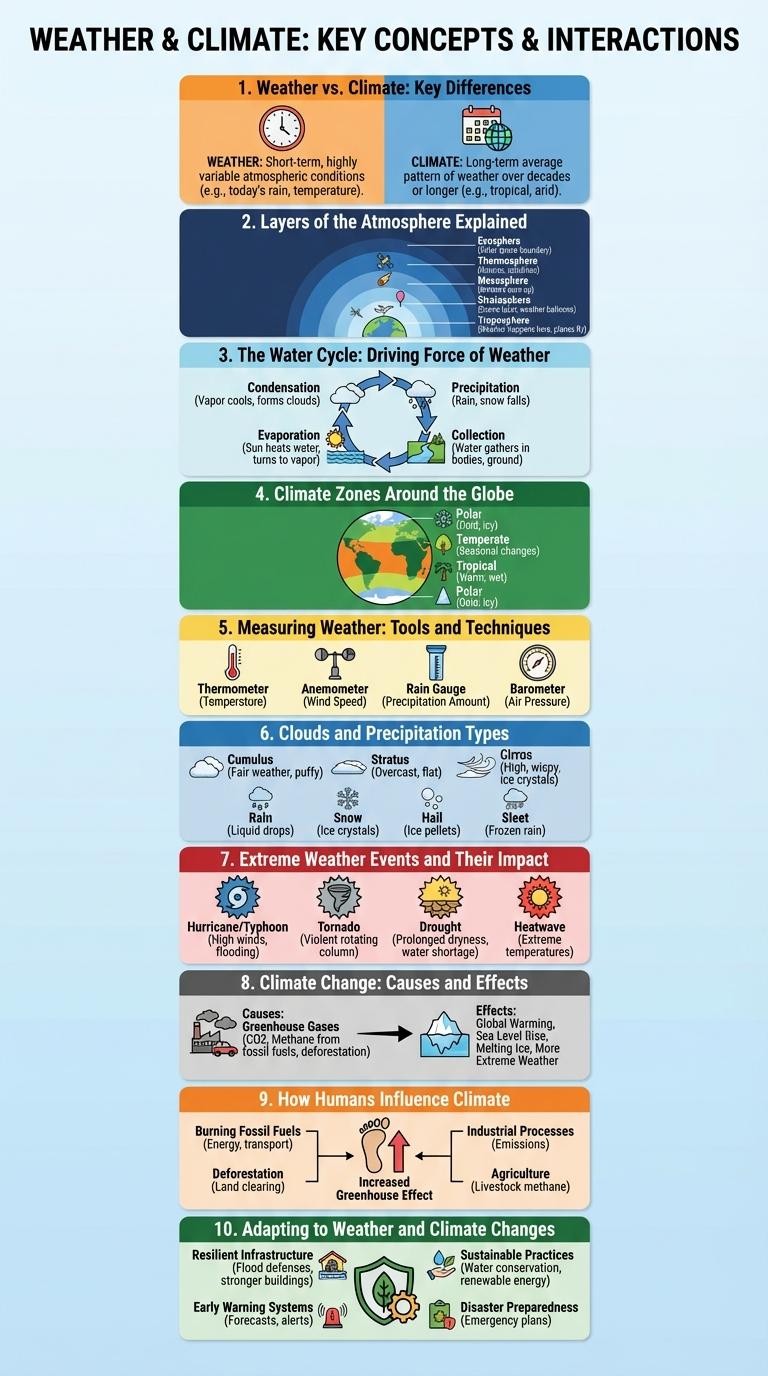
Weather and climate are essential factors that shape our environment and daily lives. Understanding their patterns helps predict storms, manage agriculture, and prepare for natural disasters. This infographic visually presents key data and distinctions between weather phenomena and long-term climate trends.
Weather vs. Climate: Key Differences
Weather refers to the atmospheric conditions in a specific place over a short period, such as hours or days. It includes variables like temperature, humidity, precipitation, and wind speed.
Climate describes the long-term average of weather patterns in a region, typically over 30 years or more. Climate data helps predict general trends and seasonal variations rather than daily changes.
Layers of the Atmosphere Explained
The Earth's atmosphere consists of five main layers: the Troposphere, Stratosphere, Mesosphere, Thermosphere, and Exosphere. Each layer has distinct characteristics, such as temperature variation, chemical composition, and weather phenomena. Understanding these layers is essential for studying weather patterns and climate behavior worldwide.
The Water Cycle: Driving Force of Weather
The water cycle is a fundamental process that drives weather patterns around the globe. It involves continuous movement of water through evaporation, condensation, precipitation, and collection.
- Evaporation - Water from oceans, lakes, and rivers transforms into vapor due to solar heat.
- Condensation - Water vapor cools and changes into liquid droplets forming clouds.
- Precipitation - Water droplets fall as rain, snow, sleet, or hail, replenishing Earth's water sources.
- Collection - Precipitated water gathers in bodies of water or infiltrates the ground to start the cycle anew.
- Energy Transfer - The water cycle distributes heat energy in the atmosphere, influencing temperature and weather conditions.
This continuous cycle is essential in shaping regional climates and short-term weather events worldwide.
Climate Zones Around the Globe
Climate zones represent the distinct regions of the Earth characterized by specific temperature and precipitation patterns. These zones influence ecosystems, human activities, and weather conditions worldwide.
There are five primary climate zones: Tropical, Dry, Temperate, Continental, and Polar. Each zone possesses unique characteristics; for example, Tropical climates experience high temperatures and heavy rainfall year-round. Understanding these zones helps predict weather trends and supports environmental planning and conservation efforts.
Measuring Weather: Tools and Techniques
Weather measurement relies on a variety of specialized tools designed to capture atmospheric conditions accurately. Instruments such as thermometers, barometers, and anemometers provide essential data on temperature, pressure, and wind speed.
Advanced techniques like radar and satellite imaging enhance weather monitoring by offering real-time insights into storm patterns and precipitation. These tools combined enable meteorologists to forecast weather and study climate trends effectively.
Clouds and Precipitation Types
Clouds form when water vapor condenses into tiny droplets or ice crystals in the atmosphere. Different types of clouds, such as cumulus, stratus, and cirrus, indicate various weather patterns. Precipitation occurs when these droplets combine and fall as rain, snow, sleet, or hail, depending on temperature and atmospheric conditions.
Extreme Weather Events and Their Impact
Extreme weather events are becoming more frequent and intense due to climate change. These events cause significant economic, social, and environmental impacts worldwide.
Understanding the types and consequences of extreme weather is crucial for effective risk management and adaptation strategies.
- Heatwaves - Prolonged periods of excessive heat increase health risks and strain energy resources.
- Floods - Heavy rainfall and storm surges lead to widespread property damage, displacement, and loss of life.
- Hurricanes and Typhoons - Intense tropical storms cause destructive winds, flooding, and infrastructure collapse in coastal regions.
Climate Change: Causes and Effects
| Cause | Effect |
|---|---|
| Greenhouse Gas Emissions | Global temperature rise |
| Deforestation | Loss of carbon sinks, increased CO2 levels |
| Fossil Fuel Combustion | Air pollution, enhanced greenhouse effect |
| Agricultural Practices | Methane and nitrous oxide release |
| Industrial Activities | Increased atmospheric pollutants |
| Effect | Details |
|---|---|
| Temperature Increase | Average global temperatures rising by 1.1degC since pre-industrial era |
| Sea Level Rise | Melting ice caps causing up to 3.7 mm annual rise |
| Extreme Weather | Increased frequency of heatwaves, hurricanes, and droughts |
| Biodiversity Loss | Habitat destruction and species extinction rates accelerating |
| Ocean Acidification | Higher CO2 levels lowering ocean pH, affecting marine life |
How Humans Influence Climate
How do human activities influence the Earth's climate?
Human actions such as burning fossil fuels and deforestation release greenhouse gases into the atmosphere. These gases trap heat, leading to global temperature increases and altered weather patterns.