
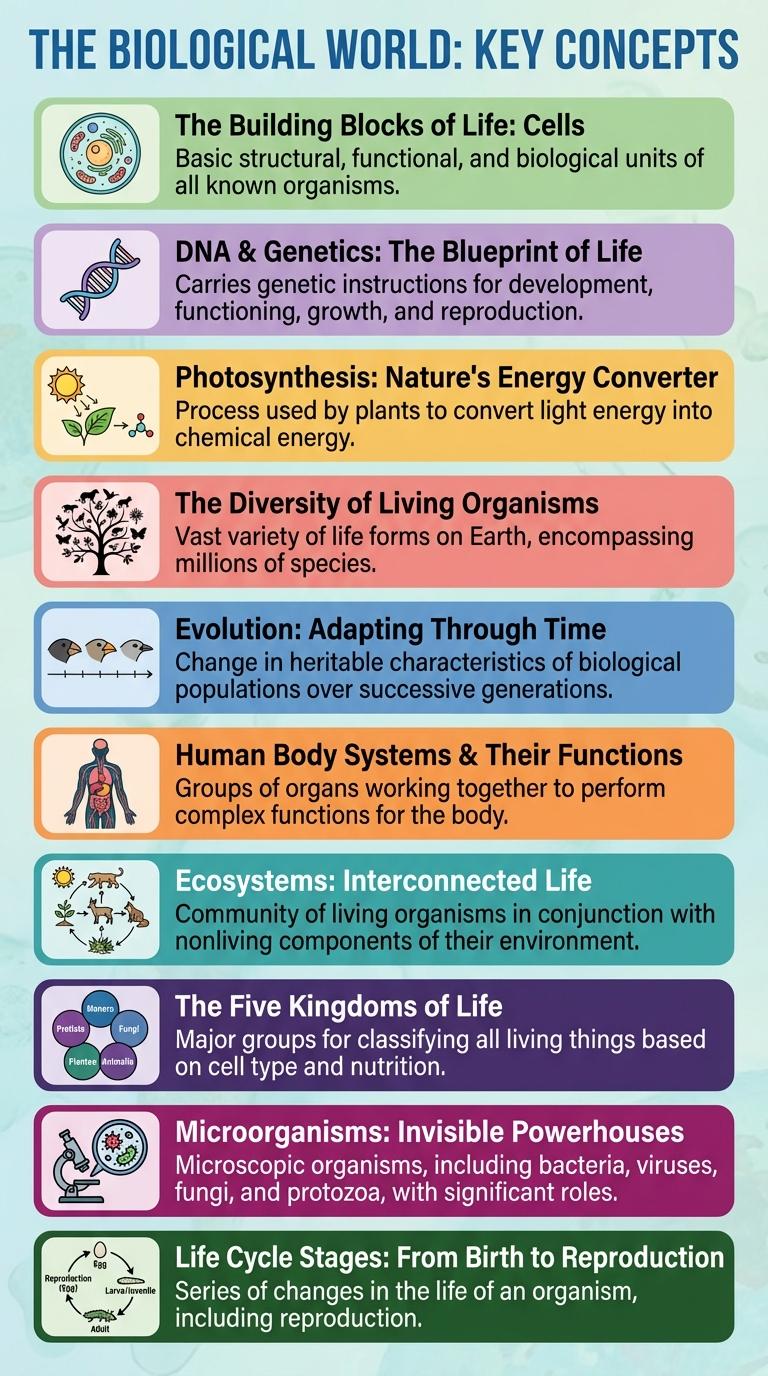
Biology infographics simplify complex scientific concepts by visually representing key information about living organisms, cellular structures, and ecosystems. They enhance understanding by combining detailed images with concise text, making intricate biological processes accessible to students and educators alike. Clear visual aids support faster learning and better retention of fundamental biology topics.
The Building Blocks of Life: Cells
Cells are the fundamental units of life, forming the basis of all living organisms. They contain essential components such as the nucleus, cytoplasm, and cell membrane, each playing a vital role in biological functions. Understanding cell structure and function is crucial for advances in medicine, genetics, and biotechnology.
DNA & Genetics: The Blueprint of Life
What is DNA and why is it essential in biology? DNA, or deoxyribonucleic acid, carries genetic instructions vital for the growth, development, and functioning of all living organisms. It acts as the blueprint of life, encoding information that determines inherited traits.
How do genetics influence living organisms? Genetics studies how traits are passed from parents to offspring through genes, segments of DNA that code for specific proteins. These inherited genes shape physical characteristics, behavior, and susceptibility to diseases.
Photosynthesis: Nature's Energy Converter
Photosynthesis is the process by which green plants convert sunlight into chemical energy, producing oxygen and glucose from carbon dioxide and water. Chlorophyll, the pigment in chloroplasts, captures sunlight to drive this vital reaction. This natural energy conversion supports life on Earth by supplying oxygen and forming the base of the food chain.
The Diversity of Living Organisms
Biology explores the vast diversity of living organisms on Earth, from microscopic bacteria to massive blue whales. This diversity is categorized into different kingdoms based on unique characteristics and evolutionary history.
- Kingdom Animalia - Comprises multicellular organisms that primarily consume organic material and possess sensory organs.
- Kingdom Plantae - Consists of autotrophic organisms that perform photosynthesis to produce energy.
- Kingdom Fungi - Includes organisms that absorb nutrients from organic matter, playing a vital role in decomposition.
- Kingdom Protista - Contains mostly unicellular organisms with diverse modes of nutrition and mobility.
- Kingdom Monera - Encompasses prokaryotic organisms such as bacteria, characterized by the absence of a true nucleus.
Evolution: Adapting Through Time
Evolution is the biological process through which species change over generations, driven by genetic variation and natural selection. This continuous adaptation enables organisms to survive and thrive in changing environments.
Understanding evolution provides insights into the diversity of life and the mechanisms that shape species over time.
- Genetic Variation - Differences in DNA among individuals create the raw material for evolution.
- Natural Selection - Organisms with advantageous traits are more likely to survive and reproduce.
- Speciation - New species arise when populations become reproductively isolated and diverge genetically.
Human Body Systems & Their Functions
The human body consists of multiple complex systems that work together to maintain life and health. Each system has specific functions vital for the body's overall operation.
The circulatory system transports blood, nutrients, and oxygen to cells while removing waste products. The respiratory system enables gas exchange, supplying oxygen to the blood and expelling carbon dioxide. The digestive system breaks down food to absorb nutrients and eliminate waste.
Ecosystems: Interconnected Life
| Component | Description |
|---|---|
| Ecosystem | A community of living organisms interacting with their physical environment. |
| Producers | Organisms, like plants and algae, that produce energy through photosynthesis. |
| Consumers | Animals that feed on producers or other consumers for energy. |
| Decomposers | Organisms such as fungi and bacteria that break down dead matter, recycling nutrients. |
| Interdependence | All species within an ecosystem depend on each other for survival, maintaining balance and biodiversity. |
The Five Kingdoms of Life
The Five Kingdoms of Life classify all living organisms into major categories based on their cellular structure, nutrition methods, and reproduction. These kingdoms provide a framework for understanding biological diversity and evolutionary relationships.
The kingdoms include Monera, Protista, Fungi, Plantae, and Animalia. Each kingdom encompasses organisms with distinct characteristics that define their role in ecosystems and their biological functions.
Microorganisms: Invisible Powerhouses
Microorganisms are tiny living organisms invisible to the naked eye yet essential to life on Earth. These microscopic entities play crucial roles in ecosystems, health, and industry.
- Ubiquity - Microorganisms inhabit diverse environments, from deep oceans to the human gut.
- Biological Functions - They drive nutrient cycling, decomposing organic matter and supporting plant growth.
- Health Impact - Beneficial microbes aid digestion and immune function, while some pathogens cause diseases.
Harnessing microorganisms has led to advancements in medicine, agriculture, and biotechnology.