
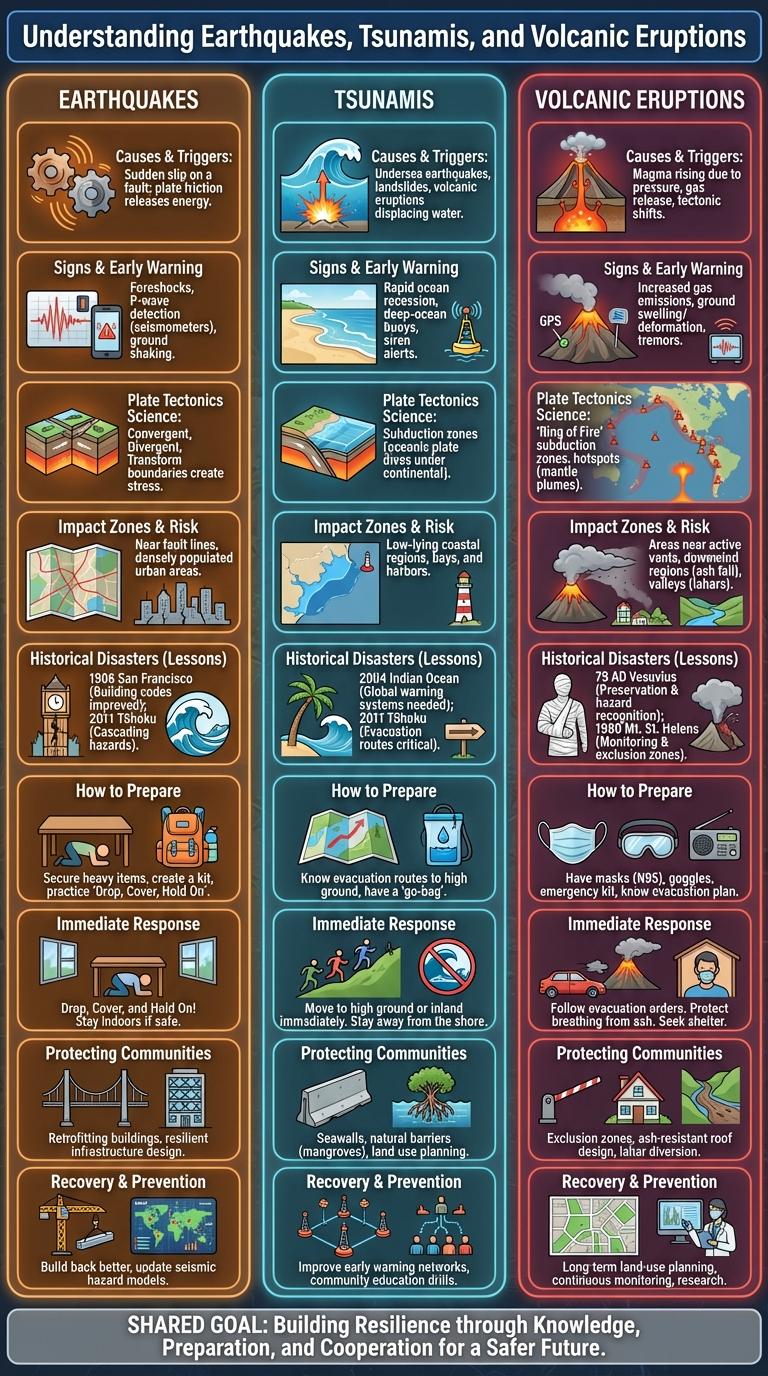
Earthquakes, tsunamis, and volcanic eruptions are powerful natural phenomena that shape our planet's landscape and pose significant risks to human populations. Understanding the causes, effects, and safety measures associated with these events is crucial for preparedness and disaster mitigation. Infographics provide a clear, visual representation of the complex data and critical information needed to comprehend these dynamic geophysical processes.
Understanding Earthquakes, Tsunamis, and Volcanic Eruptions
Earthquakes occur when tectonic plates shift abruptly, releasing energy that creates seismic waves. These waves cause the ground to shake, potentially leading to structural damage and loss of life.
Tsunamis are large ocean waves generated by underwater seismic activity, such as earthquakes or volcanic eruptions. When the ocean floor shifts, it displaces massive amounts of water, leading to waves that can travel at high speeds and cause widespread coastal destruction.
Volcanic eruptions result from magma rising through the Earth's crust and erupting as lava, ash, and gases. These eruptions can reshape landscapes, trigger tsunamis, and impact climate conditions by releasing volcanic ash and aerosols into the atmosphere.
Understanding these natural hazards is critical for disaster preparedness and risk mitigation. Early warning systems and geological monitoring help scientists predict events and protect vulnerable populations.
Causes and Triggers of Natural Disasters
Earthquakes occur due to the sudden release of energy along fault lines in the Earth's crust, often caused by tectonic plate movements. These seismic shifts create shockwaves that can result in ground shaking and structural damage.
Tsunamis are massive ocean waves generated primarily by underwater earthquakes, volcanic eruptions, or landslides. The rapid displacement of water leads to waves that travel across oceans, causing widespread coastal flooding.
Volcanic eruptions happen when magma from beneath the Earth's surface rises and escapes through vents, driven by pressure from molten rock and gases. Triggers include tectonic plate subduction, magma chamber overpressure, and changes in the Earth's crust structure.
Natural disaster triggers often interconnect; for example, an earthquake may initiate a tsunami or volcanic eruption. Understanding these causes aids in predicting and mitigating disaster impacts on vulnerable regions.
Signs and Early Warning Systems
Earthquakes, tsunamis, and volcanic eruptions exhibit specific signs that help in early detection and warning. Early warning systems use scientific technology to monitor these signs and reduce disaster impact.
Monitoring seismic activity, sea level changes, and volcanic gases are crucial for timely alerts in natural disasters.
- Seismic Monitoring - Detects ground movements to predict earthquakes and volcanic eruptions.
- Sea Level Sensors - Measure sudden changes in ocean water to warn of incoming tsunamis.
- Gas Emission Tracking - Observes sulfur dioxide and other volcanic gases to anticipate eruptions.
The Science Behind Plate Tectonics
Earthquakes, tsunamis, and volcanic eruptions result from the movement of Earth's tectonic plates. These plates float on the semi-fluid asthenosphere and interact at boundaries, causing stress that releases seismic energy. Understanding plate tectonics explains how subduction zones, rift valleys, and transform faults trigger these natural disasters.
Impact Zones: Who's at Risk?
Earthquakes, tsunamis, and volcanic eruptions pose significant threats to various geographic regions, affecting millions of people worldwide. Understanding which areas are most vulnerable helps prioritize disaster preparedness and response efforts.
- Earthquake Impact Zones - Regions along tectonic plate boundaries, such as the Pacific Ring of Fire, face the highest earthquake risks.
- Tsunami Vulnerable Areas - Coastal zones near subduction zones experience the greatest tsunami threats due to underwater seismic activity.
- Volcanic Eruption Hazards - Populations living near active volcanoes, especially in the "Volcanic Arc," are at increased risk from eruptions and related hazards.
Historical Disasters: Lessons Learned
What can historical disasters teach us about earthquake, tsunami, and volcanic eruption preparedness?
Historical disasters reveal critical patterns and vulnerabilities. Understanding these events improves early warning systems and disaster response strategies.
How to Prepare for Natural Hazards
Preparing for natural hazards like earthquakes, tsunamis, and volcanic eruptions is crucial for safety and survival. Understanding the specific risks of each hazard helps in creating an effective emergency plan.
Secure heavy furniture and appliances to prevent injury during earthquakes. Identify safe evacuation routes and establish a communication plan with family members. Stock emergency kits with water, food, first aid supplies, and essential documents to stay prepared for any natural disaster.
Immediate Response and Safety Tips
Earthquake safety begins with dropping to the ground, taking cover under sturdy furniture, and holding on until shaking stops. Tsunami response requires moving to higher ground immediately after feeling an earthquake or receiving a tsunami warning. During a volcanic eruption, stay indoors, close windows and doors, and avoid low-lying areas prone to lava flow or ashfall.
Protecting Communities and Infrastructure
Earthquakes, tsunamis, and volcanic eruptions pose significant threats to communities and infrastructure worldwide. Effective protection strategies enhance resilience and reduce potential damage.
- Early Warning Systems - Implementing advanced sensors and communication networks provides timely alerts to minimize casualties and infrastructure loss.
- Resilient Building Design - Constructing earthquake-resistant structures and elevated buildings near coastlines reduces damage from seismic activity and tsunamis.
- Evacuation Planning - Developing clear evacuation routes and community drills ensures efficient response during volcanic eruptions and tsunamis.
Community education and investment in protective infrastructure are essential to safeguard lives and property from natural disasters.