
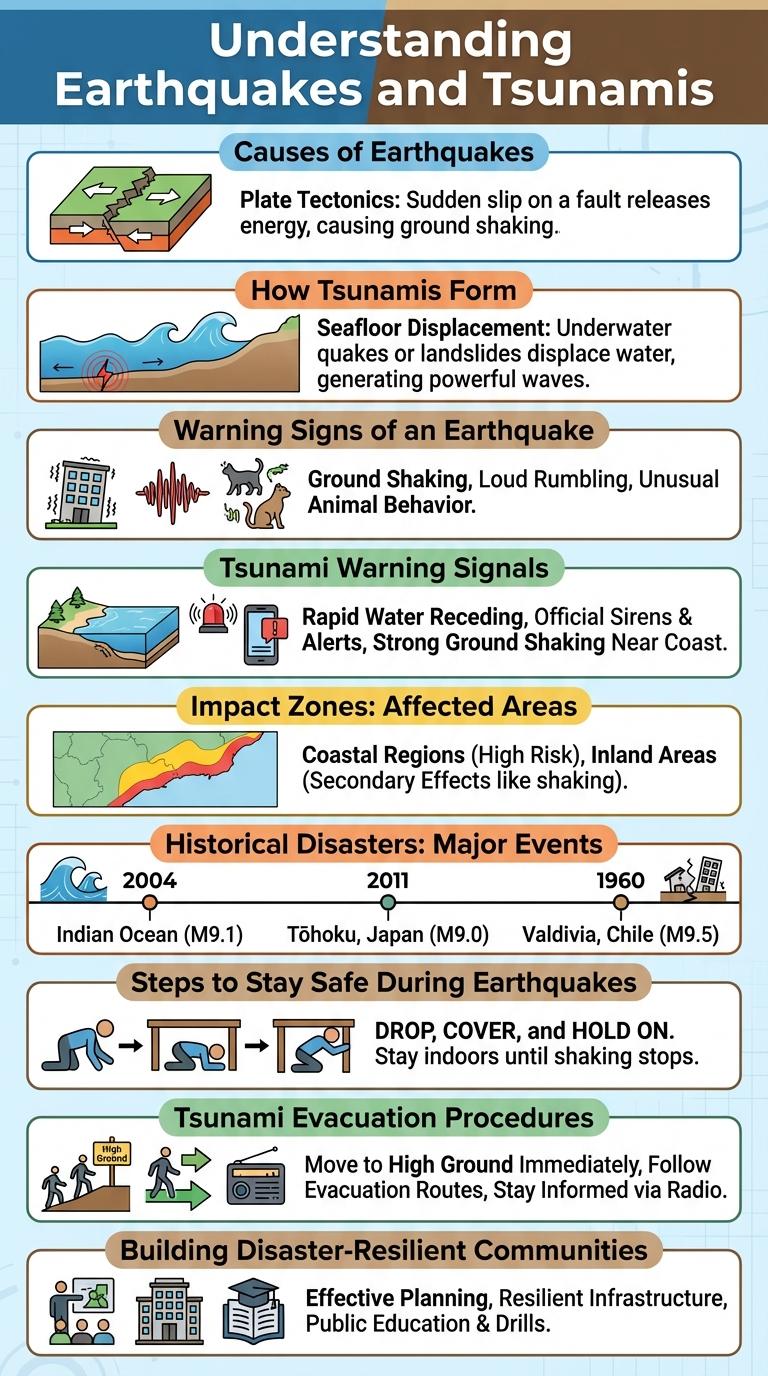
Tsunamis and earthquakes are powerful natural phenomena that pose significant risks to coastal and seismic regions worldwide. Understanding their causes, effects, and warning signs is crucial for effective preparedness and disaster response. This infographic visually highlights key information to enhance awareness and safety measures.
Understanding Earthquakes and Tsunamis
Earthquakes occur when tectonic plates shift abruptly, releasing energy that creates seismic waves. These waves can trigger underwater disturbances leading to tsunamis.
Understanding the causes and effects of earthquakes helps predict potential tsunami events. Tsunamis are large ocean waves generated primarily by undersea earthquakes. Early detection and warning systems are crucial for minimizing damage and saving lives.
Causes of Earthquakes
Earthquakes occur due to the sudden release of energy in the Earth's crust, creating seismic waves. This release typically happens when tectonic plates grind against each other along faults.
Most earthquakes are triggered by movements at plate boundaries, including subduction zones and transform faults. Human activities like mining and reservoir-induced seismicity can also cause minor earthquakes.
How Tsunamis Form
Tsunamis are large ocean waves triggered primarily by underwater earthquakes. Understanding how tsunamis form helps in disaster preparation and risk reduction.
- Underwater Earthquake - A sudden movement along tectonic plates displaces large volumes of water.
- Water Displacement - The vertical shift causes waves that travel across the ocean at high speed.
- Wave Amplification - As waves approach shallow coastal areas, they increase in height, leading to potentially devastating impacts.
Warning Signs of an Earthquake
Earthquake warning signs include sudden ground shaking, unusual animal behavior, and loud rumbling sounds. People may also notice cracks forming in walls or the ground before the main tremor. Recognizing these signs can provide crucial seconds to seek safety before a tsunami or major earthquake strikes.
Tsunami Warning Signals
Tsunami warning signals are crucial for coastal safety, providing early alerts to impending waves caused by underwater earthquakes. These signals include natural signs and technological alerts that help communities prepare and evacuate promptly.
Natural signals include sudden sea level changes and strong ground shaking. Technological alerts come from seismic monitors and tsunami detection buoys transmitting real-time data to alert centers.
Impact Zones: Affected Areas
Tsunamis and earthquakes significantly impact coastal and inland regions with varying intensity. Understanding the primary impact zones helps in disaster preparedness and mitigation efforts.
Both natural disasters affect densely populated areas, infrastructure, and ecosystems differently based on geographic and geologic factors.
- Coastal Zones - Tsunamis primarily devastate coastal areas through massive flooding and wave surges.
- Epicentral Regions - Earthquake epicenters experience the strongest shaking and structural damage.
- Inland Areas - Secondary impacts like landslides and soil liquefaction extend damage inland from the epicenter.
Historical Disasters: Major Events
Tsunamis and earthquakes have caused some of the most devastating natural disasters in history, leading to immense loss of life and property. Major events include the 2004 Indian Ocean tsunami, which resulted in over 230,000 fatalities across multiple countries, and the 2011 Tohoku earthquake and tsunami in Japan, causing nearly 20,000 deaths and triggering a nuclear crisis. These historical disasters highlight the importance of early warning systems and disaster preparedness to mitigate future impacts.
| Event | Impact |
|---|---|
| 2004 Indian Ocean Tsunami | 230,000+ deaths, affected 14 countries |
| 2011 Tohoku Earthquake & Tsunami | ~20,000 deaths, nuclear meltdown |
| 1755 Lisbon Earthquake & Tsunami | Estimated 40,000 casualties |
| 1960 Valdivia Earthquake & Tsunami | 1,600 deaths, largest recorded magnitude 9.5 |
| 1883 Krakatoa Eruption & Tsunami | 36,000 deaths, massive volcanic impact |
Steps to Stay Safe During Earthquakes
| Steps to Stay Safe During Earthquakes | |
|---|---|
| Drop, Cover, and Hold On | Drop to your hands and knees, cover your head and neck under sturdy furniture, and hold on until shaking stops. |
| Stay Indoors Until Shaking Stops | Do not run outside during shaking; stay away from windows and glass to avoid injury. |
| Identify Safe Spots | Locate strong furniture or interior walls to protect yourself from falling debris. |
| Avoid Doorways | Modern construction often means doorways are less safe compared to other shelter areas within a room. |
| Aftershocks Awareness | Be prepared for aftershocks; remain alert and protect yourself as shaking may resume suddenly. |
Tsunami Evacuation Procedures
What are the essential tsunami evacuation procedures? Immediately move to higher ground or inland when a tsunami warning is issued. Avoid coastal areas and follow designated evacuation routes for safety.
How can people recognize the signs of an impending tsunami? Natural indicators include a rapid withdrawal of water from the shoreline and a loud, roaring ocean sound. Promptly evacuate to avoid being caught by the incoming waves.
Where should individuals go during a tsunami evacuation? Seek locations at least 30 meters above sea level or 2 kilometers inland. Use evacuation maps and follow official instructions to reach safe zones.
What items should be prepared for a tsunami evacuation kit? Include essentials like water, food, first aid supplies, flashlights, and important documents. Keep the kit accessible to ensure quick departure during an emergency.
Why is early evacuation critical in tsunami events? Tsunami waves can arrive within minutes of an earthquake or warning. Rapid response minimizes the risk of injury and saves lives by avoiding flood zones and debris.