
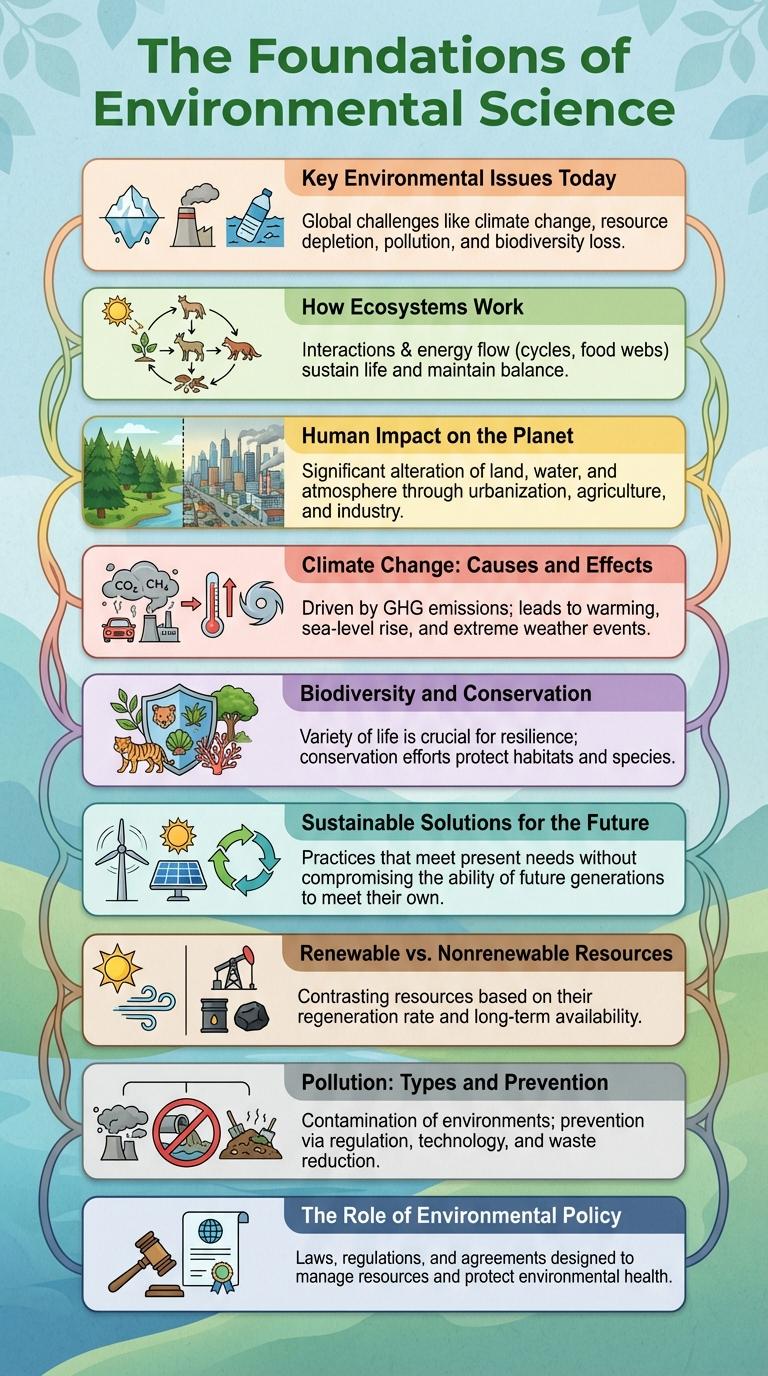
Environmental science infographics visually present complex data about ecosystems, pollution, and conservation efforts, making it easier to understand key issues affecting our planet. They combine statistics, maps, and graphics to highlight trends in climate change, biodiversity loss, and renewable energy adoption. This visual approach enhances awareness and encourages informed decision-making to protect the environment.
The Foundations of Environmental Science
Environmental science explores the relationships between living organisms and their physical surroundings. It encompasses multiple disciplines to understand and address environmental challenges.
- Ecology - Studies interactions between organisms and their environments to reveal ecosystem dynamics.
- Atmospheric Science - Examines air systems and climate patterns impacting global and local environments.
- Geology - Investigates earth processes influencing soil, water, and landform development.
These foundational fields provide critical insights for sustainable environmental management and policy development.
Key Environmental Issues Today
Environmental science addresses the critical challenges facing our planet today. Understanding these key issues is essential for developing sustainable solutions.
- Climate Change - Rising global temperatures caused by greenhouse gas emissions disrupt weather patterns and ecosystems.
- Deforestation - The large-scale removal of forests leads to loss of biodiversity and increased carbon emissions.
- Pollution - Air, water, and soil contamination pose severe health risks to humans and wildlife alike.
How Ecosystems Work
Ecosystems consist of living organisms interacting with their physical environment, forming a complex web of life. These interactions regulate essential processes such as energy flow and nutrient cycling.
Producers like plants capture sunlight to create energy through photosynthesis, serving as the foundation of the food chain. Consumers, including herbivores and carnivores, obtain energy by feeding on other organisms. Decomposers break down dead matter, returning nutrients to the soil and supporting new growth.
Human Impact on the Planet
Human activities have significantly altered Earth's ecosystems, leading to deforestation, pollution, and climate change. Industrialization and urbanization increase greenhouse gas emissions, causing global warming and loss of biodiversity. Sustainable practices and environmental policies are crucial to mitigate these impacts and preserve natural resources for future generations.
Climate Change: Causes and Effects
Climate change is primarily caused by the increase of greenhouse gases such as carbon dioxide and methane in the atmosphere. These gases result from human activities like burning fossil fuels, deforestation, and industrial processes.
Rising global temperatures lead to melting ice caps, sea level rise, and extreme weather events. Ecosystems, agriculture, and human health are significantly impacted by these environmental changes.
Biodiversity and Conservation
Biodiversity represents the variety of life forms on Earth, essential for ecosystem stability and human survival. Conservation efforts aim to protect species, habitats, and genetic diversity from threats like habitat loss and climate change.
- Habitat Preservation - Protecting natural areas maintains ecosystems and supports diverse species populations.
- Endangered Species Protection - Targeted programs prevent extinction of vulnerable species through monitoring and breeding.
- Genetic Diversity Maintenance - Conserving genetic variation helps species adapt to environmental changes and resist diseases.
Sustainable Solutions for the Future
| Environmental Challenge | Sustainable Solutions |
|---|---|
| Climate Change | Renewable Energy Sources (solar, wind, hydro) |
| Deforestation | Reforestation and Responsible Forestry Management |
| Pollution | Waste Reduction, Recycling, and Clean Technology |
| Water Scarcity | Water Conservation, Efficient Irrigation, and Rainwater Harvesting |
| Biodiversity Loss | Protected Areas, Wildlife Corridors, and Habitat Restoration |
Renewable vs. Nonrenewable Resources
What are the key differences between renewable and nonrenewable resources? Renewable resources naturally replenish over time, such as solar energy, wind, and biomass. Nonrenewable resources, like coal, oil, and natural gas, exist in finite amounts and take millions of years to form.
Why is the shift toward renewable resources important for environmental sustainability? Renewable resources reduce greenhouse gas emissions and dependence on fossil fuels, helping combat climate change. Nonrenewable resource consumption leads to pollution, habitat destruction, and resource depletion.
How do renewable and nonrenewable resources impact energy production? Renewable energy sources provide cleaner alternatives that can be harnessed continuously without running out. Nonrenewable energy sources often have higher environmental costs and contribute to global warming.
What challenges affect the adoption of renewable resources? Intermittency issues, such as solar and wind variability, and high initial infrastructure costs slow adoption. Nonrenewable resources benefit from established technology and infrastructure but face depletion risks.
How can societies balance the use of renewable and nonrenewable resources? Integrating renewable resources with energy efficiency and smart grid technologies enables sustainable growth. Strategic management of nonrenewable resources requires minimizing environmental harm and transitioning to renewables.
Pollution: Types and Prevention
Pollution is the introduction of harmful substances into the environment, affecting air, water, and soil quality. Major types include air pollution, water pollution, soil contamination, and noise pollution.
Prevention methods focus on reducing emissions, proper waste disposal, using eco-friendly products, and promoting renewable energy sources. Public awareness and strict environmental regulations play crucial roles in minimizing pollution impacts.