
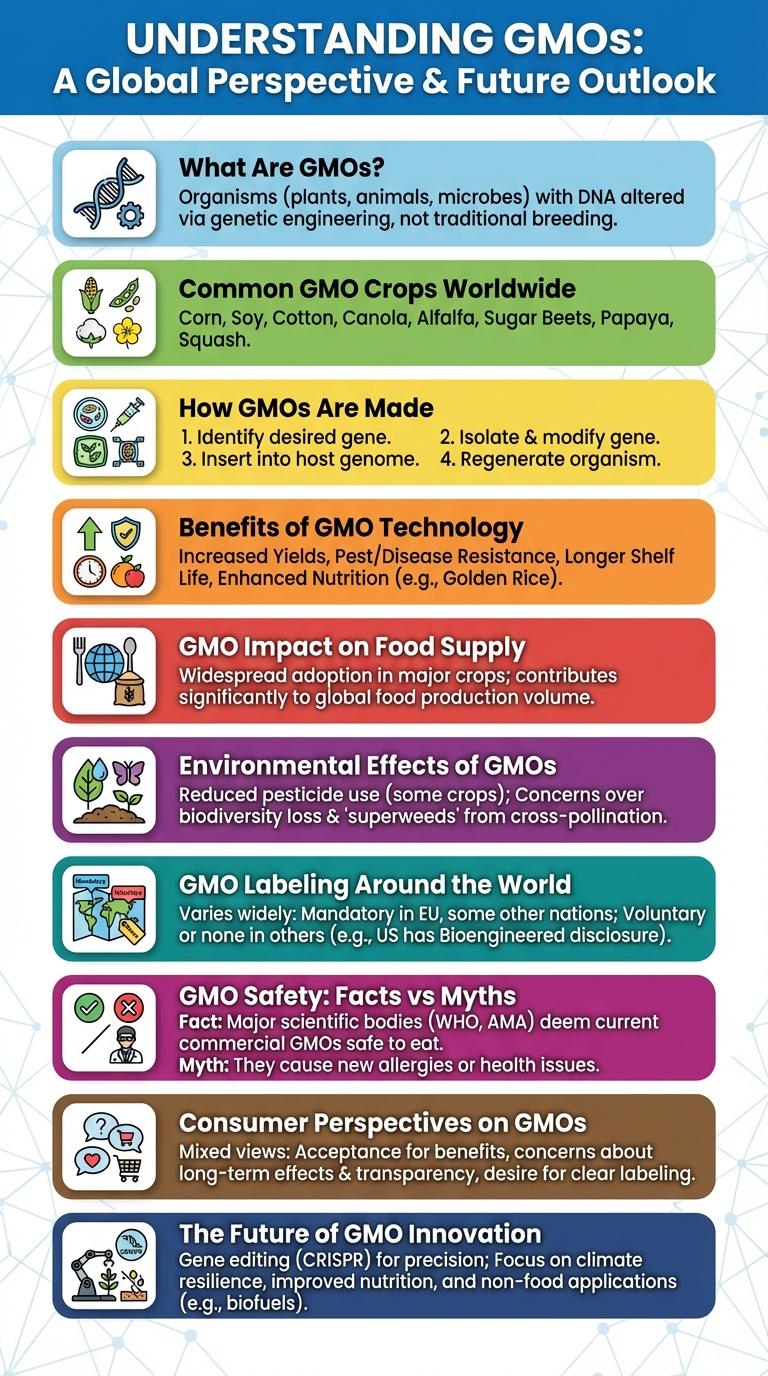
Genetically modified organisms (GMOs) revolutionize agriculture by enhancing crop yields, improving resistance to pests, and increasing nutritional value. This infographic illustrates key facts about GMO development, safety assessments, and global adoption rates. Understanding these elements helps clarify the impact of GMOs on food security and sustainability.
What Are GMOs?
Genetically Modified Organisms (GMOs) are living organisms whose genetic material has been artificially altered using genetic engineering techniques. These modifications aim to introduce new traits or enhance existing ones for various purposes in agriculture, medicine, and industry.
- Genetic Engineering - GMOs are created by directly manipulating an organism's DNA to achieve desired traits.
- Common Applications - GMOs are widely used in crops for pest resistance, herbicide tolerance, and improved nutritional content.
- Regulation and Safety - GMOs undergo rigorous testing to ensure they meet safety standards for human consumption and environmental impact.
Understanding what GMOs are helps inform discussions about biotechnology, food security, and sustainability.
Common GMO Crops Worldwide
What are the most common GMO crops cultivated worldwide? Genetically modified organisms (GMOs) in agriculture enhance crop resistance and yield. Key GMO crops include soybeans, corn, and cotton, which dominate global production.
| Crop | Primary GMO Trait |
|---|---|
| Soybeans | Herbicide tolerance |
| Corn | Pest resistance and herbicide tolerance |
| Cotton | Insect resistance |
| Canola | Herbicide tolerance |
| Alfalfa | Herbicide tolerance |
How GMOs Are Made
Genetically modified organisms (GMOs) are created by altering the genetic material of plants or animals to introduce desired traits. This process involves precise scientific techniques to ensure specific genes are inserted, removed, or modified.
- Gene Identification - Scientists identify the gene responsible for a desired trait in a donor organism.
- Gene Isolation - The targeted gene is extracted using molecular tools for transfer into the host organism.
- Gene Insertion - The isolated gene is inserted into the DNA of the host organism through methods like gene guns or bacterial vectors.
- Selection - Modified cells expressing the new gene are selected and cultured to develop into full organisms.
- Testing and Validation - GMOs undergo rigorous testing to confirm gene expression, safety, and effectiveness before commercialization.
Benefits of GMO Technology
Genetically Modified Organisms (GMOs) have revolutionized agriculture by enhancing crop yields and resilience. These innovations contribute to sustainable food production and improved nutrition worldwide.
- Increased Crop Productivity - GMO technology boosts agricultural output by enabling plants to grow faster and resist pests more effectively.
- Pest and Disease Resistance - Genetic modifications protect crops from insects and diseases, reducing the need for chemical pesticides.
- Enhanced Nutritional Value - GMOs can be engineered to contain higher levels of essential vitamins and minerals, improving human health.
GMO Impact on Food Supply
| Aspect | Impact on Food Supply |
|---|---|
| Crop Yield | GMO crops typically produce higher yields by resisting pests and diseases, increasing overall food availability. |
| Food Security | Enhanced crop resilience reduces crop failures, contributing to greater food stability worldwide. |
| Resource Efficiency | Genetically engineered plants often require less water and pesticides, optimizing resource use in agriculture. |
| Nutrition Improvement | Biofortified GMO foods can address nutrient deficiencies, improving public health in vulnerable populations. |
| Environmental Impact | Reduced chemical inputs lower environmental pollution, supporting sustainable farming practices. |
Environmental Effects of GMOs
Genetically modified organisms (GMOs) impact the environment by reducing the need for chemical pesticides, which can decrease soil and water contamination. GMO crops designed for herbicide tolerance may lead to increased herbicide use, contributing to the development of resistant weeds. Crop modifications can also enhance yield efficiency, potentially reducing land use and promoting biodiversity conservation.
GMO Labeling Around the World
GMO labeling regulations vary widely across the globe, reflecting different consumer preferences and government policies. Some countries mandate clear labeling, while others have voluntary or no labeling requirements.
In the European Union, strict GMO labeling is enforced to ensure transparency for consumers. In contrast, the United States requires labeling only for genetically modified foods with altered nutritional content or allergens.
GMO Safety: Facts vs Myths
Genetically Modified Organisms (GMOs) undergo rigorous testing to ensure their safety for human consumption and environmental impact. Scientific consensus supports that approved GMOs are as safe as their non-GMO counterparts.
Myths often claim GMOs cause health problems, but extensive research shows no credible evidence linking GMOs to illnesses. Environmental concerns, such as gene transfer or biodiversity loss, are addressed through strict regulatory practices. GMO technology aims to improve crop yield, nutritional value, and resistance to pests and diseases while maintaining food safety standards.
Consumer Perspectives on GMOs
Genetically Modified Organisms (GMOs) evoke mixed reactions from consumers worldwide. Some view GMOs as a solution to food security, while others express concerns about health and environmental impacts.
Studies reveal that approximately 60% of consumers are cautious about purchasing GMO products. Transparency and labeling influence consumer trust and purchasing decisions significantly.