
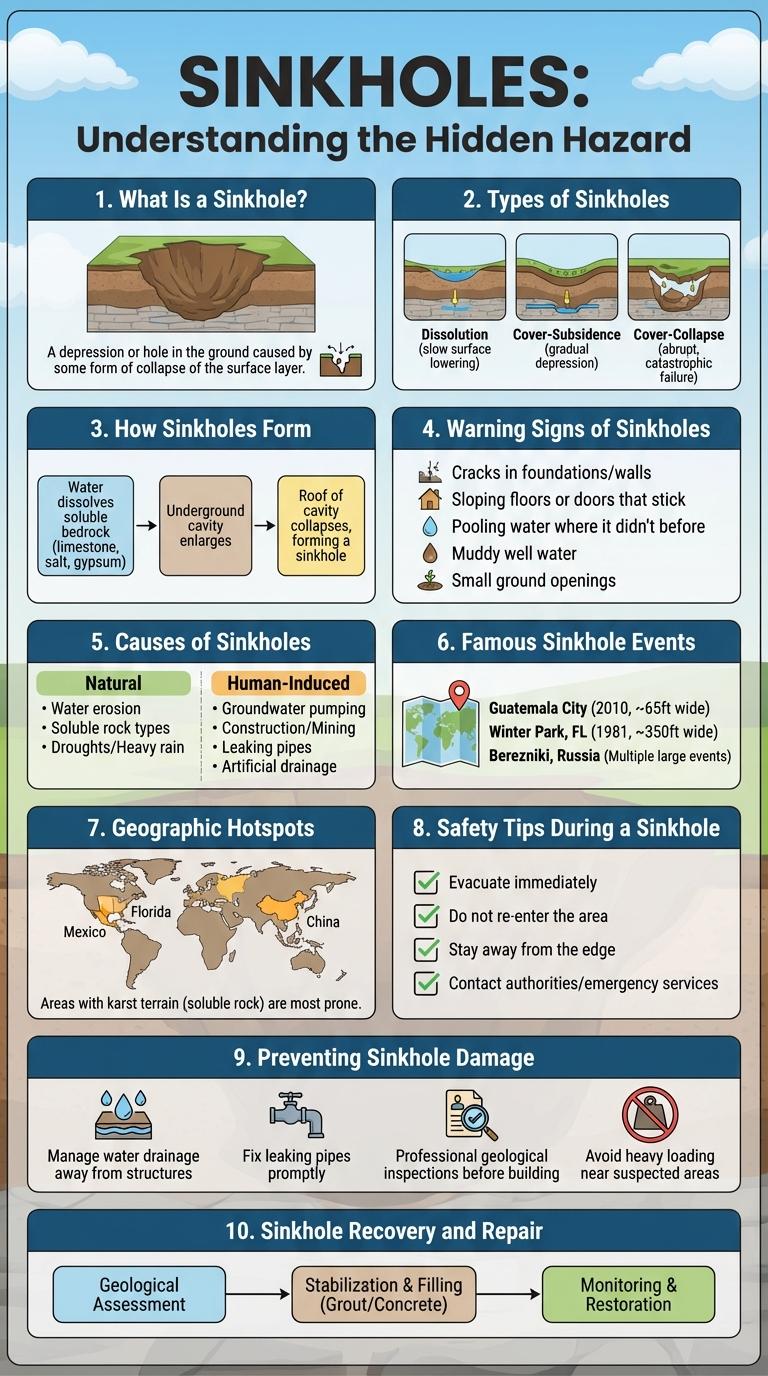
Sinkholes are natural depressions or holes in the ground caused by the collapse of a surface layer, often due to the dissolution of underlying limestone or other soluble rock. These geological phenomena can vary in size from small cavities to massive craters, posing significant risks to infrastructure and safety. Understanding the formation, causes, and impacts of sinkholes is essential for effective prevention and mitigation strategies.
What Is a Sinkhole?
A sinkhole is a depression or hole in the ground caused by the collapse of a surface layer. It often forms suddenly and can vary in size from a few feet to hundreds of acres.
Sinkholes occur when water dissolves soluble rock, such as limestone, beneath the earth's surface, creating underground voids. These voids grow over time until the surface layer can no longer support the weight above, leading to a collapse. Sinkholes are common in karst regions and can cause significant damage to infrastructure and property.
Types of Sinkholes
Sinkholes are depressions or holes in the ground caused by the collapse of a surface layer. There are three main types of sinkholes: solution sinkholes, cover-subsidence sinkholes, and cover-collapse sinkholes. Each type forms through different geological processes, influencing its shape, size, and rate of formation.
| Type of Sinkhole | Description |
|---|---|
| Solution Sinkholes | Formed by the slow dissolution of rock, creating shallow depressions with minimal surface collapse. |
| Cover-Subsidence Sinkholes | Develop gradually as sediment settles into voids created by dissolved rock, causing a subsiding surface. |
| Cover-Collapse Sinkholes | Characterized by sudden surface collapse when sediment bridges above cavities fail, resulting in dramatic holes. |
How Sinkholes Form
Sinkholes are depressions or holes in the ground caused by the collapse of a surface layer. They form when underground materials dissolve or erode, creating voids beneath the earth.
- Dissolution of Rock - Water dissolves soluble rock such as limestone, creating underground cavities.
- Subsurface Erosion - Flowing water erodes soil and rock layers, enlarging voids below the surface.
- Collapse of Surface - The roof of an underground cavity becomes unstable and collapses, forming a sinkhole.
Warning Signs of Sinkholes
| Warning Sign | Description |
|---|---|
| Ground Cracks | Visible fractures or fissures appearing on roads, pavements, or foundations suggest soil movement beneath the surface. |
| Sudden Depression | Localized sinking or lowering of the ground level indicates the early formation of a sinkhole. |
| Tilting Trees and Poles | Natural objects leaning unusually can signal instability in underlying soil. |
| Doors and Windows Misalignment | Structures showing difficulty in opening or closing point to shifting foundations caused by underground voids. |
| Unusual Water Pooling | Unexpected puddles or water accumulation may mean disrupted drainage from subsurface cavities. |
Causes of Sinkholes
Sinkholes form when the ground beneath the surface dissolves or collapses, creating a void that the surface can no longer support. These geological phenomena often occur in regions with soluble rock such as limestone, gypsum, or salt beds.
Natural causes include the erosion of underground rock by water, leading to voids that eventually collapse. Human activities like groundwater extraction, construction, and mining can also trigger or accelerate sinkhole formation.
Famous Sinkhole Events
Sinkholes are sudden depressions or holes in the ground caused by collapse of surface layers. They can cause significant damage and capture public attention when they occur in populated areas.
- 2010 Guatemala City Sinkhole - A massive 60-foot-wide sinkhole swallowed a three-story building after heavy rain, destroying homes and infrastructure.
- Florida's Winter Park Sinkhole (1981) - This event caused the collapse of a house and led to the formation of a freshwater cenote popular with divers today.
- 2013 Ottawa Sinkhole - A large sinkhole opened near a dunkin' donuts in Canada's capital, disrupting traffic and requiring major repairs.
Geographic Hotspots
Sinkholes predominantly occur in regions with extensive limestone bedrock, where acidic water dissolves the rock and creates underground cavities. Geographic hotspots include parts of the United States, China, and the Middle East, where karst landscapes are prevalent.
Florida and Texas in the U.S. experience frequent sinkholes due to their unique geology and heavy rainfall patterns. In China, the Guangxi and Guizhou provinces are known for dramatic sinkhole formations linked to rapid urban development and natural erosion processes.
Safety Tips During a Sinkhole
Sinkholes can cause sudden ground collapse, posing serious risks to safety and property. Understanding how to respond effectively can prevent injury and damage.
- Evacuate Immediately - Leave the area as soon as signs of a sinkhole appear to avoid injury from ground collapse.
- Avoid Driving or Walking Near the Sinkhole - The unstable ground can cause vehicles or pedestrians to fall unexpectedly.
- Notify Authorities - Contact local emergency services to report the sinkhole for proper assessment and response.
Stay informed about sinkhole risks in your area to enhance preparedness and safety.
Preventing Sinkhole Damage
What causes sinkholes to form and how can they be prevented? Sinkholes occur when the ground beneath the surface erodes, creating voids that eventually collapse. Preventing sinkhole damage involves proper land management and regular ground inspections.
How does water drainage impact the risk of sinkholes? Poor water drainage increases the likelihood of soil erosion, accelerating sinkhole development. Installing effective drainage systems helps control water flow and reduces the sinkhole risk.
What role does soil composition play in sinkhole formation? Certain soil types, like limestone-rich areas, are more prone to sinkholes due to natural dissolution processes. Testing soil composition before construction can identify vulnerable zones and inform preventive measures.
What structural measures can protect buildings from sinkhole damage? Reinforcing foundations with piers or pilings helps stabilize structures on potentially unstable ground. Engineering assessments are essential to design appropriate foundation supports to withstand sinkhole risks.
How often should properties in sinkhole-prone areas be inspected? Regular inspections every 6 to 12 months detect early signs of ground movement or water infiltration. Early detection allows for timely repairs and preventive actions to minimize damage.