
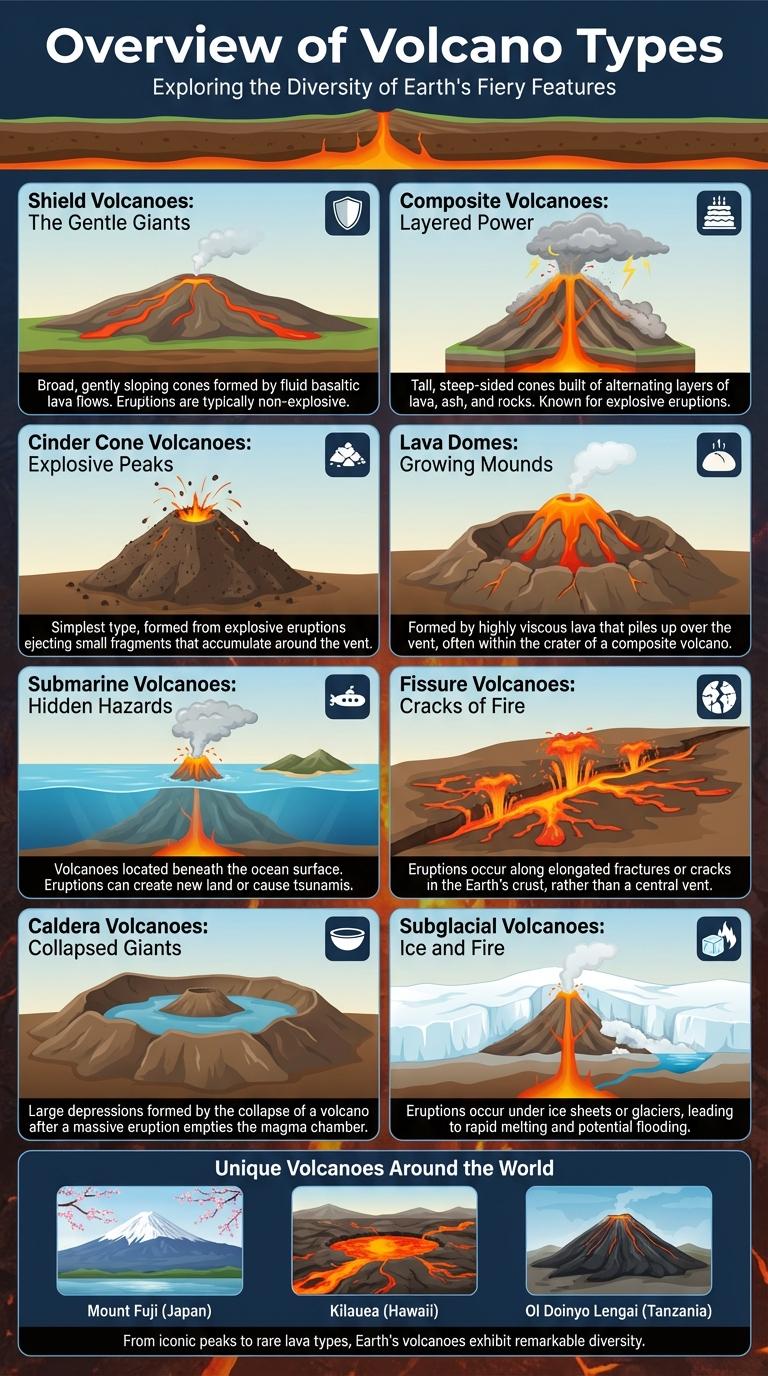
Volcanoes are classified into different types based on their shape, eruption style, and magma composition. The main types include shield, composite, cinder cone, and lava dome volcanoes, each with unique characteristics and eruption patterns. Understanding these distinctions helps explain the diverse volcanic landscapes found around the world.
Overview of Volcano Types
Volcanoes are geological formations where magma reaches the Earth's surface, creating various types based on their structure and eruption style. Understanding different volcano types helps in studying volcanic hazards and their impact on the environment.
This infographic provides an overview of the main types of volcanoes commonly found around the world.
- Shield Volcanoes - Broad, gently sloping volcanoes formed by low-viscosity lava flows.
- Stratovolcanoes (Composite Volcanoes) - Tall, steep-sided volcanoes built from alternating layers of lava and ash.
- Cinder Cone Volcanoes - Small, steep cones made of volcanic debris ejected during explosive eruptions.
Shield Volcanoes: The Gentle Giants
Shield volcanoes are broad, gently sloping landforms created by the flow of low-viscosity basaltic lava. These volcanoes can span tens of kilometers in diameter and rise to impressive heights while maintaining a smooth profile. Known as the gentle giants of the volcanic world, shield volcanoes erupt effusively, producing extensive lava flows rather than explosive blasts.
Composite Volcanoes: Layered Power
Composite volcanoes, also known as stratovolcanoes, are characterized by their tall, layered structures formed from alternating eruptions of lava and ash. These volcanoes exhibit steep profiles and produce some of the most explosive eruptions on Earth.
Common examples include Mount St. Helens and Mount Fuji, both renowned for their classic cone shapes and powerful eruptions. The layers of hardened lava and tephra create a durable yet dangerous geological formation capable of producing pyroclastic flows and lava domes.
Cinder Cone Volcanoes: Explosive Peaks
What defines Cinder Cone Volcanoes as explosive peaks? Cinder Cone Volcanoes are small, steep-sided volcanoes formed from volcanic debris called cinders. Their eruptions are highly explosive, ejecting lava fragments that cool and solidify as they fall.
Lava Domes: Growing Mounds
Lava domes are rounded, mound-shaped volcanoes formed by slow eruption of viscous lava. These structures grow as thick lava accumulates near a volcanic vent.
Unlike explosive volcanoes, lava domes build up gradually due to the high silica content in their magma.
- Viscous Lava - Lava domes consist of thick, sticky lava that cools quickly and piles up rather than flowing far.
- Growth Process - New layers continuously add as lava extrudes slowly, creating a bulbous mound shape.
- Hazard Potential - Dome collapse can trigger pyroclastic flows, posing significant risks to nearby areas.
Submarine Volcanoes: Hidden Hazards
Submarine volcanoes, located beneath the ocean surface, are often overlooked but pose significant geological hazards. These underwater eruptions can trigger tsunamis, release toxic gases, and impact marine ecosystems. Monitoring these hidden volcanoes is crucial for early warning systems and disaster preparedness.
Fissure Volcanoes: Cracks of Fire
Fissure volcanoes are linear fractures in the Earth's surface that emit lava instead of a singular volcanic cone. These eruptions create vast lava plateaus rather than steep volcanic mountains.
Fissure volcanoes form when magma rises through elongated cracks called fissures. The lava flows out gently, spreading over large areas and cooling to create extensive basaltic plains. These volcanoes contribute significantly to the formation of the Earth's oceanic crust and large igneous provinces.
Caldera Volcanoes: Collapsed Giants
Caldera volcanoes are massive volcanic structures formed after the collapse of a magma chamber. They represent some of the most dramatic and explosive volcanic activities on Earth.
- Formation - Caldera volcanoes form when a large eruption empties the magma chamber, causing the ground above to collapse.
- Size - Calderas can span several kilometers in diameter, making them significantly larger than typical volcanic craters.
- Examples - Famous caldera volcanoes include Yellowstone in the USA and Toba in Indonesia, known for their catastrophic eruptions.
These volcanic giants profoundly impact surrounding landscapes and ecosystems through their explosive eruptions and collapses.
Subglacial Volcanoes: Ice and Fire
| Type of Volcano | Description |
|---|---|
| Subglacial Volcanoes | Volcanoes that erupt beneath glaciers or ice sheets, causing rapid melting and unique volcanic formations. |
| Formation Process | Magma rises and interacts with overlying ice, leading to explosive steam generation and sediment buildup. |
| Key Features | Ice-meltwater lakes, pillow lava, hyaloclastite deposits, and tuyas--flat-topped, steep-sided volcanoes. |
| Geographical Occurrence | Common in Iceland, Antarctica, and parts of Canada, where glaciers cover volcanic regions. |
| Environmental Impact | Rapid melting can cause glacial outburst floods and influence local ecosystems and climate patterns. |