
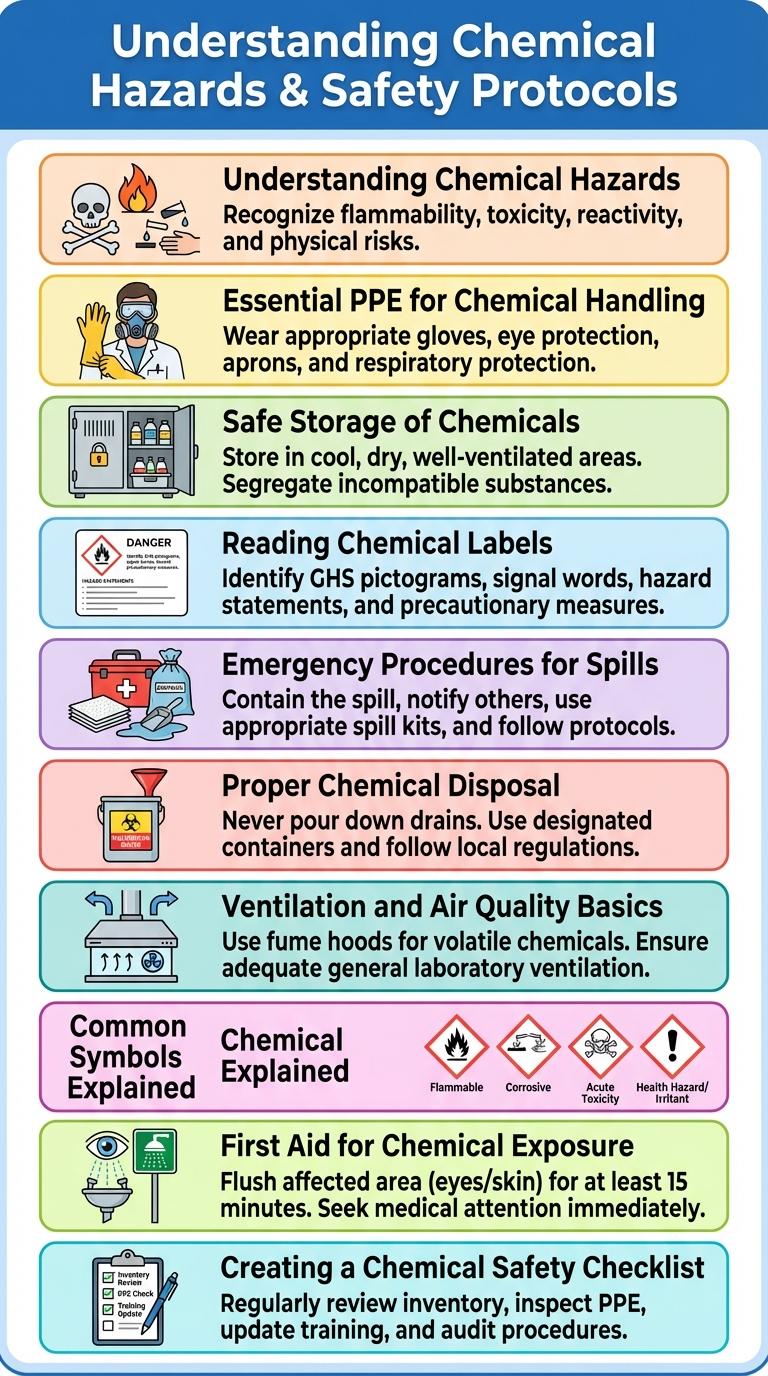
Chemical safety infographics visually present essential guidelines for handling and storing hazardous substances safely. Clear symbols and concise information help prevent accidents and promote awareness in workplaces and homes. Effective chemical safety communication reduces risks and ensures compliance with regulatory standards.
Understanding Chemical Hazards
Chemical safety is critical for preventing accidents and health risks in workplaces and homes. Understanding chemical hazards helps identify potential dangers and implement effective safety measures.
- Types of Hazards - Chemical hazards include physical, health, and environmental risks posed by substances.
- Exposure Routes - Chemicals can enter the body through inhalation, ingestion, skin contact, or injection.
- Labeling and Symbols - Hazard labels and pictograms communicate the risks associated with chemicals for safe handling.
Essential PPE for Chemical Handling
Chemical safety is crucial in preventing hazardous exposure during handling processes. Proper personal protective equipment (PPE) minimizes the risk of injury from chemical substances.
- Safety Goggles - Protect eyes from splashes, fumes, and airborne particles.
- Chemical-Resistant Gloves - Shield hands from corrosive and toxic chemicals.
- Lab Coats and Aprons - Provide a barrier to protect skin and clothing from spills.
Wearing appropriate PPE ensures safe handling and reduces the chance of chemical accidents.
Safe Storage of Chemicals
Proper storage of chemicals is essential to prevent accidents and ensure workplace safety. Store chemicals in well-ventilated areas away from direct sunlight and sources of heat to minimize risk. Clearly label all containers and separate incompatible substances to avoid dangerous reactions.
Reading Chemical Labels
How can you ensure safety by reading chemical labels correctly?
Chemical labels provide critical information about hazards and handling instructions. Understanding symbols, signal words, and precautionary statements minimizes risks during use.
Emergency Procedures for Spills
| Step | Emergency Procedure for Chemical Spills |
|---|---|
| 1. Assess the Spill | Identify the chemical type and spill size. Determine hazards by consulting the Safety Data Sheet (SDS). |
| 2. Alert and Evacuate | Notify nearby personnel and supervisors immediately. Evacuate non-essential personnel from the affected area. |
| 3. Use Personal Protective Equipment (PPE) | Wear appropriate PPE such as gloves, goggles, and respirators before attempting containment or cleanup. |
| 4. Contain the Spill | Prevent spread by using barriers like spill pads or absorbent materials. Avoid allowing chemicals to enter drains or waterways. |
| 5. Cleanup and Dispose | Follow procedures outlined in the SDS to clean up safely. Dispose of waste materials in designated hazardous waste containers. |
Proper Chemical Disposal
Proper chemical disposal is essential to prevent environmental contamination and protect human health. Chemicals should never be poured down drains, disposed of in regular trash, or released into the environment.
Use designated hazardous waste containers and follow local regulations for disposal. Always label containers clearly and store chemicals safely until they can be properly disposed of.
Ventilation and Air Quality Basics
Proper ventilation is essential for maintaining safe air quality in environments where chemicals are used or stored. It helps remove harmful vapors, dust, and fumes, reducing the risk of inhalation exposure.
Effective ventilation systems include local exhaust, general dilution, and natural ventilation methods. Monitoring air quality through sensors and regular inspections ensures safe levels of airborne contaminants are maintained.
Common Chemical Symbols Explained
Chemical safety requires understanding common symbols used to indicate hazards. Recognizing these symbols helps prevent accidents and ensures proper handling.
- Flammable (Flame) - Indicates substances that can easily catch fire and should be kept away from heat and sparks.
- Toxic (Skull and Crossbones) - Warns of chemicals that can cause serious harm or death if ingested, inhaled, or absorbed.
- Corrosive (Test Tubes Pouring on Hand and Metal) - Represents chemicals that can cause severe burns to skin and damage to metals.
First Aid for Chemical Exposure
First aid for chemical exposure involves immediate removal of contaminated clothing and thorough rinsing of the affected area with water for at least 15 minutes. In case of eye contact, flushing eyes with water while holding eyelids open is crucial to prevent damage. Seek medical attention promptly, especially if symptoms such as burns, pain, or difficulty breathing occur following exposure.