
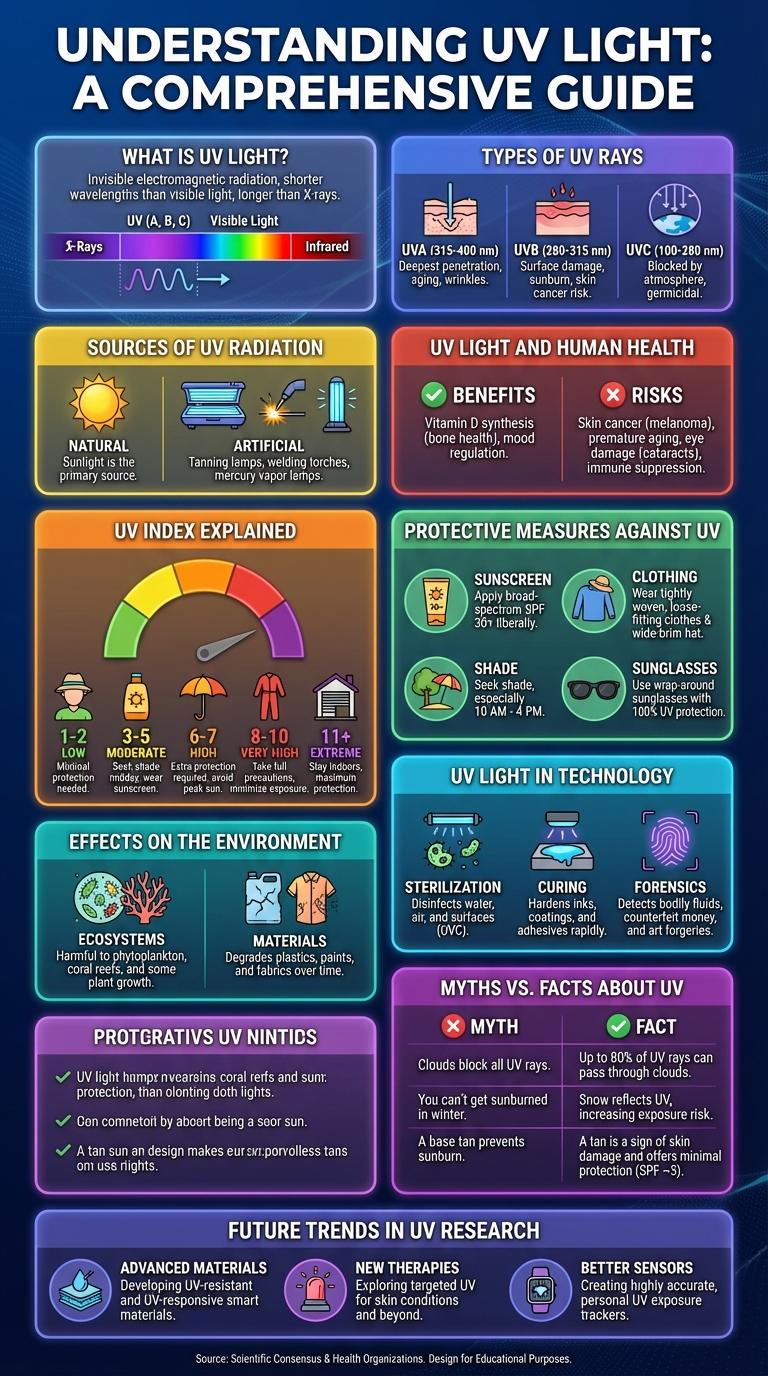
UV light, or ultraviolet light, is a type of electromagnetic radiation invisible to the human eye but essential for various applications. It plays a crucial role in sterilization, skin health, and detecting counterfeit currency. Understanding the different types and effects of UV light helps maximize its benefits while minimizing potential risks.
What is UV Light?
Ultraviolet (UV) light is a type of electromagnetic radiation with a wavelength shorter than visible light but longer than X-rays. It is naturally emitted by the sun and artificial sources like black lights.
- Wavelength Range - UV light ranges from 100 to 400 nanometers in wavelength, classified into UV-A, UV-B, and UV-C bands.
- Invisible Radiation - UV light is invisible to the human eye but can cause fluorescence in certain materials.
- Energy Level - UV photons carry more energy than visible light, making them capable of causing chemical reactions.
Understanding UV light is essential for applications in health, sterilization, and scientific research.
Types of UV Rays
Ultraviolet (UV) light is divided into three main types based on wavelength: UVA, UVB, and UVC. UVA rays have the longest wavelength, penetrating deep into the skin and contributing to aging and long-term skin damage. UVB rays primarily affect the surface of the skin, causing sunburn, while UVC rays have the shortest wavelength and are largely absorbed by the Earth's atmosphere, posing minimal risk to humans.
Sources of UV Radiation
Ultraviolet (UV) light is emitted from both natural and artificial sources. The sun is the primary natural source, producing UVA, UVB, and UVC rays.
Artificial sources include tanning beds, black lights, and certain types of lamps used for sterilization. These emit varying levels of UV radiation depending on their design and purpose.
UV Light and Human Health
Ultraviolet (UV) light is a type of electromagnetic radiation emitted by the sun and artificial sources such as tanning beds. Moderate exposure to UV light helps the human body produce vitamin D, essential for bone health and immune function. Excessive UV exposure can cause skin damage, sunburn, premature aging, and increase the risk of skin cancer.
UV Index Explained
| UV Index Level | Description & Safety Measures |
|---|---|
| 0-2 (Low) | Minimal risk of harm from unprotected sun exposure. Wear sunglasses on bright days. |
| 3-5 (Moderate) | Protection needed during midday sun. Use sunscreen SPF 30+, wear hats and sunglasses. |
| 6-7 (High) | Increased risk of harm. Reduce time in the sun between 10 a.m. and 4 p.m. Apply broad-spectrum sunscreen every 2 hours. |
| 8-10 (Very High) | Take extra precautions. Seek shade, wear protective clothing, and apply SPF 50+ sunscreen frequently. |
| 11+ (Extreme) | Extreme risk of harm. Unprotected skin can burn quickly. Avoid sun exposure during peak hours and use full protective measures. |
Protective Measures Against UV
UV light can cause skin damage and increase the risk of skin cancer. Effective protective measures help minimize harmful exposure.
- Use Sunscreen - Apply broad-spectrum sunscreen with SPF 30 or higher to protect skin from UVA and UVB rays.
- Wear Protective Clothing - Cover skin with long sleeves, hats, and UV-blocking sunglasses to reduce direct exposure.
- Seek Shade - Stay under shade during peak UV hours between 10 a.m. and 4 p.m. to avoid the strongest sunlight.
Effects on the Environment
UV light from the sun plays a crucial role in the Earth's atmosphere by helping to regulate the ozone layer. This layer absorbs the majority of harmful ultraviolet radiation, protecting ecosystems and human health.
Excessive UV radiation due to ozone depletion causes damage to marine life, particularly phytoplankton, which forms the base of aquatic food chains. Increased UV exposure also leads to reduced crop yields and disrupts terrestrial plant growth, impacting biodiversity and food security.
UV Light in Technology
How is UV light utilized in modern technology?
UV light plays a crucial role in several advanced technological applications, including sterilization, data storage, and lithography. Its ability to interact with materials at a molecular level enables innovative solutions across industries.
Myths vs. Facts About UV
Ultraviolet (UV) light is a type of electromagnetic radiation emitted by the sun. It plays a crucial role in both health risks and benefits, making understanding its myths and facts essential.
Many believe that UV light is harmless on cloudy days, but up to 80% of UV rays can penetrate clouds. Another common myth is that sunscreen is only necessary at the beach; in reality, UV exposure occurs year-round. Proper UV protection helps prevent skin cancer, premature aging, and eye damage.