
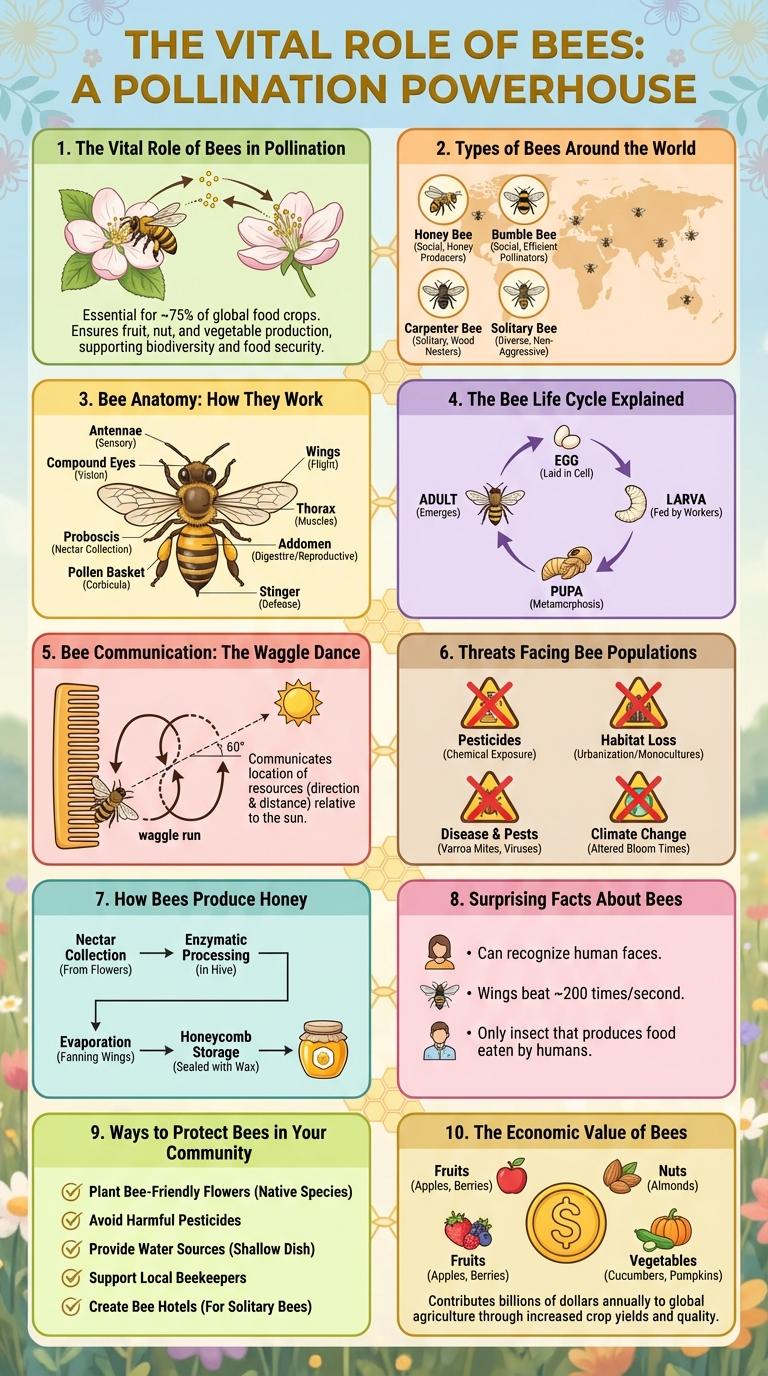
Bees play a crucial role in pollination, supporting biodiversity and agriculture worldwide. This infographic highlights their behavior, species diversity, and the environmental challenges they face. Understanding these facts emphasizes the importance of protecting bee populations for ecosystem health.
The Vital Role of Bees in Pollination
Bees play an essential role in pollination, facilitating the reproduction of more than 75% of flowering plants worldwide. Their activity supports biodiversity and food production, making them critical to global ecosystems.
Pollination by bees directly contributes to the growth of fruits, vegetables, and nuts, which form a significant part of human diets. Without bees, many crops would experience reduced yields, threatening food security. Their efficiency in transferring pollen between flowers ensures the survival of countless plant species.
Types of Bees Around the World
Bees play a vital role in ecosystems worldwide, contributing to pollination and biodiversity. Various bee species exist, each with distinct characteristics and habitats.
- Honey Bees - Known for producing honey and forming large colonies, honey bees are essential pollinators in agriculture.
- Bumblebees - These robust, fuzzy bees are excellent pollinators for wild plants and crops, thriving in cooler climates.
- Carpenter Bees - Solitary bees that burrow into wood to create nests, often mistaken for bumblebees due to similar appearance.
Bee Anatomy: How They Work
Bees have a unique anatomy specially adapted for pollination and hive tasks. Their body parts work together to enable flight, nectar collection, and communication.
Each section of a bee's body plays a vital role in its survival and efficiency in the ecosystem.
- Head - Contains antennae for sensing and compound eyes for detailed vision.
- Thorax - Houses muscles controlling the wings and legs for flying and gathering nectar.
- Abdomen - Includes the stinger and digestive organs essential for defense and nutrition.
The Bee Life Cycle Explained
Bees undergo a fascinating life cycle that transforms them from eggs into adult workers, drones, or queens. Understanding each stage provides insight into their crucial role in ecosystems.
- Egg Stage - The queen lays a single egg in each cell, which hatches after about three days.
- Larva Stage - Larvae are fed royal jelly or pollen and nectar, growing rapidly over six days.
- Pupa Stage - The larva spins a cocoon and metamorphoses into an adult bee inside the capped cell over 12 days.
- Adult Stage - Newly emerged bees take on specific colony roles such as foragers, nurses, or guards.
- Queen Development - Queens develop faster and have a larger diet of royal jelly, enabling lifelong egg laying.
The complete life cycle typically spans 21 days, ensuring a continuous flow of workers and sustaining the hive's productivity.
Bee Communication: The Waggle Dance
Bees communicate through a unique method known as the waggle dance, which conveys information about the location of food sources. This dance is performed by forager bees inside the hive to guide their hive mates.
The waggle dance involves a figure-eight movement combined with a waggle run in the center. The direction and duration of the waggle correlate with the direction and distance to the nectar source from the hive.
Threats Facing Bee Populations
Bee populations face significant threats from habitat loss, pesticide exposure, and climate change. These factors disrupt their foraging patterns and reduce the availability of flowering plants necessary for survival. Protecting bee habitats and regulating harmful chemicals are crucial for maintaining healthy bee populations.
How Bees Produce Honey
How do bees produce honey?
Bees collect nectar from flowers and store it in their honey stomachs. Enzymes break down the nectar into simple sugars, which are then deposited into honeycomb cells.
What happens to nectar once inside the hive?
Bees fan their wings to evaporate water from the nectar, thickening it into honey. The honeycomb cells are sealed with beeswax to preserve the honey.
Why is honey important for bees?
Honey serves as a primary food source, especially during winter when nectar is scarce. It provides essential energy and nutrients for the colony's survival.
Which bees are responsible for honey production?
Worker bees, primarily foragers, gather nectar and transform it into honey. Nurse bees help by tending to larvae and maintaining hive conditions.
How much nectar is needed to make honey?
Bees visit thousands of flowers, collecting nearly 2 million flower visits to produce one pound of honey. This process demonstrates remarkable efficiency and teamwork.
Surprising Facts About Bees
| Surprising Fact | Details |
|---|---|
| Bees Communicate Through Dance | The "waggle dance" helps bees share information about food locations. |
| Bees Have Five Eyes | Two large compound eyes and three smaller ocelli detect light intensity. |
| Worker Bees Are Female | All foraging and hive duties are performed by female bees. |
| Bees Can Recognize Human Faces | Using pattern recognition, bees distinguish between different faces. |
| Bees Are Vital for Global Agriculture | Approximately 70% of the world's crops depend on bee pollination. |
Ways to Protect Bees in Your Community
Bees play a crucial role in pollinating plants, supporting biodiversity, and sustaining food production. Protecting bees helps maintain healthy ecosystems and ensures the growth of fruits, vegetables, and flowers in your community.
Create bee-friendly habitats by planting native wildflowers and providing water sources like shallow dishes with stones. Avoid using pesticides and support local beekeepers by purchasing honey and beeswax products made sustainably.