
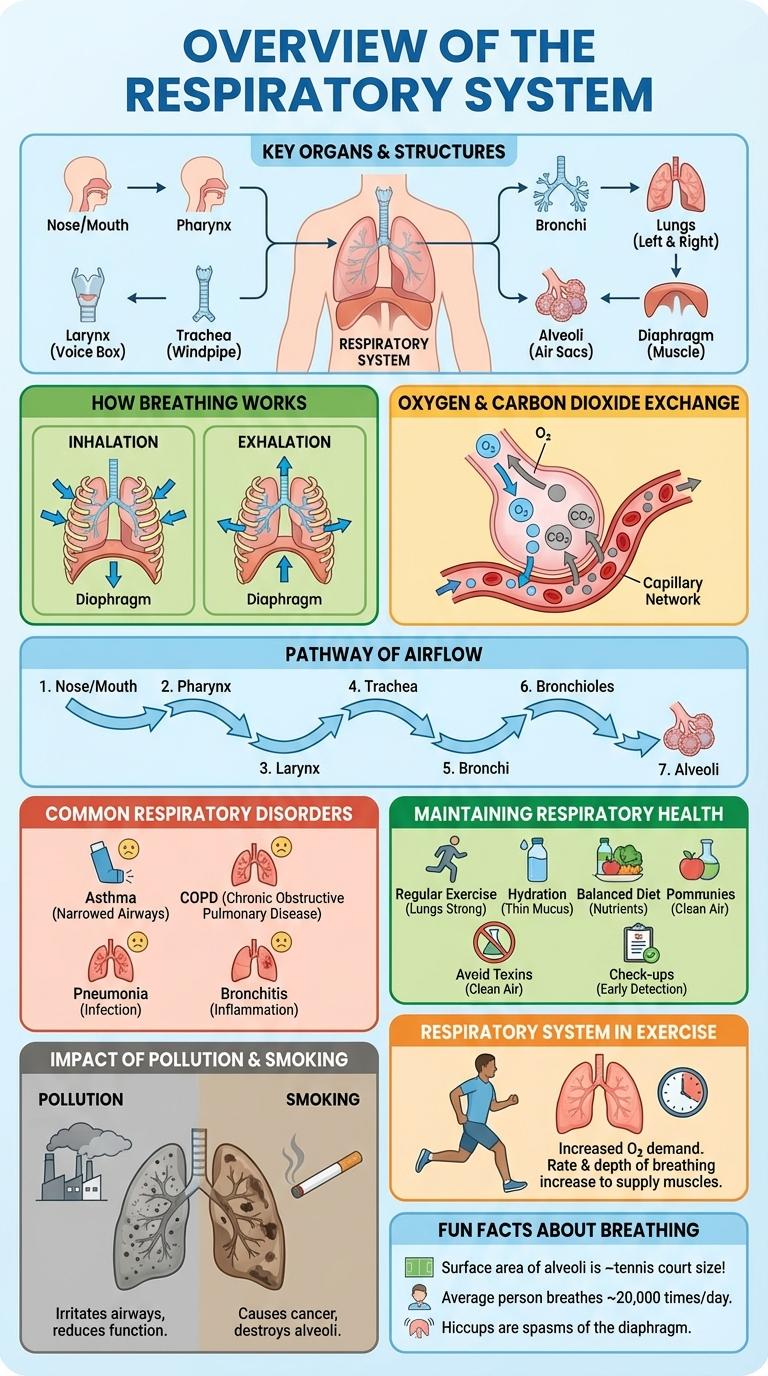
The respiratory system is vital for delivering oxygen to the body and removing carbon dioxide. Understanding its structure and function enhances awareness of how breathing supports overall health. This infographic visually breaks down the key components and processes of the respiratory system.
Overview of the Respiratory System
The respiratory system is responsible for the intake of oxygen and the expulsion of carbon dioxide. It consists of organs that facilitate breathing and gas exchange essential for cellular function.
Key components include the nose, trachea, lungs, and diaphragm. These parts work together to ensure that oxygen reaches the bloodstream and carbon dioxide is removed efficiently.
Key Organs and Structures
What are the key organs and structures of the respiratory system? The respiratory system consists of organs responsible for breathing and gas exchange. These organs work together to supply oxygen and remove carbon dioxide from the body.
| Organ/Structure | Function |
|---|---|
| Nose and Nasal Cavity | Filters, warms, and moistens air before it enters the lungs |
| Pharynx and Larynx | Passageway for air and voice production |
| Trachea | Connects larynx to bronchi and directs air to the lungs |
| Bronchi and Bronchioles | Branch into lungs and distribute air to alveoli |
| Alveoli | Microscopic air sacs where gas exchange occurs |
How Breathing Works
The respiratory system enables the intake of oxygen and removal of carbon dioxide, essential for cellular function. Breathing involves the coordinated action of the lungs, diaphragm, and airways to facilitate gas exchange.
- Inhalation - The diaphragm contracts and moves downward, increasing lung volume and drawing air in through the nose or mouth.
- Gas Exchange - Oxygen passes from the alveoli into the bloodstream, while carbon dioxide moves from the blood to the alveoli to be exhaled.
- Exhalation - The diaphragm relaxes and moves upward, decreasing lung volume and forcing air containing carbon dioxide out of the lungs.
Oxygen and Carbon Dioxide Exchange
The respiratory system facilitates the exchange of oxygen and carbon dioxide between the body and the environment. Oxygen is inhaled into the lungs, where it passes through alveoli into the bloodstream. Carbon dioxide, a waste product of cellular metabolism, moves from the blood into the alveoli to be exhaled.
Pathway of Airflow
The respiratory system is responsible for the exchange of oxygen and carbon dioxide between the body and the environment. Air flows through a structured pathway to facilitate efficient gas exchange in the lungs.
- Nasal Cavity - Air enters the body through the nasal cavity where it is filtered, warmed, and humidified.
- Pharynx and Larynx - The air passes through the pharynx and larynx, allowing it to move from the nose to the trachea.
- Trachea to Bronchi - Air travels down the trachea, which divides into the bronchi leading to each lung.
- Bronchioles - Bronchi branch into smaller bronchioles that direct the airflow deeper into the lungs.
- Alveoli - Air reaches the alveoli where oxygen is transferred to the blood, and carbon dioxide is removed from the bloodstream.
Common Respiratory Disorders
The respiratory system is essential for oxygen exchange, involving the lungs, trachea, and bronchi. Common respiratory disorders include asthma, chronic obstructive pulmonary disease (COPD), bronchitis, pneumonia, and lung cancer. Early diagnosis and treatment are crucial for managing these conditions and maintaining respiratory health.
Maintaining Respiratory Health
The respiratory system is vital for oxygen exchange and removing carbon dioxide from the body. Maintaining respiratory health supports overall well-being and enhances lung function.
Regular exercise helps strengthen respiratory muscles and improves lung capacity. Avoiding pollutants like tobacco smoke protects the airway linings from damage.
Impact of Pollution and Smoking
| Aspect | Impact on Respiratory System |
|---|---|
| Air Pollution | Exposure to pollutants like PM2.5, ozone, and nitrogen dioxide causes inflammation of airways, reduces lung function, and increases risk of asthma and chronic bronchitis. |
| Smoking | Inhalation of toxic chemicals damages lung tissue, leads to chronic obstructive pulmonary disease (COPD), lung cancer, and impairs ciliary function responsible for clearing mucus and debris. |
| Combined Effects | Smoking combined with polluted air significantly increases oxidative stress and lung damage, accelerating respiratory diseases and lowering overall lung capacity. |
| Health Consequences | Higher incidence of respiratory infections, decreased oxygen exchange efficiency, chronic cough, wheezing, and increased hospitalization rates for respiratory illnesses. |
| Prevention Measures | Reducing exposure to pollution, smoking cessation, using air purifiers, wearing masks in high pollution areas, and regular respiratory health check-ups. |
Respiratory System in Exercise
The respiratory system plays a vital role in supplying oxygen to muscles during exercise. It efficiently removes carbon dioxide, a waste product of increased metabolic activity.
During physical activity, breathing rate and depth increase to meet the elevated oxygen demand. The lungs expand more fully, enhancing gas exchange. Efficient respiratory function improves endurance and overall athletic performance.