
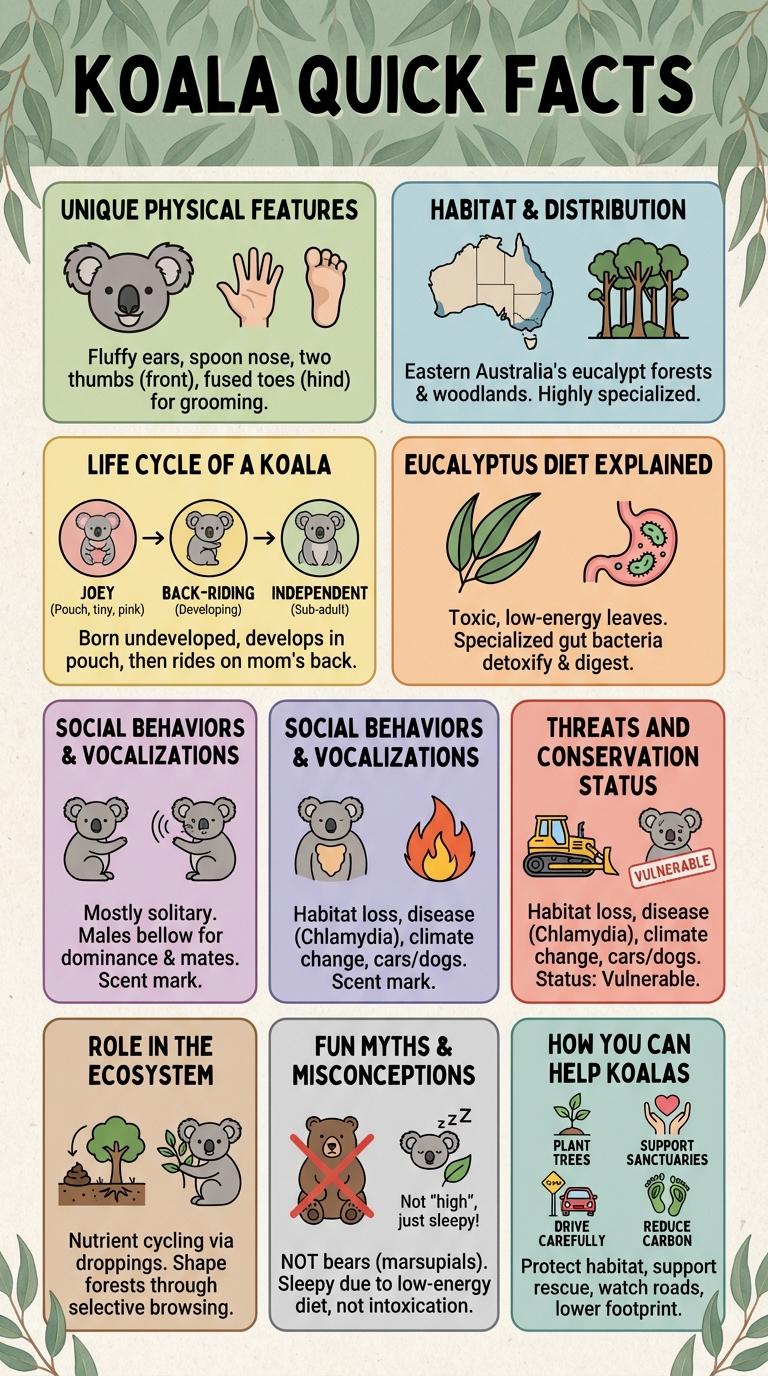
Koalas are iconic marsupials native to Australia, renowned for their fluffy ears and tree-hugging lifestyle. These herbivores primarily feed on eucalyptus leaves, which provide both nutrition and hydration. Understanding koalas' habitat, diet, and conservation status is essential to protecting this beloved species.
Koala Quick Facts
Koalas are iconic marsupials native to Australia known for their tree-dwelling lifestyle and eucalyptus diet.
They spend most of their time sleeping and feeding, playing a critical role in their ecosystem.
- Habitat - Koalas primarily inhabit eucalyptus forests along the eastern and southeastern coasts of Australia.
- Diet - Their diet consists almost exclusively of eucalyptus leaves, which are low in nutrients and toxic to most animals.
- Behavior - Koalas sleep up to 18-22 hours per day to conserve energy due to their nutrient-poor diet.
Unique Physical Features
Koalas possess distinctive physical features that enable their arboreal lifestyle and specialized diet. These adaptations contribute significantly to their survival in Australian eucalyptus forests.
- Thick Fur - Koalas have dense, woolly fur that insulates against both heat and cold while repelling rain.
- Sharp Claws - Their strong, curved claws provide exceptional grip for climbing and holding onto tree branches.
- Opposable Thumbs - Two opposable thumbs on each front paw enhance their ability to grasp leaves and branches securely.
- Large Nose - A broad, sensitive nose aids in detecting the scent of eucalyptus leaves and identifying safe food sources.
- Specialized Teeth - Their continuously growing molars efficiently chew tough eucalyptus leaves, crucial for their herbivorous diet.
Each unique physical trait supports koalas' adaptation to their ecological niche as tree-dwelling folivores.
Habitat & Distribution
| Aspect | Details |
|---|---|
| Primary Habitat | Eucalyptus forests and woodlands |
| Geographic Distribution | Eastern and southeastern Australia |
| States Found | Queensland, New South Wales, Victoria, South Australia |
| Preferred Climate | Temperate and subtropical zones |
| Habitat Threats | Deforestation, urbanization, climate change |
Eucalyptus Diet Explained
Koalas rely almost exclusively on eucalyptus leaves for their diet, consuming large quantities to meet their nutritional needs. Their unique digestive system allows them to detoxify the harmful compounds found in eucalyptus.
- Specialized Diet - Koalas eat primarily eucalyptus leaves, which are tough, fibrous, and low in nutrients.
- Detoxification - Their liver processes toxic oils and compounds in eucalyptus, making the leaves safe to digest.
- Slow Metabolism - Koalas have a slow metabolic rate that conserves energy while digesting their fibrous diet.
Life Cycle of a Koala
The life cycle of a koala begins with a tiny joey, which is born hairless and blind, measuring only about 2 centimeters. The joey crawls into its mother's pouch, where it stays for approximately six months to continue developing.
Once the joey leaves the pouch, it clings to its mother's back while learning to eat eucalyptus leaves. Koalas reach maturity at around 2 to 3 years old and can live up to 13 to 18 years in the wild.
Social Behaviors & Vocalizations
Koalas exhibit complex social behaviors despite their solitary lifestyle. They maintain overlapping home ranges and communicate through scent marking to establish territory.
Vocalizations play a crucial role in koala communication, especially during mating season. Male koalas produce deep bellowing calls to attract females and ward off rivals. These vocalizations can travel over considerable distances in dense eucalyptus forests.
Threats and Conservation Status
Koalas face significant threats from habitat loss, bushfires, and diseases such as chlamydia, which drastically reduce their populations. Climate change exacerbates these issues by affecting eucalyptus tree availability and increasing heat stress. Conservation efforts include habitat preservation, disease management, and breeding programs aimed at stabilizing and growing koala populations.
Role in the Ecosystem
What role do koalas play in their ecosystem? Koalas help maintain eucalyptus forest health by selectively feeding on certain leaves, promoting new growth. Their presence supports biodiversity by providing food and habitat for other species.
Fun Myths & Misconceptions
Koalas are often mistakenly called "koala bears," but they are marsupials, not bears. Contrary to popular belief, koalas do not sleep all day; they actually rest for about 18-22 hours to conserve energy from their low-nutrient eucalyptus diet. Many assume koalas drink water regularly, but they primarily get moisture from eucalyptus leaves and rarely need to drink water directly.