
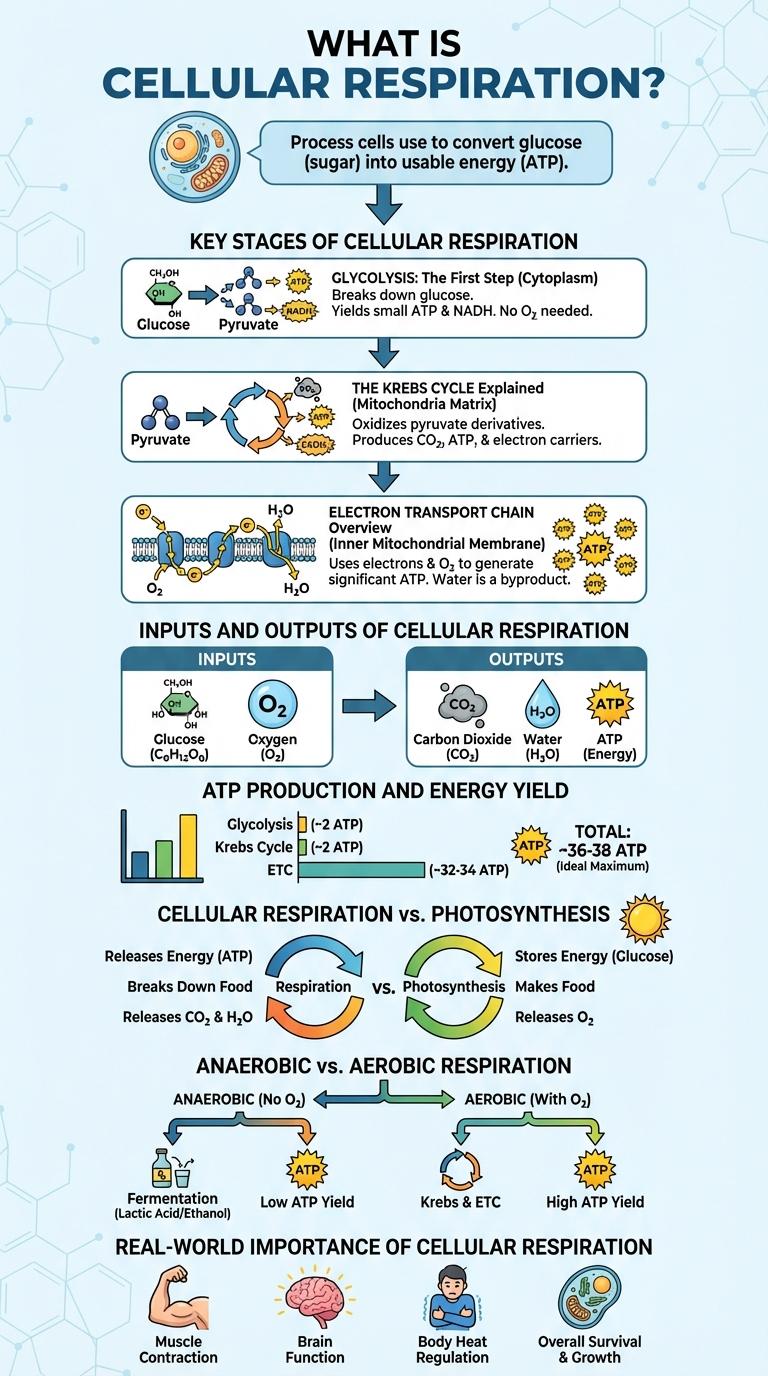
Cellular respiration is the process by which cells convert glucose into usable energy in the form of ATP. This infographic breaks down the key stages, including glycolysis, the Krebs cycle, and the electron transport chain, highlighting how each step contributes to energy production. Understanding these mechanisms provides insight into how organisms sustain vital functions at the cellular level.
What is Cellular Respiration?
Cellular respiration is a biochemical process that converts glucose and oxygen into energy within cells. This process produces adenosine triphosphate (ATP), the primary energy carrier in living organisms.
- Energy Conversion - Cellular respiration transforms the chemical energy stored in glucose into usable cellular energy in the form of ATP.
- Mitochondrial Function - The majority of cellular respiration occurs in the mitochondria, the cell's powerhouse.
- Byproducts - Carbon dioxide and water are produced as waste products during cellular respiration.
Key Stages of Cellular Respiration
Cellular respiration is a vital biochemical process that converts glucose into usable energy for cells. This process occurs in distinct stages, each playing a crucial role in energy production.
- Glycolysis - It breaks down one glucose molecule into two molecules of pyruvate, producing a small amount of ATP and NADH.
- Krebs Cycle (Citric Acid Cycle) - It processes pyruvate into carbon dioxide while generating high-energy electron carriers NADH and FADH2.
- Electron Transport Chain (ETC) - It uses electrons from NADH and FADH2 to drive ATP synthesis through oxidative phosphorylation.
These stages together enable cells to efficiently convert biochemical energy from nutrients into ATP, the energy currency of the cell.
Glycolysis: The First Step
| Aspect | Details |
|---|---|
| Process Name | Glycolysis |
| Function | Breakdown of one glucose molecule into two pyruvate molecules |
| Location | Cytoplasm of the cell |
| Energy Yield | Produces 2 ATP (net gain) and 2 NADH molecules |
| Significance | First step in cellular respiration, essential for energy production in both aerobic and anaerobic conditions |
The Krebs Cycle Explained
The Krebs Cycle, also known as the Citric Acid Cycle, is a crucial part of cellular respiration. It takes place in the mitochondria, where energy is extracted from acetyl-CoA.
During the Krebs Cycle, acetyl-CoA combines with oxaloacetate to form citrate. Through a series of enzyme-driven reactions, citrate is broken down, releasing carbon dioxide and transferring high-energy electrons to NADH and FADH2. These electron carriers then fuel the production of ATP in the electron transport chain.
Electron Transport Chain Overview
The Electron Transport Chain (ETC) is the final stage of cellular respiration, located in the inner mitochondrial membrane. It transfers electrons from NADH and FADH2 through protein complexes, creating a proton gradient that drives ATP synthesis. Oxygen acts as the final electron acceptor, combining with electrons and protons to form water.
Inputs and Outputs of Cellular Respiration
What are the main inputs and outputs of cellular respiration? Cellular respiration primarily uses glucose and oxygen as inputs. It produces carbon dioxide, water, and energy in the form of ATP as outputs.
ATP Production and Energy Yield
Cellular respiration is a vital biochemical process that converts glucose into usable energy in the form of ATP (adenosine triphosphate). ATP production occurs primarily in the mitochondria through glycolysis, the Krebs cycle, and the electron transport chain.
The energy yield from one molecule of glucose includes approximately 2 ATP from glycolysis, 2 ATP from the Krebs cycle, and about 34 ATP from oxidative phosphorylation. The total yield of ATP per glucose molecule is around 38, making cellular respiration highly efficient for energy production.
Cellular Respiration vs. Photosynthesis
Cellular respiration and photosynthesis are essential biological processes that sustain life by managing energy flow within cells. Cellular respiration converts glucose and oxygen into ATP, carbon dioxide, and water, releasing energy for cellular activities. Photosynthesis uses sunlight to convert carbon dioxide and water into glucose and oxygen, storing energy in chemical bonds.
Anaerobic vs. Aerobic Respiration
Cellular respiration is the process by which cells convert glucose into energy. It occurs in two main types: aerobic and anaerobic respiration.
Aerobic respiration requires oxygen and produces a high yield of ATP, the cell's energy currency. Anaerobic respiration occurs without oxygen and generates less ATP, often producing lactic acid or ethanol as byproducts.