
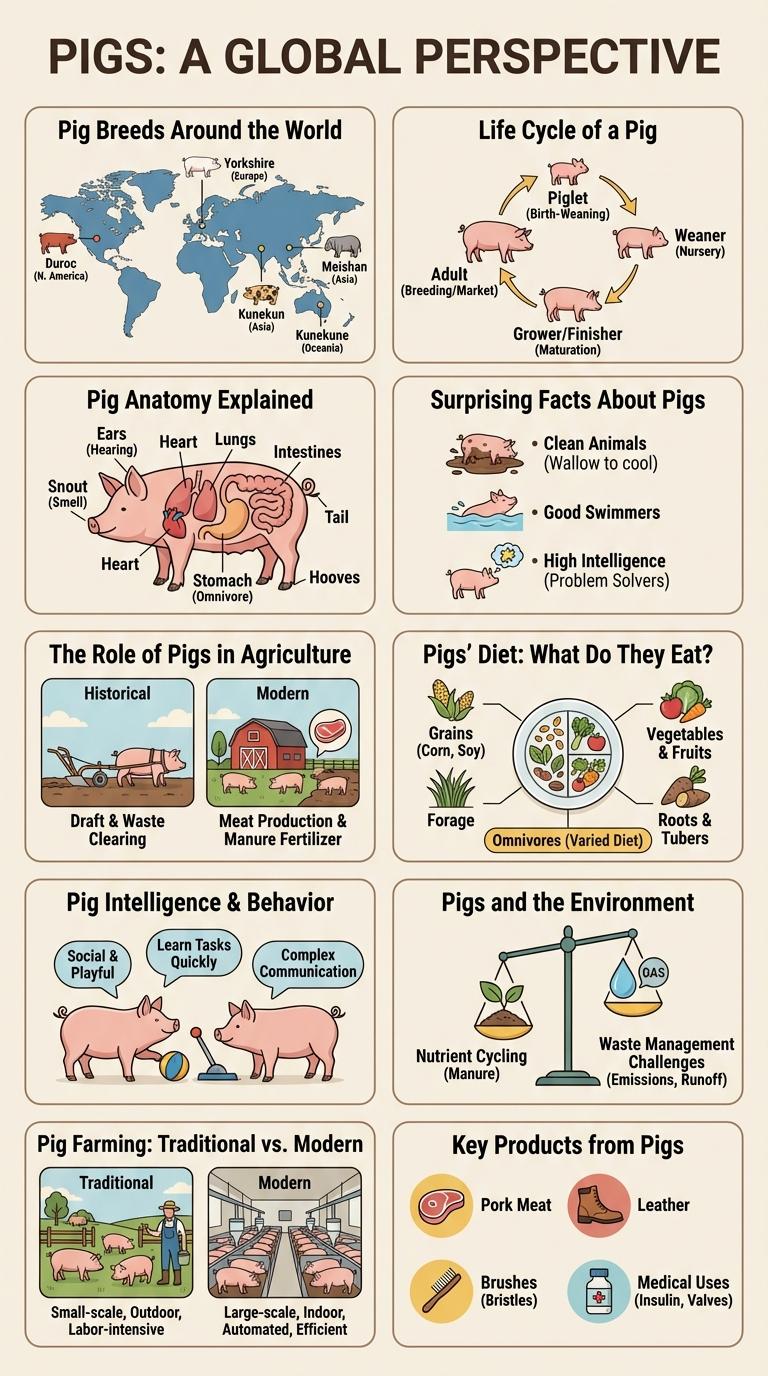
Pigs play a vital role in agriculture and culture worldwide, known for their intelligence and adaptability. This infographic highlights key facts about pig breeds, behavior, and their economic importance. Understanding these aspects offers valuable insight into their care and impact on farming.
Pig Breeds Around the World
Pigs are raised globally for their meat, with various breeds adapted to different environments and purposes. Pig breeds vary widely in size, appearance, and productivity, reflecting diverse agricultural traditions.
Popular breeds include the Yorkshire, known for its high growth rate, and the Duroc, prized for its meat quality. Heritage breeds like the Gloucestershire Old Spot illustrate traditional farming practices and genetic diversity.
Life Cycle of a Pig
| Stage | Description |
|---|---|
| Gestation | Lasts approximately 114 days; the sow carries piglets in the womb before birth. |
| Birth | Piglets are born in litters averaging 10 to 12; they weigh about 1 to 2 pounds each. |
| Lactation | Piglets nurse from the sow for 3 to 4 weeks, receiving essential nutrients and antibodies. |
| Weaning | Piglets transition from milk to solid feed; occurs around 3 to 4 weeks old. |
| Growth to Maturity | Piglets grow rapidly, reaching market weight (250-280 pounds) by 5 to 6 months. |
Pig Anatomy Explained
What are the key anatomical features of pigs? Pigs have a strong muscular body covered with bristly hair, which supports their movement and protection. Their snout is highly sensitive, used for foraging and sensing the environment.
How is the pig's digestive system structured? Pigs possess a simple stomach similar to humans, designed for omnivorous diets, allowing efficient breakdown of both plant and animal matter. A long small intestine maximizes nutrient absorption.
What distinguishes the pig's respiratory system? Pigs have well-developed lungs with multiple lobes, facilitating effective oxygen exchange necessary for their active lifestyle. The large nasal cavity enhances their sense of smell.
How is the pig's skeletal system adapted for movement? The pig's skeleton comprises sturdy bones with a well-developed spine and limbs that enable powerful walking, running, and rooting behaviors. Their hooves provide stability on various terrains.
What are the notable aspects of the pig's cardiovascular system? Pigs have a four-chambered heart similar to other mammals, ensuring efficient circulation of oxygen-rich blood throughout the body. This supports their high metabolism and active nature.
Surprising Facts About Pigs
Pigs are highly intelligent animals known for their ability to learn complex tasks quickly. They possess excellent long-term memories, allowing them to remember locations and experiences over extended periods.
Despite their reputation for being dirty, pigs are naturally clean animals that designate specific areas for eating and eliminating waste. Their strong sense of smell helps them find food underground, making them excellent foragers and truffle hunters.
The Role of Pigs in Agriculture
Pigs play a crucial role in agriculture as efficient converters of feed into protein. They support food security by providing a primary source of meat worldwide.
Pigs contribute to sustainable farming by consuming agricultural by-products and food waste, reducing environmental impact. Their manure is a valuable natural fertilizer that improves soil health. The pig farming industry also supports rural economies through job creation and trade.
Pigs' Diet: What Do They Eat?
Pigs are omnivores, consuming a diverse diet that includes both plant and animal matter. Their diet commonly consists of grains, fruits, vegetables, and small insects or larvae. This varied nutrition supports their rapid growth and overall health in farming environments.
Pig Intelligence & Behavior
Pigs rank among the most intelligent animals, showcasing advanced problem-solving skills and excellent long-term memory. They communicate through a variety of grunts and squeals that convey emotions and social status within the group. Their behavior includes rooting, social bonding, and adaptability to different environments, reflecting high cognitive abilities.
Pigs and the Environment
Pigs play a significant role in agricultural ecosystems and influence environmental sustainability. Understanding their impact helps in developing eco-friendly farming practices.
Pig farming produces greenhouse gases that contribute to climate change. Proper waste management reduces environmental pollution caused by pig manure.
- Manure nutrient recycling - Pig manure can be used as natural fertilizer to enrich soil with essential nutrients.
- Greenhouse gas emissions - Pigs produce methane and nitrous oxide, potent gases affecting atmospheric conditions.
- Land use efficiency - Intensive pig farming requires less land compared to other livestock for similar protein output.
Pig Farming: Traditional vs. Modern
Pig farming has evolved significantly from traditional methods to modern practices, impacting efficiency and sustainability. Understanding the differences between traditional and modern pig farming helps to grasp advancements in animal welfare, productivity, and environmental management.
Traditional pig farming relies on natural environments and manual labor, while modern systems utilize technology and controlled facilities to optimize production.
- Housing - Traditional pig farming uses open pens or free-range systems; modern farming employs climate-controlled buildings with automated feeding.
- Feeding - Traditional pigs forage and consume farm scraps; modern farms use scientifically formulated feed for balanced nutrition.
- Production Scale - Traditional farms operate on a small scale with lower pig populations; modern farms raise large herds for mass production.
- Animal Health - Traditional methods often rely on natural remedies; modern farms implement veterinary care and biosecurity protocols.
- Environmental Impact - Traditional farming may have limited waste management; modern farms focus on waste recycling and pollution control systems.