
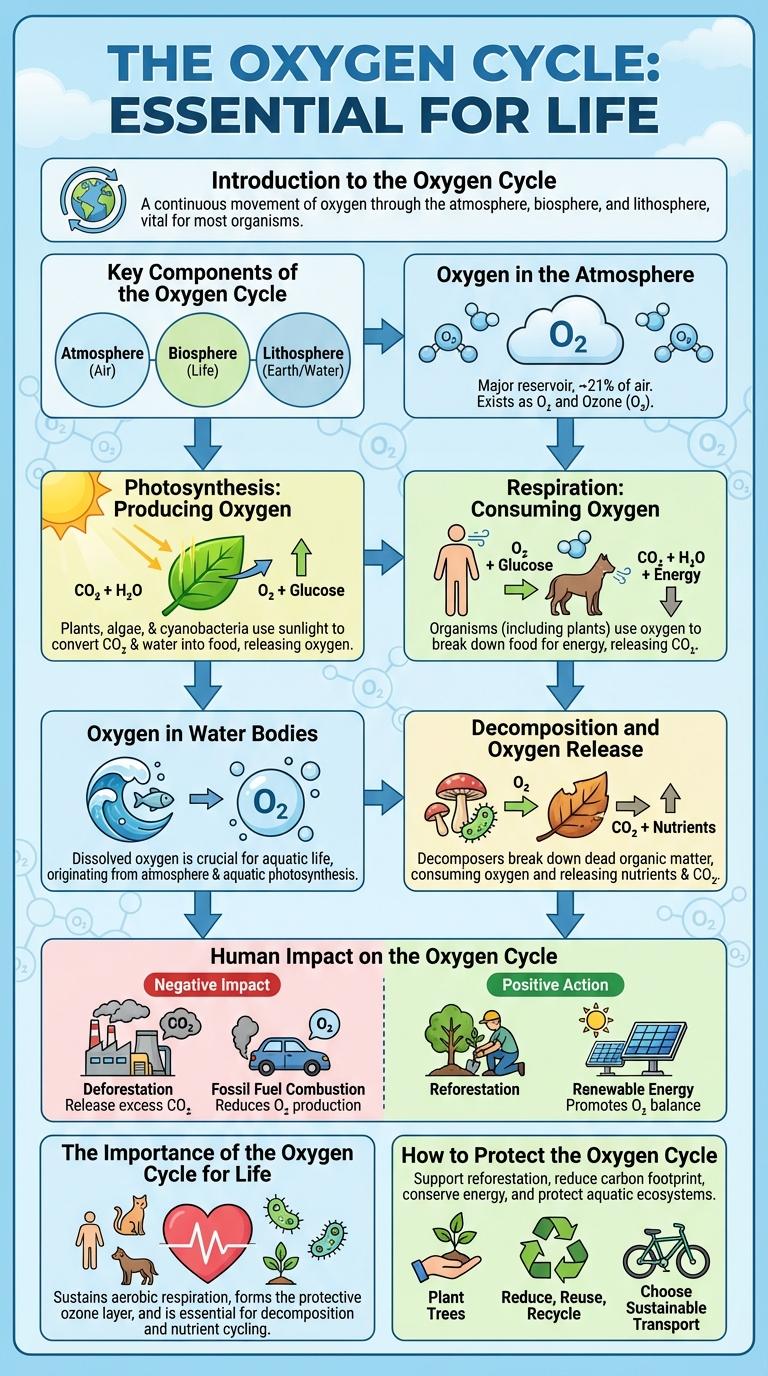
The oxygen cycle illustrates the continuous movement of oxygen within the atmosphere, biosphere, and lithosphere. Plants release oxygen through photosynthesis, which animals and humans consume for respiration, producing carbon dioxide that plants reuse. This natural exchange maintains the balance of oxygen critical for sustaining life on Earth.
Introduction to the Oxygen Cycle
The oxygen cycle describes the movement of oxygen within and between its three main reservoirs: the atmosphere, biosphere, and lithosphere. It plays a crucial role in maintaining life on Earth by supporting respiration and photosynthesis processes. Oxygen is continuously exchanged through biological, physical, and chemical activities, ensuring a balanced and sustainable environment.
Key Components of the Oxygen Cycle
The oxygen cycle is a crucial process that maintains the balance of oxygen in the atmosphere. It involves the continuous movement of oxygen between living organisms and the environment.
Key components of the oxygen cycle include photosynthesis, respiration, decomposition, and combustion. These processes ensure oxygen is produced, consumed, and recycled effectively.
Oxygen in the Atmosphere
| Aspect | Details |
|---|---|
| Oxygen Percentage | Approximately 21% of Earth's atmosphere consists of oxygen. |
| Primary Source | Photosynthesis by plants, algae, and cyanobacteria releases oxygen into the atmosphere. |
| Oxygen Role | Essential for respiration in most living organisms and supports combustion processes. |
| Cycle Involvement | Oxygen is continuously cycled through respiration, photosynthesis, and decomposition. |
| Atmospheric Layer | Concentration of oxygen is highest in the troposphere, where most life exists. |
Photosynthesis: Producing Oxygen
The oxygen cycle is a vital natural process where oxygen is produced and consumed by living organisms. Photosynthesis plays a key role by converting carbon dioxide and water into oxygen and glucose using sunlight.
During photosynthesis, plants, algae, and cyanobacteria release oxygen as a byproduct, maintaining atmospheric oxygen levels essential for respiration.
- Chlorophyll absorbs sunlight - Chlorophyll pigments capture solar energy needed to drive the photosynthesis reactions.
- Carbon dioxide is fixed - Plants take in CO2 from the atmosphere to synthesize glucose molecules.
- Oxygen is released - Oxygen generated from splitting water molecules is expelled into the air.
Respiration: Consuming Oxygen
The oxygen cycle involves the continuous movement of oxygen within the Earth's atmosphere, biosphere, and lithosphere. Respiration plays a critical role in this cycle by consuming oxygen and releasing carbon dioxide.
Respiration occurs in all aerobic organisms, including animals, plants, and many microorganisms. It is the process that converts oxygen and glucose into energy, carbon dioxide, and water, sustaining vital cellular functions.
- Oxygen consumption - Respiration uses oxygen to break down glucose molecules to produce ATP, the energy currency of cells.
- Energy production - The chemical reaction during respiration releases energy necessary for growth, repair, and maintenance in living organisms.
- Carbon dioxide release - Oxygen is consumed and carbon dioxide is produced as a byproduct, which re-enters the atmosphere for photosynthesis.
Oxygen in Water Bodies
Oxygen plays a vital role in maintaining aquatic ecosystems by supporting marine and freshwater life. The oxygen cycle in water bodies involves various processes that regulate dissolved oxygen levels critical for organism survival.
- Photosynthesis by Aquatic Plants - Aquatic plants and algae produce oxygen through photosynthesis, enriching water with dissolved oxygen.
- Respiration of Aquatic Organisms - Fish, invertebrates, and microorganisms consume oxygen through respiration, balancing oxygen availability.
- Oxygen Diffusion - Oxygen from the atmosphere diffuses into water, helping replenish dissolved oxygen concentrations especially near the surface.
Proper oxygen cycling ensures healthy water quality and supports biodiversity in aquatic environments.
Decomposition and Oxygen Release
How does decomposition contribute to the oxygen cycle? Decomposition breaks down dead organic matter, releasing carbon dioxide and nutrients back into the soil. This process indirectly supports oxygen release by nourishing plants, which produce oxygen through photosynthesis.
Human Impact on the Oxygen Cycle
The oxygen cycle is a crucial biogeochemical process that maintains atmospheric oxygen levels through photosynthesis and respiration. Human activities like deforestation and fossil fuel combustion disrupt this cycle by reducing oxygen production and increasing carbon dioxide emissions.
Pollution from industrial processes decreases oxygen availability in aquatic ecosystems, harming marine life. Protecting forests and reducing emissions are essential steps to restore balance in the oxygen cycle and sustain life on Earth.
The Importance of the Oxygen Cycle for Life
The oxygen cycle is essential for maintaining life on Earth by regulating the flow of oxygen between the atmosphere, living organisms, and the environment. This cycle supports cellular respiration and photosynthesis, processes crucial for energy production and oxygen replenishment.
Oxygen produced by plants during photosynthesis is consumed by animals and other organisms for respiration, generating carbon dioxide as a byproduct. Microorganisms decompose organic matter, releasing oxygen back into the atmosphere. This continuous exchange sustains the balance of oxygen necessary for all aerobic life forms.