
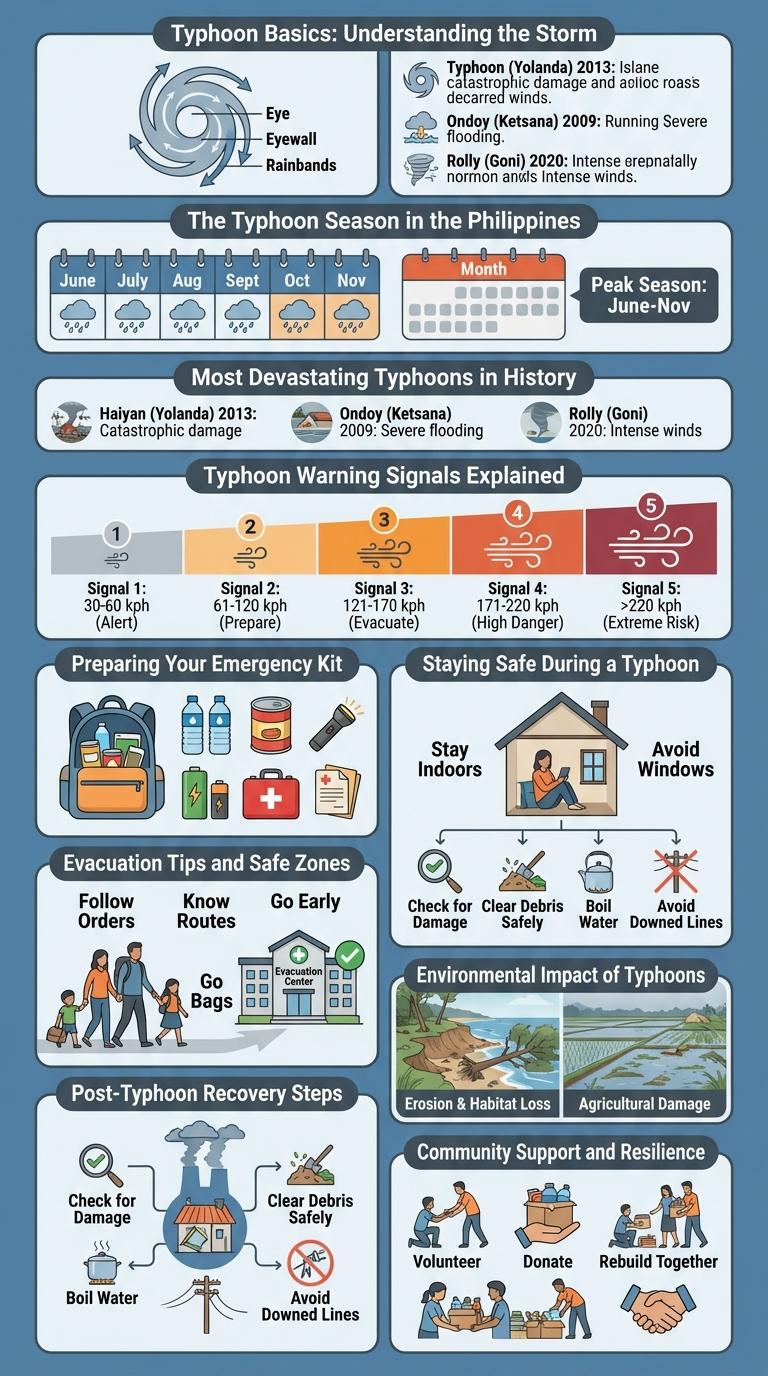
Typhoons frequently impact the Philippines, bringing heavy rains, strong winds, and widespread flooding that challenge communities across the region. Understanding their intensity, seasonality, and effects is crucial for disaster preparedness and response efforts. This infographic presents key data and insights to help visualize the patterns and impacts of typhoons in the Philippines.
Typhoon Basics: Understanding the Storm
Typhoons are intense tropical storms that form over warm ocean waters, typically in the Western Pacific, including the Philippines. These storms bring strong winds, heavy rainfall, and can cause flooding and landslides, posing significant risks to life and property. Understanding the formation, path, and intensity of typhoons helps in effective preparation and disaster response.
The Typhoon Season in the Philippines
When does the typhoon season occur in the Philippines? The typhoon season in the Philippines typically spans from June to November, with the highest activity between August and October. During this period, the country faces an average of 20 typhoons annually, many of which cause significant damage.
Most Devastating Typhoons in History
The Philippines is frequently hit by typhoons due to its location in the Western Pacific. These storms cause widespread damage to communities and infrastructure each year.
Typhoon Haiyan (Yolanda) in 2013 is the most devastating typhoon in Philippine history, with over 6,000 confirmed deaths and massive destruction in Tacloban City. Typhoon Bopha (Pablo) in 2012 caused severe flooding and landslides, resulting in more than 1,000 fatalities. Typhoon Mike (Ruping) in 1990 also led to extensive damage and over 700 deaths, highlighting the country's vulnerability to intense tropical cyclones.
Typhoon Warning Signals Explained
Typhoon Warning Signals in the Philippines indicate the severity and proximity of an approaching typhoon, helping communities prepare accordingly. Signal No. 1 warns of winds 30-60 kph expected within 36 hours, while Signal No. 5 signals extremely strong winds exceeding 220 kph expected within 12 hours. These signals guide evacuations, school closures, and disaster readiness measures to reduce risks and save lives.
Preparing Your Emergency Kit
Preparing an emergency kit is essential for safety during a typhoon in the Philippines. A well-stocked kit ensures you have necessary supplies when power and water may be cut off.
Include enough water, non-perishable food, and a first aid kit to last at least three days. Flashlights, batteries, and important documents should also be part of your emergency supplies.
Staying Safe During a Typhoon
Typhoons frequently impact the Philippines, bringing heavy rains and strong winds that pose significant risks to life and property. Staying informed and prepared is crucial to ensuring safety during these severe weather events.
Secure your home by reinforcing windows and doors, and have an emergency kit ready with water, food, and essential supplies. Evacuate immediately when authorities advise, and avoid floodwaters and damaged roads to minimize danger.
Evacuation Tips and Safe Zones
Typhoons frequently impact the Philippines, requiring efficient evacuation and knowledge of safe zones to protect lives. Understanding evacuation tips and identifying safe zones is crucial for disaster preparedness.
- Pack Emergency Essentials - Prepare a kit with water, food, medications, and important documents to sustain you during evacuation.
- Follow Official Evacuation Orders - Evacuate immediately once local authorities issue warnings to avoid hazards associated with typhoons.
- Identify Safe Zones - Seek shelter in elevated areas away from flood-prone zones and strong wind exposure during a typhoon.
Post-Typhoon Recovery Steps
Recovering from a typhoon in the Philippines involves coordinated efforts to restore safety and normalcy. Post-typhoon recovery focuses on immediate relief, infrastructure repair, and community rehabilitation.
- Conduct Damage Assessment - Local authorities evaluate affected areas to identify urgent needs and allocate resources effectively.
- Restore Utilities and Infrastructure - Repair of power lines, water supply, and roads ensures essential services resume quickly.
- Provide Humanitarian Aid - Distribution of food, clean water, and medical supplies helps support displaced and affected families.
- Rebuild Homes and Public Facilities - Reconstruction efforts focus on safer, more resilient buildings to reduce future risks.
- Implement Livelihood Recovery Programs - Economic support and vocational training help communities regain financial stability post-disaster.
Environmental Impact of Typhoons
Typhoons in the Philippines cause significant environmental damage, affecting ecosystems and biodiversity. Their frequent occurrence leads to long-term degradation of natural resources and habitats.
- Flooding and Soil Erosion - Heavy rains and storm surges cause widespread flooding and accelerate soil erosion, impacting agricultural lands and freshwater systems.
- Damage to Coastal Ecosystems - Strong winds and high waves destroy coral reefs and mangroves, which are vital for coastal protection and marine biodiversity.
- Deforestation and Habitat Loss - Typhoon winds uproot trees and destroy forests, resulting in loss of wildlife habitats and increased carbon emissions.
Addressing the environmental impact of typhoons is critical to sustaining the Philippines' natural environment and climate resilience.