
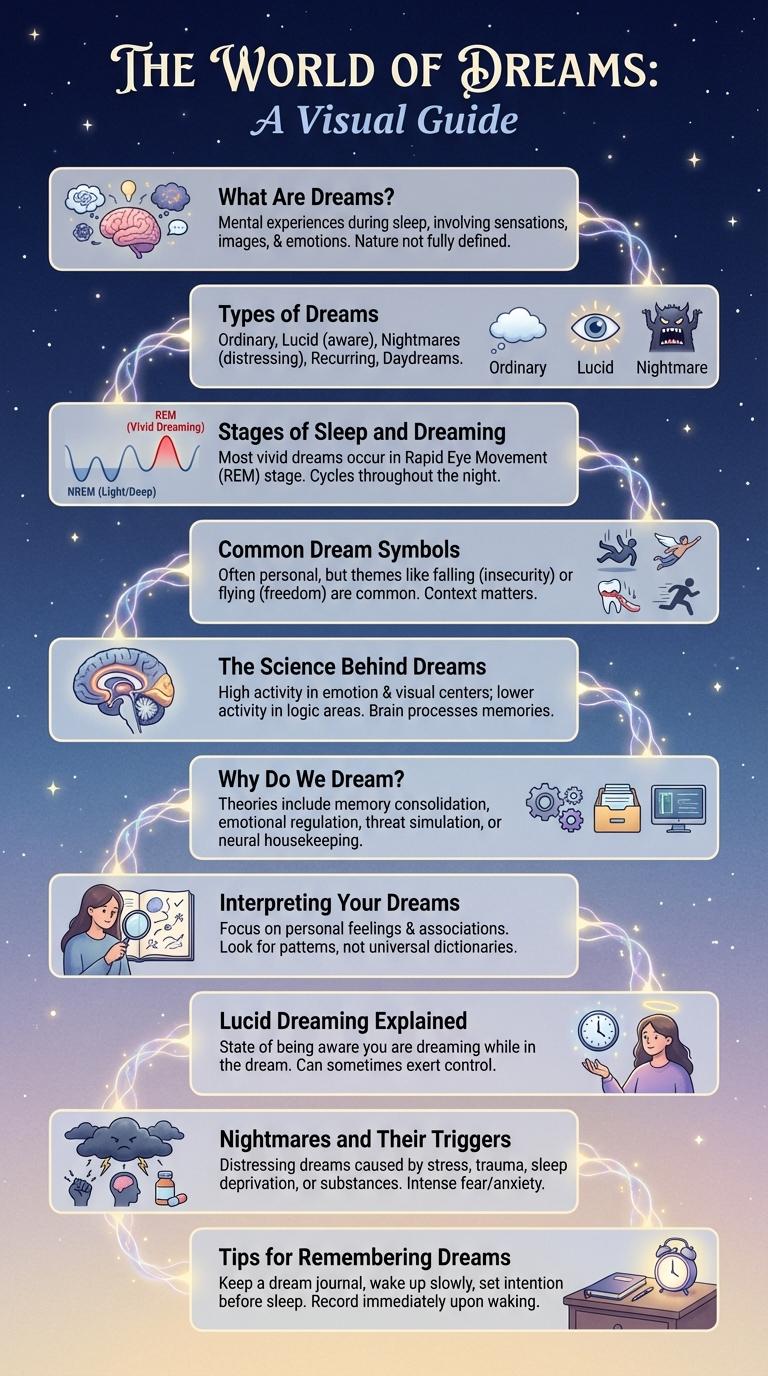
Dreams offer a fascinating glimpse into the subconscious mind, revealing emotions, desires, and fears through vivid imagery and symbolism. This infographic unpacks common dream themes, interpretations, and scientific insights to help decode what your dreams might mean. Understanding these patterns can provide valuable self-awareness and enhance mental well-being.
What Are Dreams?
What are dreams and why do we experience them?
Dreams are sequences of images, ideas, emotions, and sensations that occur involuntarily in the mind during certain stages of sleep. They often reflect subconscious thoughts, memories, and feelings, providing insights into our mental and emotional state.
Types of Dreams
Dreams come in various types, each reflecting different aspects of our subconscious mind. Common types include lucid dreams, nightmares, and recurring dreams, each with unique characteristics and psychological impacts.
Lucid dreams occur when the dreamer becomes aware they are dreaming, allowing for control over the dream environment. Nightmares are distressing dreams that evoke fear and anxiety, often linked to stress or trauma.
Stages of Sleep and Dreaming
Dreams primarily occur during the REM (Rapid Eye Movement) stage of sleep, which cycles several times throughout the night. Each REM phase lengthens with each cycle, ranging from a few minutes to over an hour.
Non-REM sleep consists of three stages, moving from light to deep sleep, essential for physical restoration. Dreaming can occasionally happen in non-REM stages but is most vivid and frequent in REM sleep.
Common Dream Symbols
Dreams often feature recurring symbols that reflect our subconscious thoughts and emotions. Understanding these common dream symbols can provide insight into our inner world and personal experiences.
- Flying - Represents freedom, ambition, or a desire to escape limitations.
- Teeth Falling Out - Symbolizes anxiety, loss, or concerns about appearance and communication.
- Water - Reflects emotions, cleansing, or the unconscious mind.
- Being Chased - Indicates stress, avoidance, or unresolved fears.
- Falling - Signifies insecurity, fear of failure, or loss of control.
The Science Behind Dreams
Dreams occur primarily during the rapid eye movement (REM) stage of sleep when brain activity is high. Scientists study dreams to understand cognitive functions and emotional processing.
- REM Sleep Activation - Dreams are most vivid during REM sleep due to increased brain activity similar to wakefulness.
- Memory Consolidation - Dreaming helps process and organize memories from daily experiences.
- Emotional Regulation - Dreams contribute to managing emotions by simulating experiences in a safe environment.
Why Do We Dream?
Dreams occur during the REM (Rapid Eye Movement) stage of sleep when brain activity is high. They help process emotions, consolidate memories, and solve problems subconsciously. Scientists believe dreaming supports mental health and cognitive functions by integrating experiences and emotions.
Interpreting Your Dreams
Dreams provide a window into our subconscious mind, revealing hidden emotions and thoughts. Understanding their meanings can offer valuable insights into our waking lives.
- Symbolism - Dreams often use symbols that represent deeper issues or feelings in our personal lives.
- Emotional Reflection - The emotions experienced in dreams can mirror unresolved feelings or stress factors.
- Recurring Themes - Repeated dream patterns may indicate persistent concerns or desires that need attention.
Interpreting dreams involves analyzing these elements in the context of your personal experiences for meaningful insights.
Lucid Dreaming Explained
Lucid dreaming is the state of being aware that you are dreaming while still asleep. It allows the dreamer to consciously control the dream environment and narrative.
During a lucid dream, the brain remains highly active, especially in areas responsible for self-awareness and decision-making. Techniques like reality checks and maintaining dream journals improve the likelihood of experiencing lucid dreams. Research suggests lucid dreaming can enhance problem-solving skills and reduce nightmares.
Nightmares and Their Triggers
| Nightmares | Common Triggers |
|---|---|
| Frightening dreams causing anxiety and fear upon waking | Stress and anxiety related to daily life events |
| Often involve threats to safety or survival | Traumatic experiences such as accidents or abuse |
| Occur mainly during REM (Rapid Eye Movement) sleep | Medications affecting brain chemistry, like antidepressants |
| Can disrupt sleep quality and cause insomnia | Sleep disorders including sleep apnea and restless legs syndrome |
| More frequent in children but common across all ages | Consumption of alcohol or drug withdrawal symptoms |