
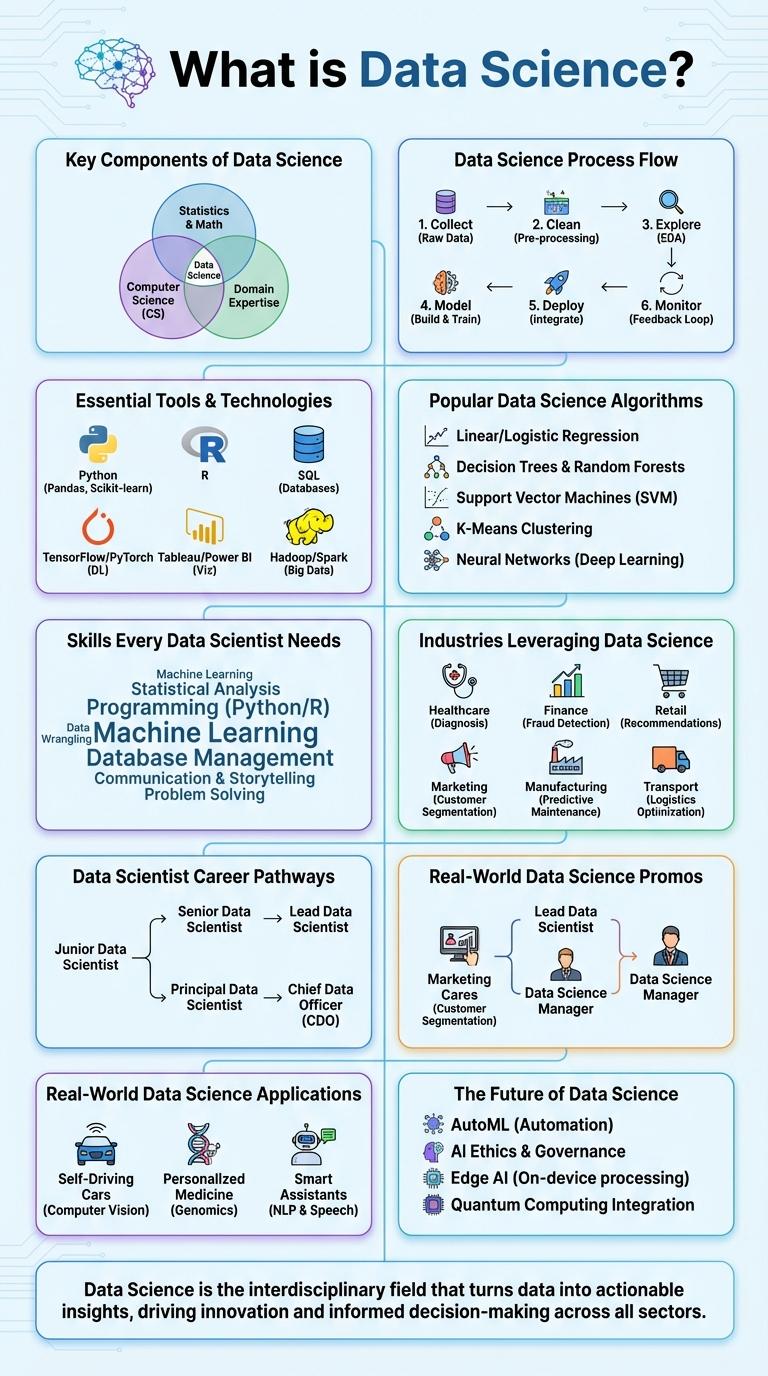
Data science transforms raw data into actionable insights by using advanced analytics, machine learning, and statistical techniques. This infographic breaks down the essential components of data science, including data collection, processing, and visualization. Explore how these elements work together to drive informed decision-making and innovation.
What is Data Science?
Data Science is an interdisciplinary field that combines statistics, computer science, and domain expertise to extract insights from structured and unstructured data. It involves processes like data collection, cleaning, analysis, and visualization to make informed decisions.
Techniques such as machine learning, predictive analytics, and data mining play a key role in uncovering patterns and trends. Data Science drives innovation across industries by transforming raw data into actionable intelligence.
Key Components of Data Science
Data science integrates multiple disciplines to extract meaningful insights from raw data. It involves collecting, processing, and analyzing vast datasets to support decision-making and innovation.
The key components of data science include Data Collection, Data Cleaning, Data Analysis, Machine Learning, and Data Visualization. Each component plays a vital role in transforming data into actionable knowledge.
Data Science Process Flow
Data Science Process Flow involves a systematic approach to transforming raw data into actionable insights. Key stages include data collection, data preprocessing, data analysis, modeling, and result interpretation. This structured flow ensures effective decision-making and drives business value through data-driven strategies.
Essential Tools & Technologies
Data science relies on a variety of essential tools and technologies to analyze, visualize, and interpret complex datasets. Key programming languages include Python and R, renowned for their extensive libraries like Pandas, NumPy, and ggplot2. Popular platforms such as Jupyter Notebooks and Apache Spark enable efficient data manipulation and scalable processing for insightful decision-making.
Popular Data Science Algorithms
| Algorithm | Use Case |
|---|---|
| Linear Regression | Predicting numerical values, trend analysis |
| Decision Trees | Classification and regression tasks |
| K-Means Clustering | Grouping data into clusters based on similarity |
| Random Forest | Improving accuracy in classification and regression |
| Support Vector Machine (SVM) | Classifying data with high-dimensional space boundaries |
Skills Every Data Scientist Needs
Data science combines various skills to analyze and interpret complex data. Mastery of these skills empowers professionals to make data-driven decisions effectively.
- Statistical Analysis - Understanding statistical methods is crucial for extracting meaningful insights from data sets.
- Programming Proficiency - Knowledge of languages like Python and R enables data manipulation and model development.
- Data Visualization - Creating visual representations helps communicate findings clearly to stakeholders.
- Machine Learning - Applying algorithms allows for predictive analytics and automation of data processes.
- Domain Knowledge - Expertise in the relevant industry enhances the contextual interpretation of data results.
Developing these core competencies is essential for success in the evolving field of data science.
Industries Leveraging Data Science
Which industries are benefiting the most from data science? Data science transforms sectors by enabling better decision-making and innovation. Key industries harnessing data science include healthcare, finance, retail, manufacturing, and technology.
How does data science impact healthcare and finance? In healthcare, data science improves diagnostics, personalized treatments, and patient outcomes. In finance, it enhances fraud detection, risk management, and algorithmic trading.
What role does data science play in retail and manufacturing? Retailers use data science for customer behavior analysis, inventory management, and targeted marketing. Manufacturing relies on it for predictive maintenance, quality control, and supply chain optimization.
Why is technology a major industry for data science use? Technology companies leverage data science for product development, user experience enhancement, and artificial intelligence advancements. It drives innovation and competitive advantage in the tech sector.
| Industry | Primary Data Science Applications |
|---|---|
| Healthcare | Diagnostics, personalized treatment, patient monitoring |
| Finance | Fraud detection, risk analysis, algorithmic trading |
| Retail | Customer insights, inventory management, marketing strategies |
| Manufacturing | Predictive maintenance, quality control, supply chain management |
| Technology | AI development, product innovation, user experience |
Data Scientist Career Pathways
Data science is a rapidly evolving field that combines statistics, programming, and domain expertise to extract insights from complex datasets. Data Scientist Career Pathways offer diverse opportunities for professionals to specialize and advance in this dynamic industry.
Entry-level roles typically include Data Analyst or Junior Data Scientist positions, focusing on data cleaning and basic analysis. Mid-level roles such as Data Scientist or Machine Learning Engineer involve developing predictive models and deploying algorithms. Senior roles like Data Science Manager or Chief Data Officer emphasize strategy, team leadership, and integrating data science solutions into business decisions.
Real-World Data Science Applications
Data science transforms raw data into actionable insights that drive decision-making across industries. Its real-world applications improve efficiency, innovation, and user experiences worldwide.
- Healthcare analytics - Uses patient data to predict diseases and personalize treatment plans.
- Financial forecasting - Analyzes market trends and risk factors to optimize investments.
- Customer behavior analysis - Examines purchasing patterns to enhance marketing strategies.