
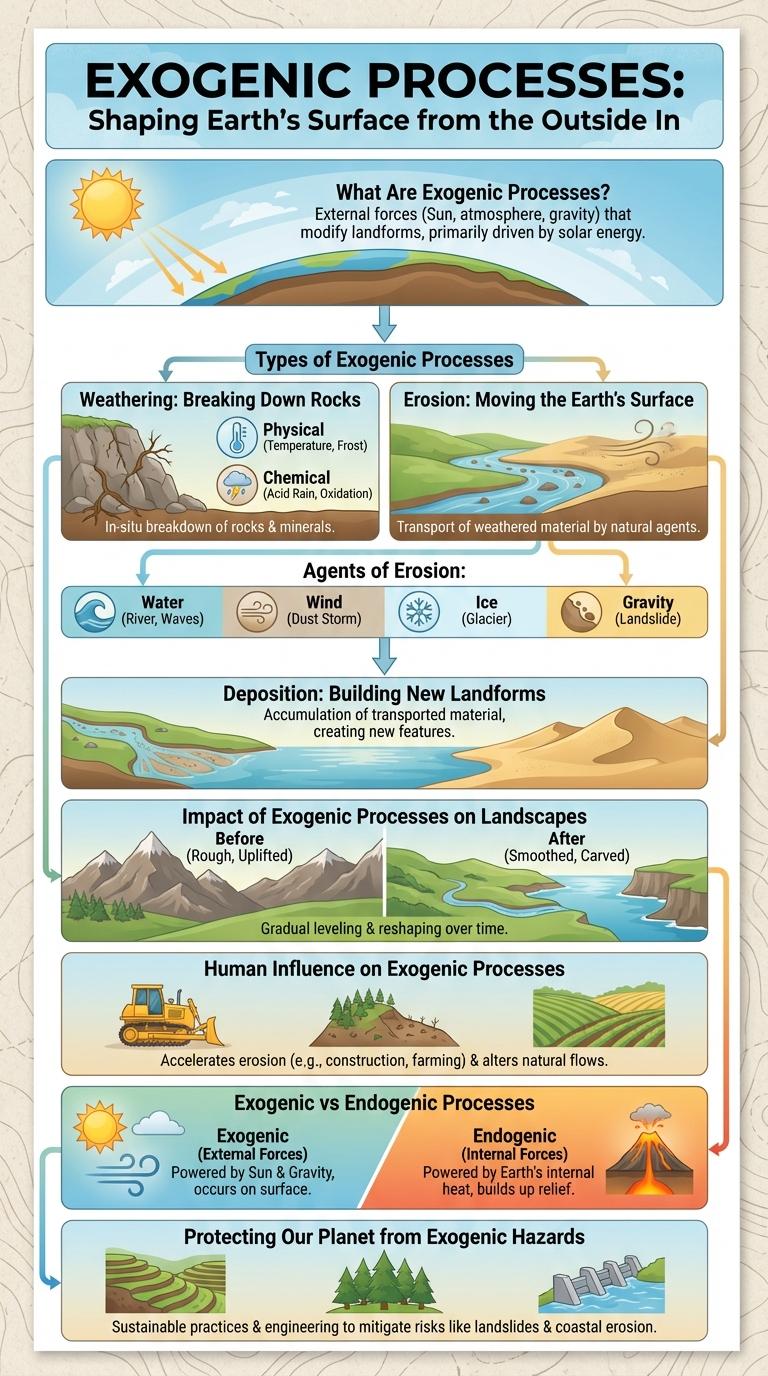
Exogenic processes shape the Earth's surface through external forces such as weathering, erosion, and sedimentation. These mechanisms break down rocks and transport materials, continuously transforming landscapes over time. Understanding exogenic processes reveals how natural elements sculpt environments and influence ecosystems.
What Are Exogenic Processes?
Exogenic processes are natural forces that operate on the Earth's surface, shaping the landscape by wearing down and redistributing materials. These processes play a crucial role in the rock cycle and contribute to soil formation and landform development.
- Weathering - The breakdown of rocks and minerals through physical, chemical, or biological mechanisms.
- Erosion - The removal and transportation of surface materials by wind, water, or ice.
- Deposition - The settling and accumulation of transported sediments in new locations.
Types of Exogenic Processes
What are the main types of exogenic processes that shape the Earth's surface? Exogenic processes include weathering, erosion, transportation, and deposition. These natural forces work together to break down rocks, move sediments, and reshape landscapes over time.
Weathering: Breaking Down Rocks
Exogenic processes shape the Earth's surface through external forces, with weathering playing a crucial role in breaking down rocks. Weathering transforms solid rock into smaller particles by physical, chemical, and biological mechanisms.
Physical weathering includes freeze-thaw cycles and abrasion, which mechanically fracture rocks. Chemical weathering involves reactions like oxidation and hydrolysis that alter the rock's mineral composition.
Erosion: Moving the Earth's Surface
Exogenic processes shape the Earth's surface by redistributing soil and rock materials through natural forces. Erosion is a key exogenic process that moves Earth's surface elements from one location to another.
- Water Erosion - Flowing water removes soil and rock particles, carving valleys and shaping landscapes.
- Wind Erosion - Wind transports fine sediments, especially in arid regions, altering surface features.
- Glacial Erosion - Glaciers grind and pluck rocks, reshaping mountains and valleys.
Erosion continuously transforms the Earth's surface by wearing down and relocating materials through natural agents.
Agents of Erosion: Water, Wind, Ice, and Gravity
Exogenic processes shape the Earth's surface through external forces that wear down and transport materials. The primary agents of erosion include water, wind, ice, and gravity, each playing a critical role in landscape transformation.
Water erosion occurs through rainfall, rivers, and ocean waves, carving valleys and transporting sediments. Wind erosion affects arid regions by lifting and moving fine particles, creating dunes and desert pavements. Ice erosion results from glaciers that grind and reshape terrain, while gravity causes mass wasting events like landslides and rockfalls, moving debris downhill.
Deposition: Building New Landforms
Exogenic processes shape Earth's surface by external forces such as wind, water, and ice. Deposition occurs when these agents transport sediments and eventually lay them down in new locations.
Deposition plays a crucial role in building new landforms like deltas, sand dunes, and alluvial fans. These features form as sediments accumulate, creating layers that alter the landscape over time.
Impact of Exogenic Processes on Landscapes
| Exogenic Process | Impact on Landscapes |
|---|---|
| Weathering | Breaks down rocks into soil and sediment, shaping landforms and contributing to soil formation. |
| Erosion | Transports soil and rock from higher to lower areas, creating valleys, canyons, and coastal cliffs. |
| Deposition | Builds new landforms such as deltas, alluvial fans, and sand dunes by depositing sediments. |
| Mass Wasting | Moves large volumes of earth down slopes, causing landslides and altering mountain shapes. |
| Glacial Activity | Carves U-shaped valleys, fjords, and moraines, dramatically reshaping terrain through ice movement. |
Human Influence on Exogenic Processes
Human activities significantly impact exogenic processes such as erosion, sedimentation, and weathering. Urbanization and deforestation accelerate soil erosion by removing vegetation that stabilizes the ground. Construction and mining alter natural landscapes, increasing the rate and intensity of exogenic processes.
Exogenic vs Endogenic Processes
Exogenic and endogenic processes shape the Earth's surface through distinct mechanisms. Understanding their differences is key to grasping geological and environmental changes.
Exogenic processes occur on the Earth's surface, driven by external forces, while endogenic processes originate from within the Earth due to internal heat and pressure.
- Exogenic Processes - Include weathering, erosion, and sedimentation caused by atmospheric, hydrologic, and biological factors.
- Endogenic Processes - Involve tectonic activity, volcanism, and mountain building fueled by mantle convection and internal energy.
- Impact on Landscape - Exogenic processes tend to wear down and reshape landforms, whereas endogenic processes build up and create new geological features.