
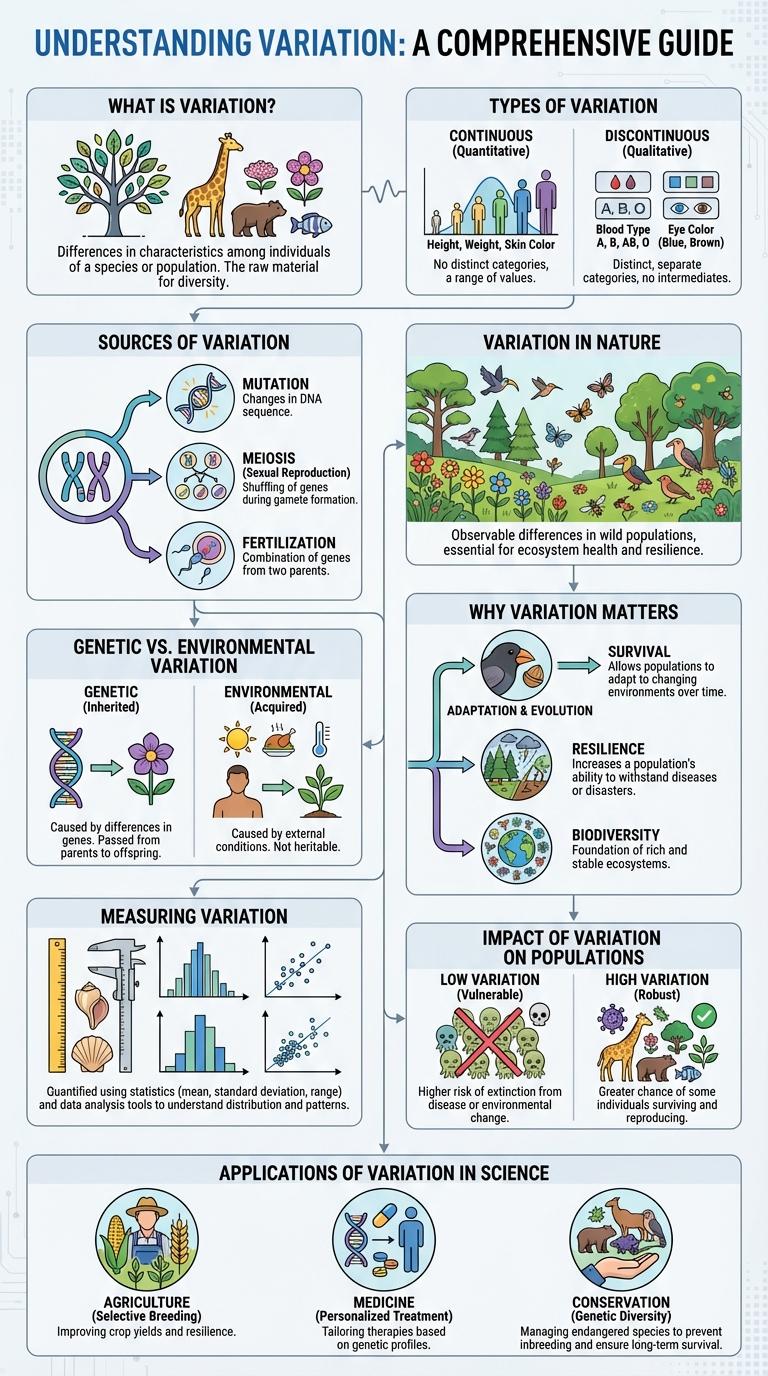
Variations represent differences or changes within a particular set or system, highlighting diversity and adaptability in data or phenomena. Understanding these fluctuations is crucial for analyzing trends, patterns, and outcomes across various fields such as science, business, and technology. Infographics provide a clear and concise visual representation of variation, making complex information easier to comprehend and compare.
What is Variation?
What is variation?
Variation refers to the differences observed among individuals or groups in a population. It encompasses genetic, environmental, and behavioral differences that contribute to diversity.
Types of Variation
Variation refers to the differences observed within a population or between populations in traits or characteristics. Understanding types of variation helps in fields like genetics, biology, and quality control.
- Genetic Variation - Differences in DNA sequences among individuals cause genetic variation.
- Environmental Variation - Non-genetic factors such as climate, diet, or lifestyle lead to environmental variation.
- Continuous and Discontinuous Variation - Continuous variation shows a smooth range of traits, while discontinuous variation involves distinct categories.
Sources of Variation
Variation occurs due to diverse factors influencing processes and outcomes. Understanding these sources helps improve quality and predictability.
- Environmental Factors - Changes in temperature, humidity, and other environmental conditions cause variations.
- Material Differences - Variability in raw materials or components affects process consistency.
- Human Factors - Operator skill levels and human errors contribute to variation.
- Machine Performance - Equipment wear, calibration, and maintenance impact output uniformity.
- Measurement Systems - Inaccuracies or inconsistencies in measurement tools introduce variation.
Identifying and controlling these sources reduces variation and enhances product reliability.
Variation in Nature
Variation in nature refers to the differences observed among individuals within a species. These differences can be physical, behavioral, or genetic, contributing to biodiversity.
Genetic variation arises from mutations, gene flow, and sexual reproduction. Environmental factors also influence phenotypic variation, allowing species to adapt to changing conditions. This diversity is essential for survival and evolution, supporting ecosystems worldwide.
Genetic vs. Environmental Variation
Variation in organisms arises from differences in genetics or environmental influences. Understanding these sources helps explain diversity within species.
Genetic variation results from differences in DNA sequences inherited from parents. Environmental variation occurs due to external factors affecting an organism's traits during its lifetime.
- Genetic Variation - Inherited traits passed down through genes cause differences among individuals.
- Environmental Variation - External conditions like climate and nutrition alter physical characteristics without changing DNA.
- Impact on Populations - Genetic variation enables adaptation through natural selection, while environmental variation can influence survival and reproduction temporarily.
- Examples of Genetic Variation - Eye color and blood type vary due to genetic differences in populations.
- Examples of Environmental Variation - Height differences caused by nutrition or skin tanning due to sun exposure illustrate environmental effects.
Why Variation Matters
Variation plays a crucial role in biology and everyday life by ensuring diversity within populations. This diversity allows organisms to adapt to changing environments and survive various challenges.
In genetics, variation contributes to unique traits that influence development, health, and behavior. Emphasizing variation highlights the importance of differences that drive evolution and innovation.
Measuring Variation
Measuring variation is essential for understanding data distribution and consistency within a dataset. Common metrics include range, variance, and standard deviation, each quantifying different aspects of spread. Accurate measurement of variation supports data analysis, quality control, and decision-making processes.
Impact of Variation on Populations
| Type of Variation | Impact on Populations |
|---|---|
| Genetic Variation | Increases adaptability by providing diverse traits; enhances survival and reproduction under different environmental pressures. |
| Environmental Variation | Shapes phenotypic differences within populations; influences natural selection and evolutionary paths. |
| Mutation | Introduces new genetic material leading to novel traits; can be beneficial, neutral, or harmful for population fitness. |
| Gene Flow | Maintains genetic diversity by exchanging genes between populations; reduces the risk of inbreeding depression. |
| Genetic Drift | Causes random changes in allele frequencies; significantly impacts small populations, potentially reducing variation. |
Applications of Variation in Science
Variation plays a crucial role in scientific fields such as genetics, ecology, and medicine. It helps researchers understand species diversity, disease susceptibility, and evolutionary processes. Applications include improving crop yield, developing personalized treatments, and conserving endangered species.